

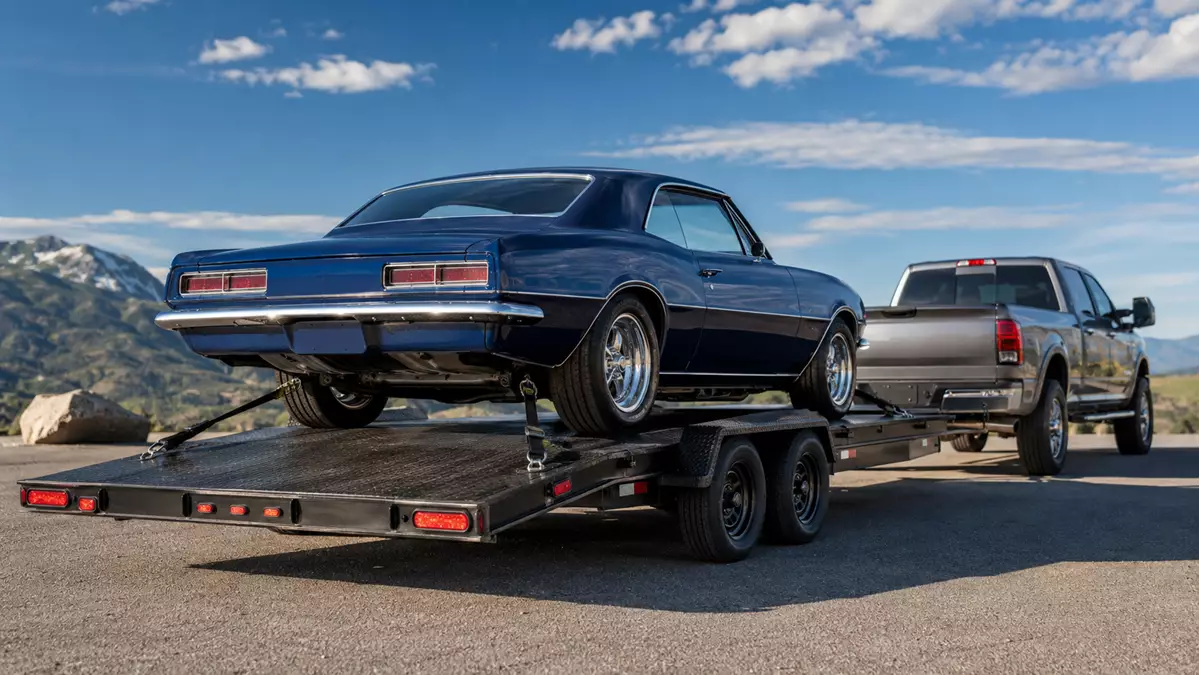
Buying a Car at Auction: How to Rent a Car Hauler and Get It Home
 Neighbors Trailer
Aug 18, 2026 75 11 min read
You won the bid. The car is yours. Now comes the part nobody at the auction talks about: getting it home. Whether you scored a project car at a local police auction, a clean weekend cruiser at a classic sale, or a flip at a dealer-only lane, the vehicle has to physically move from the auction lot to your driveway, and the clock is usually ticking. Most auctions want the vehicle gone within 24 to 72 hours, and storage fees start piling up fast if you leave it. Renting a car hauler and towing it yourself is almost always the fastest, cheapest, and most flexible way to close that gap. This guide walks through exactly how to do it, from what to check before you bid to how to secure the car for the drive home.
Why Renting a Car Hauler Beats the Alternatives
When you buy a car at auction, you have three basic ways to get it home: hire a professional auto transport company, drive it home if it runs and is road-legal, or rent a car hauler and tow it yourself. Each has a place, but the rental route wins in the situations most auction buyers actually face.
Hiring a transport company is the hands-off option, but it is slow and expensive. Regional moves commonly run several hundred dollars, and booking a carrier can take days, which is a problem when the auction wants the car gone tomorrow. Driving it home only works if the car runs, is insured, and has valid plates, which rules out the project cars, non-runners, and no-title-yet purchases that make up a huge share of auction buys. Renting a car hauler splits the difference: you move the car on your own schedule, at a fraction of transport-company cost, and it works whether or not the car runs.
For a buyer who just spent their budget at the auction itself, the cost savings matter. A peer-to-peer car hauler rental typically costs a fraction of what a professional transport service charges for the same regional move, and you control the timing completely. If you need to grab the car the morning after the sale to dodge storage fees, you can.
The gap is easiest to see when you put the three options side by side for a typical regional haul. The bars below show representative cost ranges, not fixed prices, but the pattern holds across most markets: doing it yourself with a rented hauler is dramatically cheaper than hiring out.
Where Auction Cars Come From, and Why Transport Planning Matters
Auction cars arrive from a wide range of sources, and the source often tells you what kind of transport challenge you are walking into. Public auctions, government and police surplus sales, estate auctions, insurance and salvage auctions, and classic and collector sales each tend to produce different kinds of vehicles. A government surplus lot might be full of high-mileage sedans and retired fleet trucks that run fine. A salvage auction is full of cars that do not run at all. A collector sale might feature a pristine classic that you would never want exposed to a rainstorm on an open trailer.
The common thread is that you usually have little time to arrange transport after you win, and the vehicle's condition is not always something you can fully assess before bidding. That combination is exactly why having a car hauler plan ready beats scrambling. When you already know which trailer you would rent and where to get it, the transport question becomes a quick booking rather than a multi-day headache that racks up storage fees.
Before You Bid: Match the Trailer to the Car
The smartest auction buyers figure out their transport plan before they raise a paddle, not after. Knowing what it takes to haul a specific vehicle home can even shape how much you are willing to bid, because transport is a real cost of acquisition. Here is what to sort out in advance.
Know the Vehicle's Weight
Every car hauler has a weight rating, and matching it to the vehicle is the single most important transport decision. A compact sedan might weigh 2,800 pounds, while a full-size truck or SUV can push 6,000 pounds or more. The trailer's capacity, plus the car's weight, plus your tow vehicle's towing capacity all have to line up. If you are bidding on several possible vehicles, know the rough weight of each before the sale so you are not scrambling afterward. A quick way to pin this down is to run the specific vehicle through a trailer weight capacity calculator that matches vehicle weight to an appropriately rated trailer.
Confirm Your Tow Vehicle Can Handle It
The loaded trailer weight equals the trailer's own weight plus the car on it. That combined number has to sit comfortably under your tow vehicle's towing capacity, with margin to spare. A half-ton pickup handles most sedans and small SUVs on an open hauler, but a heavy truck or a car plus a trailer that together approach the limit calls for a three-quarter-ton or larger tow vehicle. If you are unsure where your truck lands, check its factory rating and confirm your vehicle can safely tow the loaded trailer before you commit to the haul.
Watch for Low-Clearance and Non-Running Cars
Auctions are full of exactly the vehicles that give loading trouble: lowered cars, classics with soft or sagging suspension, and non-runners that cannot drive up a ramp under their own power. A low front end can scrape or hang up on a standard ramp angle, and a dead car needs a winch to get aboard. Both problems are solvable, but only if you plan for them. If you are eyeing a low or modified car, review what it takes to haul a low-profile car and confirm the trailer's ramp angle works for its ground clearance before you bid. If the car will not run, make sure you have a winch, either mounted on the trailer or brought along.
Choosing the Right Car Hauler at Auction Time
Not every car hauler is the same, and the right one depends on the vehicle you won and how far it is going. Here is how the common options stack up for auction buyers.
| Trailer Type | Best For | Typical Capacity | Loading Notes |
|---|---|---|---|
| Open car hauler | Most auction cars, sedans and SUVs | 7,000 to 10,000 lbs GVWR | Drive-on ramps; most common and affordable |
| Tilt-deck car hauler | Low-clearance and non-running cars | 5,000 to 7,000 lbs GVWR | Deck tilts to reduce ramp angle; easier low-car loading |
| Enclosed auto hauler | High-value, classic, or show cars | 7,000 to 10,000 lbs GVWR | Weather and theft protection; higher rental cost |
| Equipment trailer with winch | Non-running or heavy vehicles | Up to 14,000 lbs GVWR | Winch pulls dead cars aboard; heavier duty ramps |
For most auction buys, an open car hauler is the practical choice. Step up to a tilt-deck if you won something low or non-running, and consider an enclosed hauler only when the car's value justifies the extra cost, such as a restored classic or a show vehicle you do not want exposed to weather and road debris on the way home.
Loading Day: Getting the Car On Safely
Loading a car onto a hauler is the highest-stakes part of the whole trip. A car is thousands of pounds of rolling metal balanced on a two-axle platform, and rushing this step is how bumpers get bent and, in the worst case, how cars slide off trailers. Give it the twenty minutes it deserves.
Connect the Trailer First
Before the car goes anywhere near the ramps, the trailer must be hitched to your tow vehicle, with the coupler locked, safety chains crossed, and the electrical connector plugged in. Loading a car onto an unconnected trailer is dangerous: as the car's weight moves forward up the ramps, the trailer's tongue can lift violently and throw the car backward. Always connect first, even if you only plan to move the loaded trailer a few feet afterward.
Position for Weight Distribution
Where the car sits on the trailer determines whether the loaded rig tows straight or sways dangerously at highway speed. The general rule is that roughly 60 percent of the load should sit forward of the trailer's axle. For most front-engine cars, that means driving the car onto the trailer nose-first and positioning the engine over or slightly ahead of the axle. This produces the correct tongue weight, which should land around 10 to 15 percent of the total loaded trailer weight. Too little tongue weight and the trailer fishtails; too much and your tow vehicle's steering goes light. Getting the car's position right the first time is far easier than repositioning a strapped-down vehicle on the shoulder of a highway.
Secure With a Four-Corner Tie-Down
Use four ratchet straps rated for the vehicle's weight, one at each corner, anchored to the car's frame or designated tie-down points, never to the axles, suspension, or body panels. Run each strap down and outward at roughly a 45-degree angle to the trailer's anchor points, so the straps oppose each other and immobilize the car in every direction. Tighten each until the suspension compresses an inch or two, which keeps the straps from loosening as the car bounces on the road. For lowered or valuable cars, wheel nets that cradle each tire are gentler than frame straps and eliminate any risk of suspension or body damage. If you have never strapped a vehicle down before, our car trailer tie-down guide walks through anchor points and strap angles in more detail.
On the Road: Towing Your Auction Win Home
A loaded car hauler drives differently from an empty truck. You are heavier, longer, and slower to stop, so give yourself room and take it easy, especially if you do not tow often.
Leave far more following distance than usual, because a loaded trailer dramatically increases stopping distance. Brake earlier and more gently than instinct suggests. Take corners wide and slow, since the trailer tracks tighter than your tow vehicle through turns. On the highway, keep your speed moderate; most trailer tires are rated for 65 miles per hour, and heat from higher speeds is a leading cause of blowouts. Stop within the first few miles to check your straps, then re-check at every fuel stop, because straps loosen from vibration over distance.
It is also worth thinking about protection for the trip. When you rent through a peer-to-peer marketplace, coverage like NT Protect is available for a few dollars per day and gives you peace of mind while you are hauling a vehicle you just paid good money for. For a one-time haul of a valuable auction purchase, that is cheap insurance against a bad day on the road.
Paperwork and Practical Details
A couple of non-driving details trip up first-time auction buyers, so handle them before you roll.
Make sure you have proof of purchase from the auction, such as a bill of sale or a buyer's receipt, in the vehicle or your pocket. If you get pulled over hauling a car with no plates, being able to show you legally bought it that day saves a lot of hassle. Some states have specific rules about towing an unregistered vehicle, so a quick check of your route's requirements is smart. And confirm the auction's release process before you arrive with the trailer, since some lots require payment to clear and a gate pass before they will let the vehicle leave.
Rent Your Car Hauler and Get Your Auction Find Home
Buying a car at auction is the fun part. Getting it home safely is the part that separates a great deal from a stressful one, and it comes down to a few repeatable steps: know the car's weight before you bid, match it to the right trailer, load with proper weight distribution and a solid four-corner tie-down, and tow home slow and steady. Do those things and your auction win arrives in the same condition it left the lot.
Ready to bring your auction find home? Browse car haulers on Neighbors Trailer and find a local, affordable trailer matched to your vehicle, often within a few miles of the auction house itself. Book online, pick it up, and get your car home on your own schedule, without waiting on a transport company or paying dealer-lot storage fees.