How to Prepare Your Truck to Tow a Car Trailer Rental Safely
 Neighbors Trailer
Jun 16, 2023 879 7 min read car trailer rental, trailer preperatio
Renting a car trailer through Neighbors Trailer is one of the most cost-effective ways to move a vehicle - whether it's a new purchase, a project car, or a family vehicle being relocated. But the success of your haul depends as much on your truck's readiness as it does on the trailer itself. Before you hook up and head out, this guide walks you through every step to prepare your truck for a safe, stress-free car trailer rental.
Step 1: Confirm Your Truck's Tow Rating
The single most important number to know before towing is your truck's maximum tow rating. This figure - published by the manufacturer in your owner's manual and door jamb sticker - tells you the maximum weight your truck can safely pull. Never exceed it. Our towing capacity calculator shows your truck’s safe limit in seconds. When towing a car trailer, your total load equals the trailer's weight plus the weight of the car you're hauling.
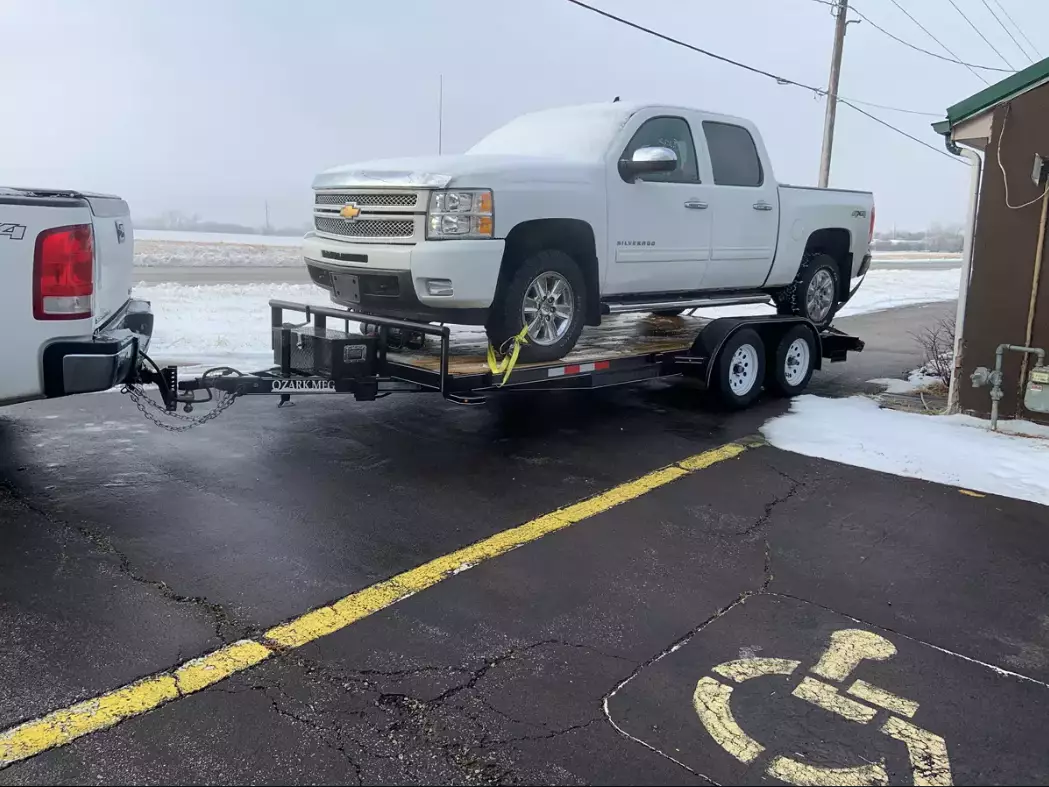
For example: A 16-ft steel car hauler trailer weighs approximately 2,800 lbs. A loaded sedan weighs 3,500 lbs. That's a combined 6,300 lbs - well within the range of most 1/2-ton trucks, but you still need to verify against your specific model's ratings. Our car hauler calculator estimates the combined car-plus-trailer weight for your specific vehicle.
Truck Towing Capacity by Common Pickup Class
| Truck Class | Example Models | Typical Max Tow Rating | Suitable for Car Trailers? |
| Half-ton (1/2) | F-150, Ram 1500, Silverado 1500 | 8,000-14,000 lbs (engine/config dependent) | Yes - for standard open car haulers |
| Three-quarter-ton (3/4) | F-250, Ram 2500, Sierra 2500 | 14,000-20,000 lbs | Yes - including heavier car haulers |
| One-ton (1) | F-350, Ram 3500, Silverado 3500 | 18,000-37,000 lbs | Yes - including gooseneck car haulers |
| SUV / Crossover | Suburban, Tahoe, Expedition | 5,000-9,000 lbs | Limited - light duty only, verify carefully |
Step 2: Check Your Hitch and Receiver
Your truck's hitch class determines what trailers you can legally connect. Car hauler trailers typically require a Class III or Class IV hitch (2-inch receiver). Before your rental day, verify:
- Receiver size: Most car haulers use a 2-inch ball - confirm your hitch receiver accepts a 2-inch shank
- Ball size: Car hauler couplers typically require a 2-inch or 2-5/16-inch ball. Verify the trailer's coupler size with the owner before pickup
- Hitch ball torque: A loose ball mount is a common cause of coupler separation. Torque the ball to spec (typically 300 ft-lbs for a 2-inch ball)
- Weight distribution: For loads over 6,000 lbs, consider a weight-distribution hitch to keep your truck level
Step 3: Inspect Your Truck's Braking System
When towing a loaded car trailer, your truck's braking distance increases substantially. At 60 mph with a 7,000-lb trailer, stopping distance can increase by 40-60% compared to solo driving. To stay safe:
- Check brake pad thickness: If pads are under 3mm, replace them before towing
- Inspect brake fluid: Low or contaminated fluid reduces braking efficiency under sustained load
- Trailer brake controller: If the rental trailer has electric brakes (required on trailers over 3,000 lbs in most states), your truck needs a brake controller. Many modern trucks have this built in; older trucks may need an aftermarket unit installed
Step 4: Check Tire Condition and Pressure
Towing increases heat buildup and load stress on all four truck tires. Before your rental, do a full tire inspection:
- Inflate to the maximum recommended PSI shown on the door jamb (not the tire sidewall) when towing - this provides better load support
- Check tread depth: minimum 4/32" for towing (6/32" or deeper recommended)
- Inspect for sidewall cracking, bubbles, or uneven wear patterns
- Don't forget the spare - a blowout while towing is a roadside emergency you don't want to face without a full-size spare
Pre-Trip Truck Checklist for Car Trailer Towing
| Check Item | What to Verify | Action if Not Ready |
| Tow rating | Truck GCWR exceeds combined load | Choose lighter trailer or different vehicle |
| Hitch ball size | Matches trailer coupler spec | Replace ball before pickup |
| Hitch ball torque | Ball tight to spec | Re-torque with proper wrench |
| Trailer wiring plug | 7-pin or 4-pin matches trailer connector | Buy adapter at auto parts store |
| Brake controller | Present if trailer has electric brakes | Install aftermarket controller |
| Tire pressure | Inflated to towing spec (door jamb) | Inflate at gas station before pickup |
| Brake pads | Over 3mm thickness | Replace before trip |
| Engine coolant level | Full - towing generates extra engine heat | Top off or inspect for leaks |
| Transmission fluid | Full and clean - automatics run hotter when towing | Service if overdue |
| Safety chains | Crossing under tongue in X pattern | Don't tow without safety chains |
Step 5: Adjust Your Mirrors
Your standard truck mirrors are likely insufficient when towing a wide car trailer. Before you leave the driveway, adjust your side mirrors downward and outward so you can see the rear corners of the trailer. If the trailer is wider than your truck, consider clip-on towing mirror extensions - available at most auto parts stores for under $30 - to give you a clear view of traffic behind and beside the trailer.
Step 6: Pre-Drive Trailer Hookup Inspection
Once you've connected the rental trailer, don't drive until you've completed this hookup checklist:
- Coupler is fully latched and locked with a hitch pin or padlock
- Safety chains are crossed and secured (short enough to not drag)
- Breakaway cable (if equipped) is attached to the truck frame - not the hitch ball
- All trailer lights are functioning: running, brake, and turn signals
- Electric brake controller is reading trailer resistance (if applicable)
- Jack stands are fully retracted
- Load is secured with straps or chains, tires chocked on the trailer
Protecting Your Rental with NT Protect
Even with a perfectly prepared truck, collisions and unexpected damage can occur. NT Protect is Neighbors Trailer's rental protection product, available for a few dollars per day with a $500 deductible. It covers damage to the trailer during your rental period, so you can focus on the road instead of worrying about what happens if something goes wrong. It's a small daily cost that can save you thousands.
Frequently Asked Questions
Does my truck need a weight distribution hitch to tow a car trailer?
Weight distribution hitches are generally recommended when trailer tongue weight exceeds 10-15% of your truck's payload rating, or when towing causes the rear of your truck to squat noticeably. Many car trailer rentals don't require one, but if you're towing a heavy enclosed trailer or a loaded flatbed with a large vehicle, it's worth the investment in stability and tire wear.
Can I tow a car trailer with a standard Class III hitch?
Most open car hauler trailers (up to about 8,000 lbs GVWR) work fine with a Class III 2-inch receiver hitch. For heavier gooseneck car haulers or enclosed car trailers with high GVWR, you'll need a Class IV or Class V hitch - or a gooseneck setup in the truck bed.
What's the safest speed to tow a loaded car trailer?
Most trailer manufacturers and towing safety guides recommend a maximum towing speed of 55-65 mph. Even if local speed limits are higher, staying at or below 65 mph significantly reduces sway risk, tire heat buildup, and emergency stopping distance. Many states have specific "towing speed" laws that are lower than the regular limit.
Should I disable trailer sway control on my truck?
No - never disable trailer sway control (TSC) when towing. Modern trucks with TSC will apply targeted braking to individual wheels to counteract sway. It's one of the most important active safety features for trailer towing.
Conclusion
A properly prepared truck is the foundation of every safe car trailer rental. By confirming your tow rating, checking your hitch setup, inspecting your brakes and tires, and walking through the hookup checklist, you eliminate the most common causes of towing incidents. Book your car trailer rental at neighborstrailer.com and connect with a local owner who can answer any trailer-specific questions before you hit the road.
Related Articles
- Everything to Know About a Gooseneck Flatbed Trailer Rental
- Trailer Safety 101: How to Safely Tow a Trailer
- Rental Trailers: Comparing Single Axle vs. Dual Axle Trailers
- Towing Mistakes to Avoid When Using a Flatbed Trailer Rental
Content Update: This guide was substantially updated in March 2026 with expanded towing safety guidance, improved equipment recommendations, and additional resources to help trailer owners tow safely and confidently.