

Spring Moving Season 2026: How Peer-to-Peer Trailer Rentals Can Save You Thousands on Your Next Move
 Neighbors Trailer
Feb 27, 2026 354 14 min read trailer rental, moving, peer to peer, spring, haul
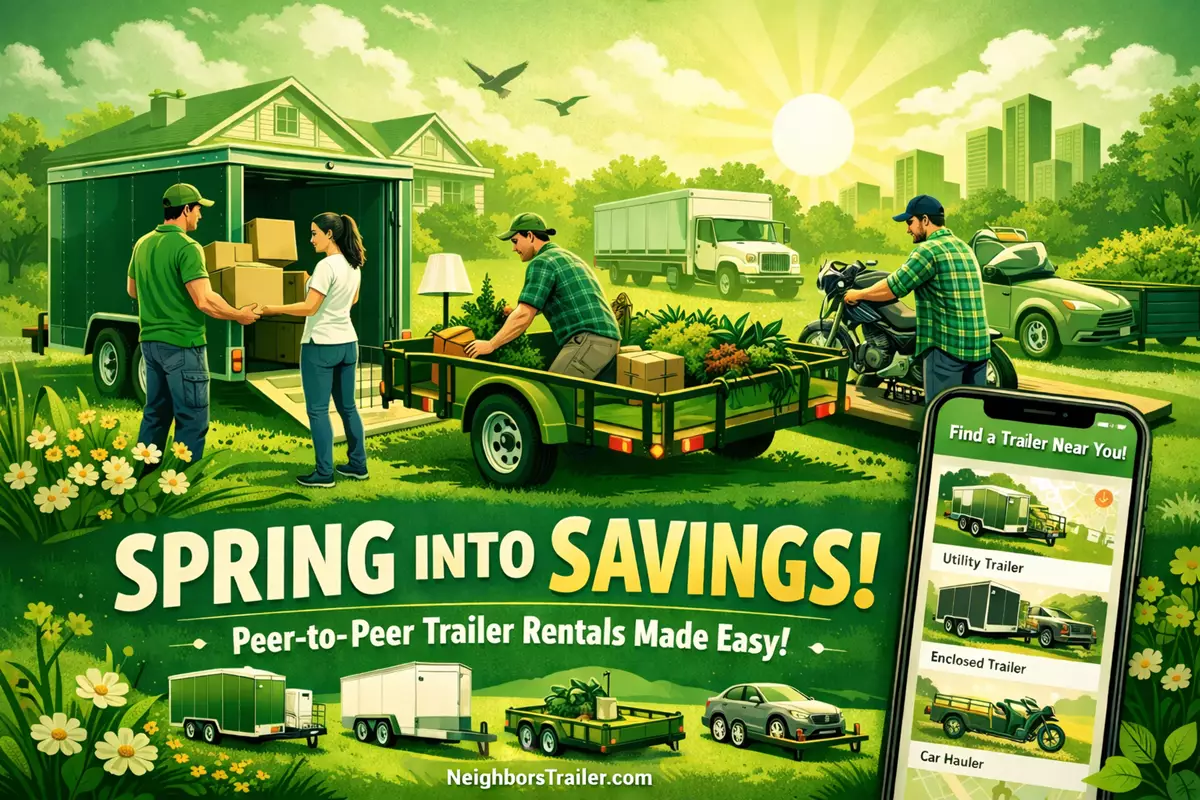
Spring is right around the corner, and with it comes one of the busiest moving seasons of the year. Whether you're relocating across town, hauling supplies for a home renovation, or finally tackling that long-overdue decluttering project, chances are good you're going to need a trailer. But before you default to the usual big-box rental companies, there's a smarter, more affordable option worth considering: peer-to-peer trailer rentals.
In this guide, we'll break down everything you need to know about renting trailers from local owners this spring — including how it works, why it's cheaper, what to look for, and how to make the most of the season's best moving window.
Why Spring Is the Best Time to Plan Your Move
Every year, millions of Americans pack up and move between March and September. Spring sits at the sweet spot of this window — warm enough to avoid the headaches of winter weather, but early enough to dodge the peak-season price surges that hit in June, July, and August.
According to the U.S. Census Bureau’s Current Population Survey, roughly 8–9% of Americans move each year, representing millions of households relocating annually. The majority of those moves take place between March and September — making spring one of the most active periods in the moving calendar.
Here's why spring stands out for movers and haulers.
- The weather works in your favor. Snow and ice are behind you in most parts of the country, but the scorching summer heat hasn't arrived yet. That means more comfortable loading and unloading conditions, fewer weather-related delays, and less risk of damage to your belongings from extreme temperatures.
- Rates are still reasonable. Moving costs tend to spike dramatically once summer arrives, with pricing often climbing 20 to 30 percent above off-season rates. Industry data from the American Moving & Storage Association shows that demand peaks between June and August, when moving activity reaches its highest levels. During these months, rental equipment and moving services often see price increases of 20–30% compared to off-peak seasons due to demand surges. By planning your move for mid-March through early May, you can lock in better pricing on everything from trailers to moving supplies.
- Availability is better. During peak summer months, popular trailer sizes and types can be booked weeks or even months in advance. Spring offers more flexibility, letting you choose the exact dates and trailer type that match your needs without scrambling for leftovers.
- School calendars align. For families with children, spring break provides a natural window for shorter relocations or staging moves before a summer transition. You get time off without competing against every other family trying to move before the school year starts.
The Rise of Peer-to-Peer Trailer Rentals
The sharing economy has transformed how we think about everything from vacation accommodations to everyday transportation. Now, it's reshaping the trailer rental industry too.
Peer-to-peer trailer rental platforms connect people who own trailers with people who need them. It's a simple concept with powerful benefits for both sides of the equation. Trailer owners earn money from an asset that would otherwise sit idle in their driveway, and renters get access to a wider selection of trailers at competitive prices.
Like many durable goods, privately owned trailers are used only occasionally. Industry estimates suggest that personal-use trailers sit idle the majority of the year — often more than 70–80% of the time — making them a prime candidate for peer-to-peer sharing models. That means most privately owned trailers spend the vast majority of their lives doing nothing — depreciating in value while taking up space. Peer-to-peer platforms turn that idle asset into a revenue stream for owners and a savings opportunity for renters.
The global trailer rental market is projected to exceed $15 billion by 2033, driven by growth in construction, residential mobility, and peer-to-peer marketplace adoption, according to recent industry market research reports.
A significant share of that growth is coming from peer-to-peer platforms that offer something traditional rental companies simply cannot — variety, convenience, and community-level pricing.
How Peer-to-Peer Trailer Rental Works
If you've ever used a home-sharing or car-sharing app, the process will feel familiar. Here's a typical workflow.
Step 1: Search for trailers near you. Open a peer-to-peer trailer rental platform like Neighbors Trailer and enter your location, the dates you need the trailer, and the type of trailer you're looking for. You'll see listings from local owners complete with photos, descriptions, pricing, and reviews from past renters.
Step 2: Choose the right trailer. Browse the available options and select the one that best fits your project. Whether you need a small utility trailer for a yard cleanup, an enclosed cargo trailer for a move, or a flatbed for hauling equipment, you'll find options that match your specific needs.
Step 3: Book and confirm. Once you've found your trailer, submit a booking request. The owner will confirm availability, and you'll complete the reservation through the platform. Payment is handled securely online, and most platforms include a trailer rental protection package so both parties are protected.
Step 4: Pick up and go. Meet the trailer owner at the agreed-upon time and location, do a quick walkthrough to confirm the trailer's condition, and you're on your way. When you're done, return the trailer in the same condition and leave a review.
The entire process is designed to be straightforward, transparent, and secure — no hidden fees, no pushy upsells, and no waiting in line at a crowded rental counter. See how it works.
Why Peer-to-Peer Beats Traditional Trailer Rental
You might be wondering what makes peer-to-peer trailer rentals a better deal than just heading to the nearest national chain. Here are the key advantages.
Lower Prices
Traditional rental companies carry significant overhead — large lots, staff, maintenance facilities, insurance pools, and corporate profit margins. All of that gets baked into the price you pay. Peer-to-peer rentals eliminate most of that overhead. Individual owners set their own competitive prices, and the marketplace keeps rates honest. Renters frequently save 30 to 50 percent compared to what they'd pay at a traditional rental counter.
More Variety
National chains tend to stock a limited range of standardized trailer models. Peer-to-peer platforms offer everything from small utility trailers to large enclosed moving trailers, car haulers, dump trailers, and specialty equipment. If you need a specific size or type, you're far more likely to find it through a local owner than at a corporate lot.
Greater Convenience
With peer-to-peer rentals, the trailer is often right in your neighborhood. That means less driving to pick it up and drop it off, more flexible scheduling, and the option to communicate directly with the owner if you have questions about towing capacity, hitch compatibility, or loading tips.
Supporting Your Community
When you rent from a neighbor instead of a national chain, your money stays local. You're helping a fellow community member earn extra income from an asset they already own, and you're building the kind of trust-based connections that make neighborhoods stronger.
Essential Tips for Your Spring Trailer Rental
To make sure your spring move or hauling project goes smoothly, keep these tips in mind.
Plan Ahead, But Don't Panic
While spring is less hectic than summer, it's still wise to book your trailer at least two to four weeks in advance, especially if you need a specific type or size. That said, one of the advantages of peer-to-peer platforms is that inventory is constantly updated as new owners join, so last-minute options are often available too.
Match the Trailer to the Job
Choosing the right trailer saves you time, money, and hassle. Here's a quick guide to common trailer types and their best uses.
| Trailer Type | Best For | Typical Size | Weather Protected? |
| Enclosed Cargo | Moving household goods, furniture, boxes | 6x12 to 8x24 ft | Yes |
| Open Utility | Yard waste, landscaping, appliances | 5x8 to 6x12 ft | No |
| Flatbed | Building materials, heavy equipment | 7x14 to 8x20 ft | No |
| Car Hauler | Transporting vehicles | 7x18 to 8x20 ft | No (open) / Yes (enclosed) |
Know Your Vehicle's Towing Capacity
Before you book anything, check your vehicle's towing capacity and hitch type. This information is usually in your owner's manual or on a sticker inside the driver's door jamb. Overloading your vehicle is dangerous and can cause brake failure, tire blowouts, and loss of control. A good peer-to-peer platform will list the trailer's weight specifications so you can make sure your vehicle is up to the task. (Can your vehicle safely tow a trailer?)
Master the 60/40 Loading Rule
When loading your trailer, aim to place about 60 percent of the weight toward the front (closest to your vehicle) and 40 percent toward the back. This distribution keeps the trailer balanced and stable while towing, reducing the risk of dangerous sway.

Secure everything with ratchet straps or tie-downs, and double-check that nothing can shift during transport.
Inspect Before You Go
When you pick up the trailer, take a few minutes to walk around it with the owner. Check the tires for proper inflation and tread depth. Test the lights, turn signals, and brake lights. Look at the hitch, safety chains, and coupler. (Need a refresher? See 10 Steps to Hitch Your Utility Trailer Properly.). Take photos of the trailer's condition before you leave — it protects both you and the owner. For a comprehensive checklist, see our Ultimate Trailer Towing Safety Guide.
Check the Weather
Spring weather can be unpredictable. Keep an eye on the forecast in the days leading up to your rental, and have a backup plan if severe weather is expected. If you're moving items that are sensitive to rain, an enclosed trailer is worth the small premium over an open one.
How Much Can You Really Save?
Let's look at a real-world comparison. (For a detailed breakdown, see our complete trailer rental pricing guide.) Say you're moving a two-bedroom apartment across town — a common spring scenario.
| Moving Method | Estimated Cost | What's Included | Your Savings |
| Full-Service Movers | $1,500 – $3,500 | Packing, loading, transport, unloading | — |
| Rental Truck (National Chain) | $150 – $400/day | Truck rental + mileage + insurance + fuel | Up to $3,100 |
| P2P Trailer Rental | $50 – $100/day | Trailer + your vehicle + insurance via platform | Up to $3,300+ |
Imagine saving $1,200 on your move and putting that toward your new home instead of a rental counter.
A peer-to-peer trailer rental might cost 50 to 100 dollars per day. Use your own vehicle to tow it, load and unload with the help of friends or family, and your total moving cost could easily come in under 200 dollars. Even after buying pizza and drinks for your helpers, you're looking at savings of 1,000 dollars or more compared to hiring movers, and potentially several hundred dollars less than renting from a national chain.
Those savings add up fast — especially if you're on a tight budget or putting money toward a new home, apartment deposit, or renovation project.
Spring Projects Beyond Moving
Moving isn't the only reason to rent a trailer this spring. Here are a few other common projects that a trailer rental can make easier and more affordable.
- Spring cleaning and decluttering. Haul donations, recycling, or junk removal loads with a dump trailer to the appropriate facilities without making a dozen trips in your car.
- Landscaping and yard work. Transport mulch, gravel, soil, plants, and other landscaping supplies in a single trip instead of paying delivery fees.
- Home renovation. Bring home lumber, drywall, fixtures, and other building materials from the hardware store. A flatbed or utility trailer handles loads that would never fit in a truck bed.
- Outdoor recreation. Haul ATVs, kayaks, bikes, and camping gear to your favorite spring adventure spot.
- Small business needs. Deliver products, transport equipment to job sites, or pick up inventory from suppliers without the cost of owning a dedicated commercial vehicle.
Frequently Asked Questions About Spring Trailer Rentals
Is spring cheaper than summer for trailer rentals?
Yes. Spring is typically more affordable than peak summer moving season. Industry demand for moving services and rental equipment peaks between June and August, when prices often increase 20–30% due to high demand. Booking a trailer between mid-March and early May can help you secure better availability and lower rates.
How far in advance should I book a trailer for a spring move?
For the best selection, book your trailer 2–4 weeks in advance. While spring is less competitive than summer, popular trailer sizes — especially enclosed cargo trailers — can still book quickly during weekends and spring break periods.
Is peer-to-peer trailer rental safe?
Yes. Reputable peer-to-peer trailer rental platforms provide insurance coverage, secure online payments, and verified user accounts. Always inspect the trailer before departure, confirm lights and safety chains are working, and follow proper loading and towing guidelines.
How much can I save by renting a trailer instead of hiring movers?
Savings vary by move size and distance, but renters often save $1,000 or more compared to hiring full-service movers. Peer-to-peer trailer rentals typically cost $50–$100 per day, making them significantly more affordable than rental trucks or professional moving services.
What size trailer do I need for a two-bedroom apartment?
Most two-bedroom apartments can be moved using a 6x12 or 7x14 enclosed cargo trailer, depending on furniture volume and packing efficiency. If you have large sectional sofas, appliances, or heavy equipment, a larger trailer may be necessary.
What is the 60/40 rule when loading a trailer?
The 60/40 rule means placing approximately 60% of the cargo weight toward the front of the trailer (near the hitch) and 40% toward the rear. This weight distribution helps reduce trailer sway and improves towing stability.
Can my SUV tow a moving trailer?
Many SUVs can tow small to mid-size trailers, but towing capacity varies by vehicle. Check your owner’s manual for your vehicle’s maximum towing capacity and hitch requirements before booking a trailer. Never exceed your vehicle’s rated limits.
Getting Started with Neighbors Trailer
Ready to find an affordable trailer rental for your spring project? Neighbors Trailer makes it easy to connect with local trailer owners in your area. As America's first peer-to-peer trailer rental marketplace, the platform offers a wide selection of trailers — from enclosed cargo trailers to flatbeds, utility trailers, and car haulers — all listed by verified owners in your community.
Every rental comes with insurance coverage and a secure payment system, so you can book with confidence. And because you're renting directly from a neighbor, you'll enjoy lower prices, more flexibility, and a personal touch that big rental companies simply can't match.
Browse available trailers near you today and see how much you can save on your next spring move, renovation, or hauling project. Your wallet — and your neighbors — will thank you.
Final Thoughts
Spring 2026 is shaping up to be a great time to tackle the projects you've been putting off. Whether it's a cross-town move, a backyard overhaul, or a major decluttering mission, having the right trailer makes the job faster, easier, and more affordable.
Peer-to-peer trailer rentals represent the future of how we access the tools and equipment we need — not through massive corporate fleets, but through the resources already sitting in our communities. It's smarter, it's cheaper, and it's better for everyone involved.
Don't wait until summer when prices spike and availability shrinks. Start planning your spring project now, book a trailer from a local owner, and get moving.
Sources & Industry Data:
U.S. Census Bureau (Current Population Survey), American Moving & Storage Association seasonal demand reports, IBISWorld Trailer Rental Industry Outlook, Verified Market Research Trailer Rental Forecast.