

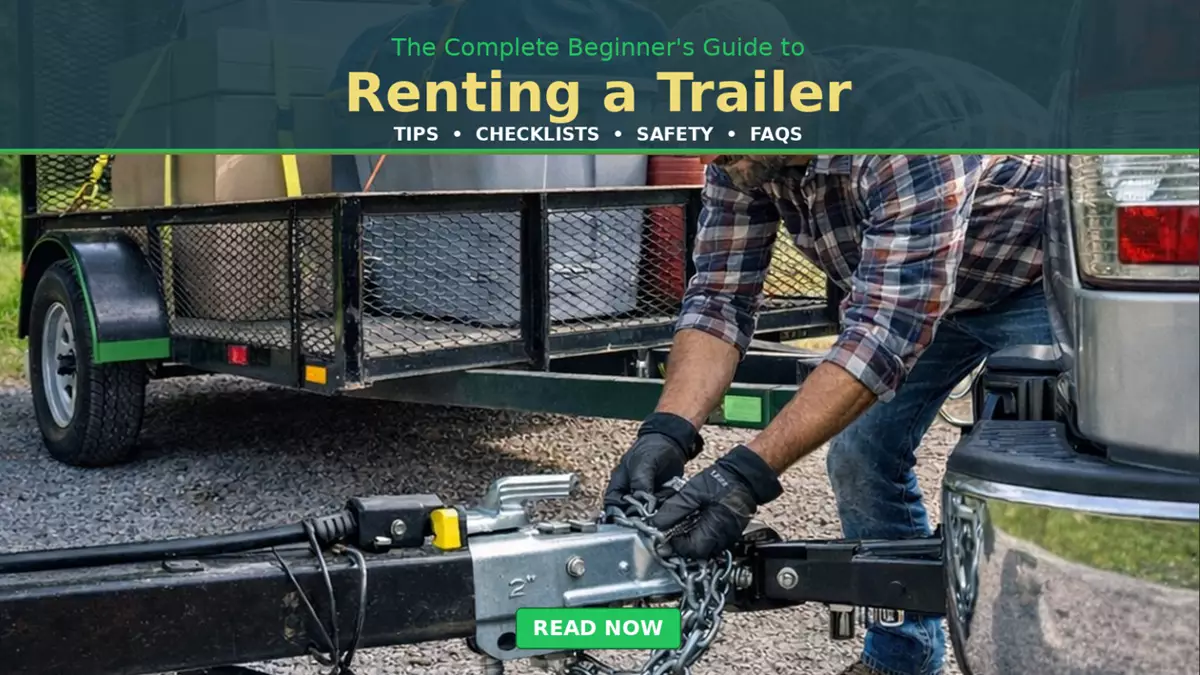
The Complete Beginner’s Guide to Renting a Trailer
 Neighbors Trailer
Feb 5, 2026 509 7 min read Trailer Rental Guid
Renting a trailer for the first time can feel intimidating. Questions about hitch sizes, towing capacity, insurance, and safety often stop people before they even start. The good news is that trailer rentals are actually straightforward once you understand a few core concepts. Whether you’re moving furniture, hauling equipment, transporting a motorcycle, or cleaning out a garage, this beginner’s guide will walk you through everything you need to know to rent and tow a trailer confidently and safely.
Why Rent a Trailer Instead of Buying?
For most people, buying a trailer doesn’t make financial sense. Trailers are often used only a few times per year, and ownership comes with storage, maintenance, registration, and insurance costs. Renting allows you to pay only when you need one and choose the right size for each job.
Key Benefits of Renting
- No long-term storage issues
- Lower upfront cost
- Access to different trailer sizes
- No maintenance or repair responsibilities
- Ideal for occasional use
Common Trailer Types Explained
Different tasks require different trailer styles. Choosing the correct type is the first step toward a successful rental.
| Trailer Type | Best For | Protection Level | Ease of Loading |
|---|---|---|---|
| Utility Trailer | Furniture, yard waste, appliances | Low | Very Easy |
| Enclosed Trailer | Moving, tools, valuables | High | Moderate |
| Car Hauler | Vehicles, ATVs | Medium | Moderate |
| Motorcycle Trailer | Motorcycles, scooters | Medium | Easy |
| Dump Trailer | Construction debris, landscaping | Medium | Easy |
Rule of Thumb:
If weather protection or theft prevention matters, choose enclosed.
If speed and convenience matter, choose utility.
Understanding Trailer Sizes
Trailer dimensions are typically listed as width × length. The most common beginner sizes are:
| Size | Typical Uses | Vehicle Compatibility |
| 4×6 | Small furniture, boxes | Compact SUVs, sedans |
| 5×8 | Studio apartment moves | SUVs, small trucks |
| 6×10 | 1-bedroom moves | SUVs, midsize trucks |
| 7×14 | Large moves, business hauling | Full-size trucks |
When in doubt, go slightly larger rather than too small. Overloading a trailer is unsafe and illegal in many states.
Towing Capacity Basics
Your vehicle has a maximum towing capacity set by the manufacturer. Exceeding it risks damage, loss of control, and legal issues.
Where to Find Towing Capacity
- Owner’s manual
- Driver-side door sticker
- Manufacturer website
- Dealership service department
Simple Capacity Formula
Total Trailer Weight = Trailer Empty Weight + Cargo Weight
Your total trailer weight must remain below your vehicle’s rated towing capacity.
For a complete breakdown of towing limits, tongue weight, braking requirements, and real-world safety examples, see our Ultimate Trailer Towing Safety Guide.
Hitch Classes and Ball Sizes
One of the most confusing areas for beginners is hitch compatibility. Your vehicle’s hitch receiver class determines how much weight you can tow.
Hitch Class Chart
| Hitch Class | Max Trailer Weight | Max Tongue Weight | Typical Vehicles |
| Class I | Up to 2,000 lbs | 200 lbs | Compact cars, small SUVs |
| Class II | Up to 3,500 lbs | 350 lbs | Sedans, midsize SUVs |
| Class III | Up to 8,000 lbs | 800 lbs | Full-size SUVs, trucks |
| Class IV | Up to 10,000 lbs | 1,000 lbs | Heavy-duty trucks |
| Class V | Up to 20,000 lbs | 2,000 lbs | Commercial trucks |
Common Hitch Ball Sizes
- 1-7/8 inch – Small trailers
- 2 inch – Most common size
- 2-5/16 inch – Heavy-duty trailers
- Always verify the trailer coupler size before pickup.
Weight Distribution and Balance
Improper weight placement is one of the leading causes of trailer sway and unsafe towing.
Ideal Weight Distribution
- 60% of cargo weight in the front half
- 40% in the rear half
- Tongue weight = 10–15% of total trailer weight
Too little tongue weight causes sway. Too much causes front-axle lift and poor steering control.
Load Balance Reference
| Load Position | Result |
| Too Far Back | Trailer sway |
| Too Far Forward | Front axle lift |
| Evenly Distributed | Stable towing |
Pre-Rental Checklist
Preparation prevents most beginner mistakes.
Vehicle Readiness
- Towing capacity confirmed
- Hitch receiver installed
- Correct ball size available
- Wiring harness for lights
- Tire pressure checked
- Mirrors adjusted
Rental Planning
- Trailer size selected
- Cargo weight estimated
- Pickup and return times scheduled
- Insurance reviewed
- Tie-down straps planned
Pickup Day Inspection Checklist
- Never skip inspection. It protects both safety and liability.
- Tires inflated and not cracked
- Lights functioning (brake, turn, running)
- Hitch coupler locks securely
- Safety chains intact
- Trailer floor solid
- Ramp or door secure
- Brake controller tested if applicable
- Photos taken before departure
How to Hook Up a Trailer
- Align vehicle with trailer coupler
- Lower coupler onto hitch ball
- Lock the coupler latch
- Attach safety chains in an “X” pattern
- Plug in wiring harness
- Raise trailer jack
- Test lights and brakes
- Do a short forward roll test
- Never tow without chains or lights.
Driving with a Trailer for the First Time
Towing changes acceleration, braking distance, and turning radius.
Beginner Driving Tips
- Accelerate gradually
- Brake earlier than normal
- Take wide turns
- Stay in the right lane on highways
- Drive below speed limits when possible
- Avoid sudden lane changes
- Increase following distance
Backing Up a Trailer
Backing up is the skill that intimidates beginners most.
Quick Technique
- Put one hand at the bottom of the steering wheel
- Move your hand in the direction you want the trailer to go
- Make small adjustments
- Get out and check when unsure
- Practicing in an empty parking lot builds confidence quickly.
Insurance and Liability
Many renters assume their auto insurance automatically covers trailers — this is not always true.
Questions to Ask
- Does my policy cover trailer damage?
- What is my deductible?
- Is cargo covered?
- Is roadside assistance included?
Supplemental coverage is often available and worth considering for first-time renters.
Cost Breakdown of Trailer Rentals
| Expense | Typical Range |
| Daily Rental | $25 – $120 |
| Insurance | $10 – $30 |
| Hitch Ball Purchase | $15 – $40 |
| Tie-Down Straps | $15 – $50 |
| Fuel Increase | 10–30% more than normal |
Even with add-ons, renting is typically far cheaper than ownership.
Safety Risk Snapshot
| Factor | Impact on Risk |
| Overloading | High |
| Incorrect Hitch | High |
| Poor Weight Balance | High |
| Tire Failure | Medium |
| Excessive Speed | Very High |
Preparation dramatically lowers risk.
When to Use a Weight Distribution Hitch
A weight distribution hitch uses tension bars to spread trailer tongue weight across all axles instead of allowing it to press only on the rear of the tow vehicle. This helps keep the vehicle level, improves braking and steering, and most importantly prevents the front axle from lifting, which can otherwise reduce tire traction and vehicle control. They are especially helpful when towing near your vehicle’s upper limits or hauling heavier enclosed trailers.
Common Beginner Mistakes to Avoid
- Guessing hitch ball size
- Ignoring tongue weight
- Forgetting safety chains
- Skipping light tests
- Overloading cargo
- Driving too fast
- Not checking tire pressure
Avoiding these mistakes makes the experience smoother and safer.
Safety and Trust When Renting Through Neighbors Trailer
For first-time renters, safety concerns often extend beyond equipment and driving — they also include payments, communication, and dispute resolution. Renting through Neighbors Trailer includes built-in trust and safety features designed to reduce uncertainty. Listings are reviewed, payments are processed securely through the platform, and automated moderation tools help reduce spam or abusive communication. In the rare case that damage or disagreements occur, structured claims and support processes are available to help both renters and owners reach fair outcomes. These safeguards allow beginners to focus on choosing the right trailer and towing safely rather than worrying about financial or communication risks.
Post-Trip Checklist
- After returning the trailer:
- Remove personal items
- Check for damage
- Clean debris
- Confirm return photos
- Save receipts
- Leave a review if applicable
Documentation protects you from disputes and helps the next renter.
Final Thoughts
Renting a trailer for the first time doesn’t need to be overwhelming. With the right preparation, understanding hitch compatibility, balancing cargo correctly, and following safety checklists, even beginners can tow with confidence. Trailer rentals make moving, hauling, and weekend projects affordable without the cost and commitment of ownership.
The key principles are simple:
Know your vehicle limits.
Choose the right trailer.
Balance the load.
Drive cautiously.
Follow these fundamentals, and your first trailer rental will feel less like a risk and more like a practical, empowering solution for getting things done.