

How Much Does It Cost to Rent a Trailer in 2026? The Complete Price Guide
 Neighbors Trailer .
Feb 24, 2026 1442 15 min read trailer rental cost, trailer rental prices, rent a trailer 20
Whether you're hauling construction debris, moving across town, or transporting equipment for a weekend project, renting a trailer is often far more practical and affordable than buying one outright. But with so many trailer types, rental durations, and providers on the market, understanding the true cost can feel overwhelming.
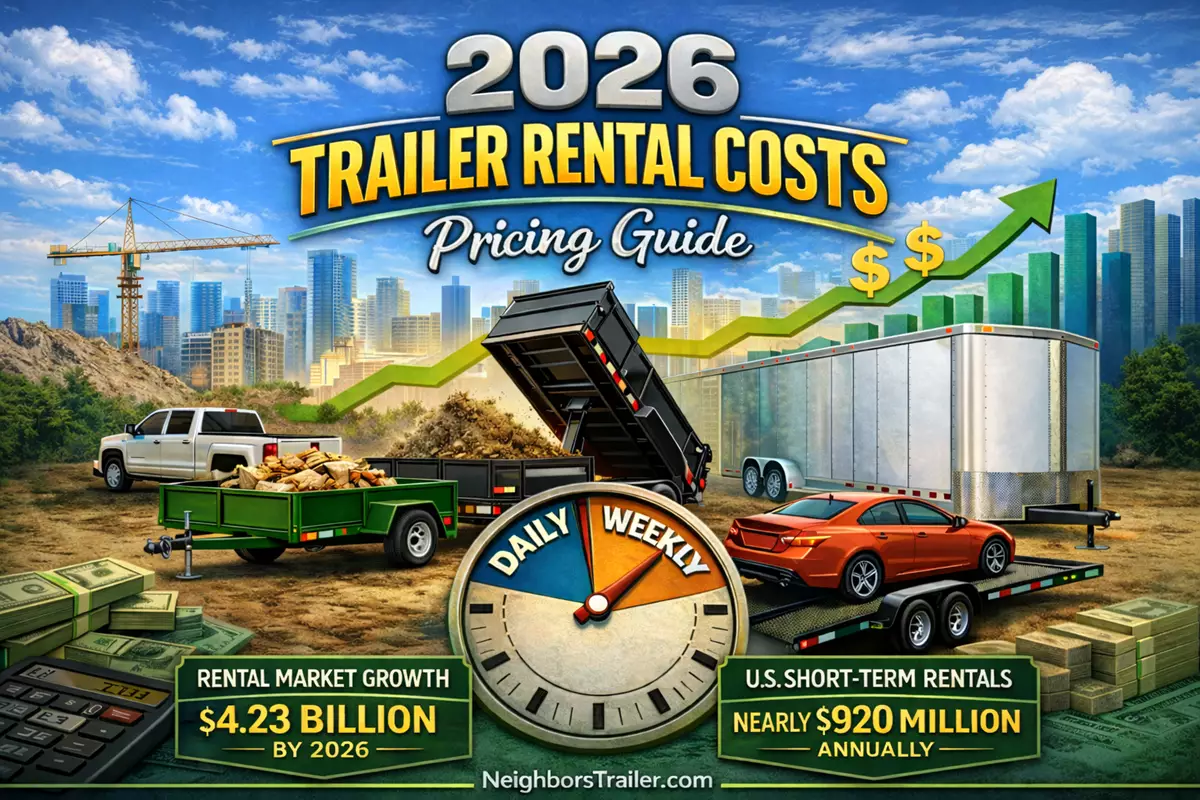
The trailer rental industry is booming. According to Global Growth Insights, the global trailer rentals market reached $4.05 billion in 2025 and is projected to hit $5.92 billion by 2034, growing at a compound annual growth rate (CAGR) of 4.3%. In the United States alone, short-term trailer rentals account for nearly $920 million annually — and that number climbs every year.
Trailer Rental Cost Quick Summary (2026)
- Utility trailers: $50–$150/day
- Dump trailers: $80–$400/day
- Enclosed trailers: $50–$250/day
- Flatbeds: $75–$400/day
- Weekly rentals save 30–50%
- Renting beats buying under 30–40 days/year
In this comprehensive 2026 pricing guide, we break down what you can expect to pay for every major trailer type, compare rental versus buying costs, highlight the factors that influence your final bill, and share insider tips for getting the best deal on your next trailer rental.

2026 Trailer Rental Costs by Type
Trailer rental prices vary dramatically depending on the type, size, and intended use. Below is a detailed breakdown of the most commonly rented trailer types and their average 2026 pricing.
Utility Trailers
Utility trailers are the workhorses of the rental world. These open-top, flatbed-style trailers handle everything from furniture moves to landscaping hauls. In 2026, you can expect to pay between $50 and $75 per day for a basic 5×8 utility trailer, while larger 6×12 models typically run $75 to $150 per day. Their versatility makes them the single most popular rental choice for homeowners and small contractors alike.
Dump Trailers
Dump trailers feature a hydraulic lift mechanism that lets you unload heavy materials like gravel, dirt, and demolition debris with the push of a button. Because of this specialized equipment, dump trailers command higher rental rates. A small 5×8 dump trailer rents for approximately $80 to $150 per day, while larger 6×12 and 7×14 dump trailers range from $150 to $350 per day. For heavy-duty projects, commercial-grade dump trailers can exceed $400 per day.
Enclosed Trailers
Enclosed (cargo) trailers provide weather protection and security for your haul. They are ideal for moving household goods, transporting motorcycles, or hauling trade show equipment. Small enclosed trailers (5×8) start around $50 to $85 per day, while mid-size options (6×12) average $85 to $150 per day. Larger enclosed trailers (8.5×20 and up) used by contractors and event companies can cost $150 to $250+ per day.
Flatbed Trailers
Flatbed trailers are designed for oversized loads, heavy equipment, and vehicles. With no walls or roof, they offer maximum loading flexibility but require proper tie-down equipment. Daily rates for flatbed trailers typically range from $75 to $200, depending on the weight capacity and length. Heavy-duty flatbeds rated for 10,000+ pounds can reach $250 to $400 per day.
Car Hauler Trailers
Purpose-built for vehicle transport, car hauler trailers feature integrated ramps, wheel chocks, and tie-down points. Standard single-car haulers rent for $75 to $125 per day, while multi-vehicle haulers designed for two or more cars can cost $150 to $300 per day.
| Trailer Type | Daily Rate | Weekly Rate | Monthly Rate | Best For |
| Utility (5×8) | $50 – $75 | $200 – $350 | $600 – $1,000 | Light hauling, yard work |
| Utility (6×12) | $75 – $150 | $350 – $600 | $900 – $1,500 | Moving, landscaping |
| Dump (Small) | $80 – $150 | $500 – $700 | $1,200 – $2,000 | Debris removal, gravel |
| Dump (Large) | $150 – $400 | $628 – $900+ | $1,800 – $3,000 | Construction, demolition |
| Enclosed (Small) | $50 – $85 | $250 – $450 | $700 – $1,200 | Moves, motorcycles |
| Enclosed (Large) | $150 – $250 | $600 – $1,000 | $1,500 – $3,000 | Events, contractors |
| Flatbed | $75 – $200 | $350 – $800 | $1,000 – $2,500 | Equipment, oversized loads |
| Car Hauler | $75 – $125 | $350 – $600 | $900 – $1,800 | Vehicle transport |
Download our free 2026 Trailer Rental Pricing Infographic (PDF) to compare rates instantly and scan the QR code to check availability or reserve your trailer online.

Daily vs. Weekly vs. Monthly Rates Compared
One of the smartest ways to reduce your trailer rental cost is to choose the right rental duration. Almost every rental provider offers tiered pricing that rewards longer commitments. Here is how the economics typically work.
A daily rental provides maximum flexibility but carries the highest per-day cost. Weekly rentals, on the other hand, usually save you 30% to 50% compared to the equivalent daily rate multiplied by seven. Monthly rentals push savings even further, often cutting your effective daily rate by 50% to 70% versus a standard day rate.
Pro Tip: If your project will take more than 3 days, a weekly rental almost always costs less than paying the daily rate for each day individually. Always ask your rental provider about multi-day discount breakpoints — many offer a "3-day weekend" special rate.
Real-World Example: Dump Trailer Rental
Consider a 6×12 dump trailer with an average daily rate of $200. If you rent it for a week straight at the daily rate, you'd pay $1,400. However, the typical weekly rate for that same trailer is approximately $628 to $700 — a savings of $700 or more. Over a month, the savings compound even further, with monthly rates often landing between $1,800 and $2,400 instead of the $6,000+ you'd rack up at the daily price.
Factors That Influence Your Rental Price
Your final trailer rental bill depends on more than just the trailer type. Several key variables can push your costs up or pull them down significantly. Understanding these factors puts you in a stronger negotiating position.
Geographic Location
Rental rates vary widely by region. Urban areas with high demand and limited supply — think major metro centers — tend to charge 15% to 30% more than rural or suburban locations. States with booming construction industries (Texas, Florida, Arizona) often see elevated dump trailer rates, while regions with less seasonal demand may offer off-peak discounts.
Trailer Size and Capacity
Larger trailers with higher gross vehicle weight ratings (GVWR) command premium prices. A 5×8 utility trailer costs roughly half of what a 7×16 model costs per day. Weight capacity matters too — trailers rated for 10,000+ pounds typically cost 2 to 3 times more than those rated for 3,500 pounds.
Rental Duration
As detailed in the previous section, longer rental periods yield significant per-day savings. Most providers build in automatic discounts at the 3-day, 7-day, and 30-day breakpoints.
Season and Demand
Peak moving season (May through September) and construction season drive up trailer demand and prices. Renting during off-peak months (November through February) can save you 10% to 25% on the same equipment.
Additional Features
Trailers with hydraulic dumps, electric brakes, ramp gates, toolboxes, or built-in tie-down systems cost more than basic models. These features add convenience and safety, but they also add $25 to $100+ per day to the base rental rate.
Renting vs. Buying a Trailer: The Cost Breakdown
This is the question every contractor and homeowner eventually asks: should I rent or buy? The answer depends entirely on how frequently you use a trailer. The data below paints a clear picture.
| Factor | Renting | Buying |
| Upfront Cost | $0 (pay per use) | $3,000 – $18,000+ |
| Annual Maintenance | $0 (provider's responsibility) | $500 – $1,500/year |
| Insurance | Often included or $15–$30/day | $200 – $800/year |
| Storage | Not needed | $50 – $200/month |
| Registration & Taxes | Not applicable | $75 – $300/year |
| Depreciation | None | 15% – 25% per year |
| Flexibility | Different trailer each time | Limited to what you own |
| Break-Even Point | Typically 40 – 60 rental days per year | |
The Break-Even Calculation
Take a mid-range enclosed trailer that costs $7,500 to purchase. Adding annual insurance ($400), maintenance ($750), registration ($150), and storage ($1,200/year) brings your first-year ownership cost to approximately $10,000. If the equivalent rental costs $100 per day, you would need to use the trailer for at least 100 days per year before buying becomes more expensive than renting in year one. By year two (subtracting the purchase price), the break-even drops to roughly 25 rental days. For most homeowners who need a trailer fewer than 20 days per year, renting is the smarter financial choice.
Bottom Line: If you use a trailer fewer than 30–40 days per year, renting saves you thousands of dollars and eliminates the hassle of maintenance, storage, and depreciation. For frequent users (50+ days per year), buying starts to make financial sense within 2–3 years.
Trailer Rental Market Trends in 2026
The trailer rental landscape is evolving rapidly. Understanding where the market is headed helps you time your rentals better and anticipate pricing shifts.
Prices Are Rising — But Moderately
According to Equipment Finance News, the rental price index for trucks, trailers, and RVs is forecast at 124.3 by August 2026, representing a 1.9% year-over-year increase. Lease prices are climbing faster at 3.1% YoY, driven by tariff impacts and potential Federal Reserve interest rate changes. While prices are going up, the increases remain manageable compared to the 8–12% spikes seen in 2022–2023.
Digital Booking Is Exploding
The industry is undergoing a digital transformation. A remarkable 46% of logistics firms are increasing investment in digital fleet solutions, while 44% of rental providers have adopted telematics for real-time trailer tracking. Online booking platforms now account for a growing share of all trailer rental transactions, making price comparison easier than ever.
Short-Term Rentals Dominate
Short-term rentals (less than 30 days) hold 58.8% of the market, valued at $2.38 billion in 2025 and growing at a 4.6% CAGR. This segment is being fueled by the gig economy, flexible contracting, and the rise of "asset-light" business models where companies prefer renting over owning equipment.
Hidden Costs to Watch Out For
The sticker price on a trailer rental listing rarely tells the full story. Savvy renters know to ask about these commonly overlooked charges before signing a rental agreement.
Damage Waivers and Insurance
Most rental companies offer (or require) a damage waiver ranging from $15 to $30 per day. While optional in some cases, skipping coverage means you're personally liable for any damage to the trailer during your rental period — which can amount to thousands of dollars. Always confirm whether your auto insurance or credit card already provides coverage before paying extra.
Mileage Fees
Some providers charge per-mile fees of $0.25 to $0.75 per mile in addition to the flat daily rate. If you're hauling long distances, these charges add up quickly. Look for providers that offer unlimited mileage or set a high mileage cap.
Late Return Penalties
Returning a trailer even a few hours late can trigger half-day or full-day overtime charges, often at 1.5 times the standard daily rate. Build buffer time into your project schedule to avoid this costly surprise.
Cleaning and Fuel Fees
Dump trailers and enclosed trailers may incur cleaning fees of $50 to $150 if returned with excessive debris. Additionally, some providers charge fuel or equipment-use surcharges for trailers with powered hydraulic systems.
Delivery and Pickup
If you can't tow the trailer yourself, delivery and pickup fees range from $50 to $200+ depending on distance. This can sometimes be negotiated, especially on longer rentals. On Trailer Bid, delivery and return are quoted inside the one complete total each supplier gives for the whole rental, so you can see the delivered cost before you commit, with taxes added at checkout where they apply.
| Hidden Cost | Typical Charge | How to Avoid It |
| Damage Waiver | $15 – $30/day | Check if your auto insurance covers rentals |
| Mileage Overage | $0.25 – $0.75/mile | Choose unlimited mileage plans |
| Late Return | 1.5× daily rate | Return early; build in buffer time |
| Cleaning Fee | $50 – $150 | Sweep out and rinse before returning |
| Delivery/Pickup | $50 – $200+ | Pick up and return the trailer yourself |
| After-Hours Dropoff | $25 – $75 | Return during business hours |
How to Save Money on Your Next Trailer Rental
Armed with the data above, here are proven strategies to minimize your trailer rental costs without sacrificing quality or reliability.
Book in Advance
Reserving your trailer 1–2 weeks ahead of your project locks in current pricing and ensures availability. Last-minute rentals during peak season can cost 20% to 40% more due to limited supply, if the trailer you need is even available at all.
Choose the Right Size
Renting a trailer that's larger than necessary means paying a premium you don't need. Measure your load, estimate the weight, and match it to the smallest trailer that safely handles the job. Upsizing "just in case" can add $50 to $150 per day to your bill.
Rent During Off-Peak Periods
If your project timeline is flexible, scheduling your rental during fall or winter months (October through February) often yields the best rates. Weekday rentals may also be cheaper than weekend pickups.
Compare Multiple Providers
Prices can vary by 30% to 50% between providers in the same area. National chains like U-Haul and Home Depot offer competitive base rates, but local rental companies — like Neighbors Trailer — often provide better value through personalized service, flexible terms, and lower overhead costs.
Ask About Package Deals
Many rental providers offer bundled pricing for trailer plus accessories (tie-downs, tarps, dollies). These packages can save 10% to 20% compared to renting each item separately.
Leverage Loyalty and Referral Programs
Repeat customers frequently receive preferred pricing. Ask your rental provider about loyalty discounts, referral bonuses, or seasonal promotions that can trim your total cost.
Frequently Asked Questions
How old do you have to be to rent a trailer?
Most rental companies require renters to be at least 18 years old with a valid driver's license. Some providers set the minimum at 21 for larger trailers or those requiring a special towing setup. Always verify age requirements with your specific rental provider before booking.
Do I need a special license to tow a trailer?
In most states, a standard driver's license is sufficient for towing trailers under 10,000 pounds GVWR (combined weight of trailer plus cargo). For heavier loads, some states require a non-commercial Class A or Class B license. Check your state's DMV guidelines to confirm.
What size vehicle do I need to tow a trailer?
Your vehicle's towing capacity must exceed the fully loaded weight of the trailer. As a general rule, mid-size SUVs and pickup trucks can handle most utility and enclosed trailers up to 5,000–7,000 pounds. For dump trailers and heavy flatbeds, a full-size truck with a tow package is typically required.
Is trailer rental insurance worth it?
If your personal auto insurance or credit card doesn't cover rental trailers (many don't), purchasing the damage waiver is a smart investment. A single incident could cost thousands in repairs, while the waiver adds only $15–$30 per day to your total.
Can I rent a trailer one-way?
Some national providers offer one-way trailer rentals, but availability varies by location and trailer type. One-way rentals typically carry a premium of $50 to $200+ on top of the standard rate. Local providers like Neighbors Trailer may offer more flexible pickup and drop-off arrangements — always ask.
How far in advance should I book?
For peak season (May–September), booking 1–2 weeks in advance is recommended. During off-peak months, 3–5 days of lead time is usually sufficient. Major holidays and long weekends require even earlier reservations.
The Bottom Line
Trailer rental costs in 2026 range from as little as $50 per day for a basic utility trailer to $400+ per day for a commercial-grade dump trailer. The key to getting the best value lies in choosing the right trailer type and size for your specific needs, opting for weekly or monthly rates when possible, booking during off-peak periods, and comparing prices across multiple providers.
The trailer rental market is projected to reach $4.23 billion globally in 2026, reflecting steady growth driven by e-commerce expansion, construction demand, and the shift toward flexible, asset-light business models. With rental prices increasing at a modest 1.9% year over year, now is still an excellent time to rent rather than buy — especially for homeowners and small businesses that need a trailer fewer than 30–40 days per year.
At Neighbors Trailer, we make renting easy with transparent pricing, well-maintained equipment, and the local expertise to match you with the perfect trailer for your project. Whether you need a utility trailer for a weekend move, a dump trailer for a landscaping overhaul, or an enclosed trailer for cross-town hauling, we've got you covered.
How to Estimate Your Trailer Rental Cost in 60 Seconds
- Identify trailer type
- Estimate rental duration
- Add potential insurance
- Confirm mileage policy
Check real-time availability and reserve your trailer in under 3 minutes. Visit NeighborsTrailer.com today and find the right trailer at the right price.