Learn How to Install a Winch on Your Flatbed Trailer Rental
 Neighbors Trailer
Sep 15, 2023 13389 10 min read how to install a winch, trailer wi
What Is a Trailer Winch and Why Should You Install One?
A winch is a mechanical or electric device that uses a cable, rope, or chain wound around a rotating drum to pull heavy loads onto a trailer. While winches are standard equipment on boat trailers, they are equally valuable on flatbed trailers used for hauling vehicles, equipment, ATVs, and other heavy cargo. A winch removes the guesswork and physical strain from loading by giving you controlled, steady pulling power whenever you need it.
Installing a winch on your flatbed trailer rental makes it more versatile and more attractive to renters. Whether you are loading a disabled car, a riding lawnmower, or heavy construction equipment, a properly installed winch handles the job safely and efficiently.
Choosing the Right Winch for Your Flatbed Trailer
Before purchasing a winch, match its rated capacity to the loads you plan to pull. The general rule is to select a winch rated at 1.5 times the gross vehicle weight (GVW) of the heaviest item you will load. Extra capacity reduces motor strain, extends the winch lifespan, and provides a safety margin for inclines and difficult loading conditions. The chart below shows recommended minimum winch ratings by load type.
Recommended minimum winch capacity (lbs) by load type. Always choose a winch rated at least 1.5x the weight of your heaviest intended load.
Not sure what your specific load actually weighs? Match your cargo to a calculator for the exact number: our Car Hauler calculator looks up vehicle weight by year, make, and model; the Equipment Trailer calculator covers skid steers, tractors, and construction equipment; and the ATV/UTV calculator handles powersports loads. Get your load's real weight, multiply by 1.5, and you have the winch rating you actually need.
| Vehicle or Load Type | Typical GVW | Recommended Winch Rating | Rope Type |
| ATV or UTV | 1,000 - 2,000 lbs | 3,000 lbs minimum | Synthetic or steel |
| Riding lawnmower or small equipment | 500 - 1,500 lbs | 2,500 lbs minimum | Synthetic |
| Passenger car | 3,000 - 5,000 lbs | 7,500 lbs minimum | Steel cable |
| Pickup truck or van | 5,000 - 6,000 lbs | 9,000 lbs minimum | Steel cable |
| Heavy equipment or machinery | 6,000 - 8,000 lbs | 12,000 lbs minimum | Steel cable |
Tools and Materials You Will Need
Gather these items before starting the installation:
- The winch unit and mounting hardware (typically included in the kit)
- A 3/8-inch drill bit and drill
- A ratchet set with 1/2-inch drive and appropriate sockets
- A wiring harness or power cable (12-gauge minimum for most winches)
- A battery, power pack, or wired connection to your tow vehicle
- Thread-locking compound
- A tape measure and marker
- Safety glasses and gloves
Step-by-Step Winch Installation Guide

Step 1: Prepare the Winch Plate
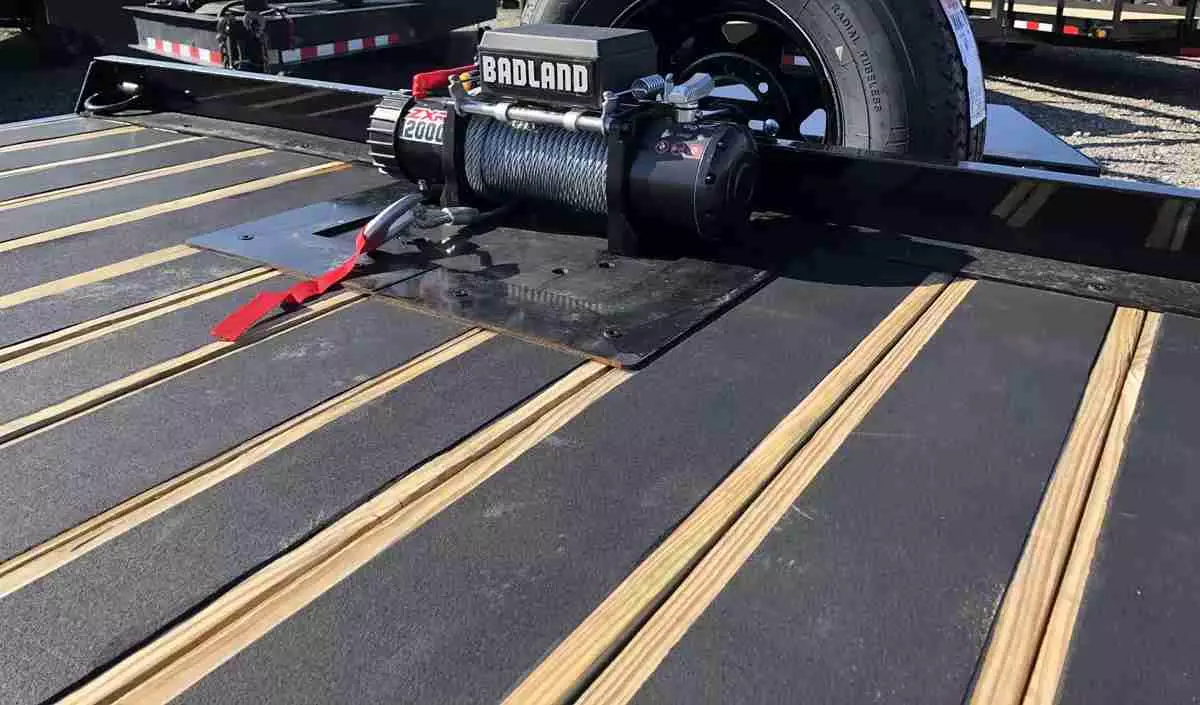
The winch must mount to a steel winch plate welded firmly to the trailer frame. Never mount a winch to wood decking or unsupported material; the plate is the only approved mounting surface. If your flatbed does not have a pre-installed winch plate, you will need a qualified welder to fabricate and attach one before proceeding. Position the winch as close to the front of the trailer as possible and as low as the frame allows to keep the pull angle flat. A flat pull angle maximizes winch efficiency. If your trailer has side rails, you may need to cut a cable slot for the winch line to pass through.
Step 2: Mark the Mounting Holes
Use a tape measure to find the center of the trailer from side to side and mark it on the winch plate. Take the template from the winch kit and center it on your mark. Trace the outline and mark all four bolt hole locations precisely. Accurate hole placement is critical: holes that do not align with the winch base will require a new plate. Take your time on this step.
Step 3: Drill the Mounting Holes
Start with a small pilot hole at each marked location, then follow with the 3/8-inch bit to drill the final holes. Hold the drill perpendicular to the plate throughout. Clean up any metal burrs around the holes before placing the winch.
Step 4: Bolt the Winch to the Plate
Set the winch on the winch plate and align it with the drilled holes. Insert a bolt through each hole and tighten firmly with the ratchet set. A properly secured winch should have zero play in any direction after tightening. Apply thread-locking compound to each bolt before final tightening to prevent vibration from loosening the hardware over time.
Step 5: Route the Wiring
Route the power cable from the winch back along the trailer frame toward the power source. Use zip ties or cable clamps to secure the wiring at regular intervals and keep it away from moving parts, sharp edges, and heat sources. Loose wiring that contacts the trailer frame will chafe and eventually short. For electric winches, route the cable to a trailer battery box or use a weatherproof connector to tap into your tow vehicle's power supply.
Step 6: Connect the Power Source
An electric winch draws significant amperage under load. Connect the positive cable to the positive terminal and the negative cable to a solid grounding point on the trailer frame. If using a separate trailer battery, install a weatherproof battery box and use a trickle charger between uses to keep it fully charged. For occasional use, a portable jump-start pack with a 12V output can power a winch that operates for brief periods.
Step 7: Spool and Test the Cable
Feed the cable or synthetic rope through the fairlead and spool at least five wraps onto the drum before connecting the hook. Test the winch under light load first, using a light object to confirm the motor, cable, and power connection all work correctly. Then test at a moderate load before your first real-use scenario. Check all bolts once more after the first test pull and re-torque anything that has moved.

Winch Safety Rules for Flatbed Trailers
Use the Free-Spool Feature Correctly
Every winch has a free-spool lever that lets you extend the cable by hand without engaging the motor. Always re-engage the motor drive before applying any load. Using the winch under load in free-spool mode can damage the drum and create an uncontrolled release.
Never Wrap the Cable Directly Around a Load
Wrapping a winch cable directly around a vehicle axle or frame rail cuts and frays the cable under tension. Always use a dedicated winch strap or D-ring shackle with the hook to distribute the load properly.
Keep Clear of the Cable Under Tension
A snapping winch cable stores significant energy and can cause serious injury. Keep bystanders at least 1.5 times the cable length away from the line when the winch is under load. Draping a heavy blanket over the cable mid-span dampens any recoil if it breaks.
Inspect the Cable Before Every Use
Check the entire cable length for fraying, kinks, corrosion, or damage before each use. Replace any cable showing visible wear before putting it under load. For more on keeping all trailer components in top shape, see our guide on preparing your flatbed trailer for safe towing in the spring.
Adding a Winch to Your Neighbors Trailer Listing
A winch is one of the most practical upgrades you can make to a flatbed trailer rental. Renters looking to load vehicles or heavy equipment will specifically search for winch-equipped trailers, which means a higher booking rate and the ability to command a higher daily rate. Check the Rental Cost calculator to see what winch-equipped flatbeds are renting for near you and set your rate with confidence. When you list your trailer on Neighbors Trailer, highlight the winch capacity and type in your description so renters can filter and find your listing easily.
Protecting your trailer investment is equally important. NT Protect coverage is available for a few dollars per day and provides financial protection against damage claims during a rental. Whether the load shifts during transport or equipment damage occurs during loading, NT Protect gives you confidence to accept more bookings without worrying about a single incident erasing your earnings. You can learn more about towing mistakes to avoid when using a flatbed trailer rental to help your renters use equipment safely.
Frequently Asked Questions
Can I install a winch on any flatbed trailer?
You can install a winch on most flatbed trailers as long as there is a steel winch plate welded securely to the trailer frame. If your trailer does not have a pre-installed winch plate, a welder will need to fabricate and attach one first. Never mount a winch to wood decking or unsupported material.
How long does a winch installation take?
For someone with basic mechanical skills and all supplies on hand, installation typically takes two to four hours. The wiring and power source setup is usually the most time-consuming part. If your trailer already has a winch plate in place, the process is considerably faster.
What is better, synthetic rope or steel cable?
Synthetic rope is lighter, easier to handle, and safer if it snaps because it does not store kinetic energy like steel cable does. Steel cable is more durable, resists abrasion better, and costs less. For heavy hauling with vehicles or machinery, steel cable is the more common and durable choice.
Do I need a separate battery for an electric winch?
For occasional light loads, tapping into your tow vehicle's electrical system is acceptable. For frequent or heavy use, a dedicated trailer battery is strongly recommended. A winch pulling a full-size vehicle can draw 300 to 400 amps, which will drain a tow vehicle battery quickly and potentially damage the charging system if the winch operates for extended periods. A separate battery on the trailer provides reliable, independent power.
How do I maintain a trailer winch?
Wipe down the drum and cable after each use to remove dirt and moisture. Lubricate the drum shaft and gear mechanism with light machine oil every few months. Keep the battery charged during storage and inspect wiring connections periodically for corrosion.
Conclusion
Installing a winch on your flatbed trailer rental is a practical upgrade that expands what your trailer can do and who will want to rent it. With the right winch, a solid mounting plate, properly routed wiring, and a reliable power source, you will be able to load any vehicle or heavy piece of equipment safely and efficiently. Take the time to install it correctly once and it will serve you reliably for years of rentals.
Related Articles
- Towing Capacity Explained: GVWR, GCWR & Payload
- Trailer Towing Laws by State (2026 Guide): Speed Limits, Brake Requirements & Weight Rules
- Ultimate Trailer Towing Safety Guide
- Tips for Trailer Owners | Everything You Must Know About Trailer Winches
Content Update: This guide was substantially updated in March 2026 with expanded towing safety guidance, improved equipment recommendations, and additional resources to help trailer owners tow safely and confidently.