Tips for Trailer Owners | Everything You Must Know About Trailer Winches
 Neighbors Trailer
Feb 22, 2023 2693 8 min read trailer winches
A trailer winch is one of the most practical accessories you can add to your setup. Whether you haul boats, ATVs, motorcycles, or heavy equipment, a quality winch makes loading and unloading faster, safer, and far less physically demanding. For trailer owners who rent their rigs on Neighbors Trailer, a winch can also make your listing more attractive to renters who want a hassle-free experience.
This guide covers everything you need to know about trailer winches, from the different types available to sizing, installation, maintenance, and real-world cost comparisons that help you pick the right one for your needs.
What a Trailer Winch Does and Why It Matters
A trailer winch is a mechanical device mounted at the front of your trailer that uses a cable, rope, or strap wound around a drum to pull heavy loads onto the trailer bed. The winch provides controlled pulling force so you can load items that would be impossible or dangerous to push, drag, or carry by hand.
Without a winch, loading a 3,000-pound boat or a disabled vehicle onto a flatbed requires additional manpower, a secondary vehicle, or risky improvisation. With a properly rated winch, one person can handle the job safely. That combination of safety and convenience is why winches are standard equipment on boat trailers and increasingly popular on flatbed and utility trailers used for hauling vehicles and equipment.
Manual vs. Electric Trailer Winches
Trailer winches fall into two broad categories: manual and electric. Each has clear strengths depending on how frequently you use it and how much weight you need to pull.
Manual Winches
Manual winches use a hand crank connected to a gear system that multiplies your effort. You turn the handle, the gears rotate the drum, and the cable or strap pulls the load forward. Manual winches are simple, affordable, and require no electrical connection. They work reliably in any weather and have very few parts that can fail.
The downside is effort. Cranking a 2,000-pound boat up a trailer ramp takes real physical work, especially on a steep incline. For occasional use with lighter loads, manual winches are perfectly adequate. For frequent use or heavy loads, they become exhausting quickly.
Electric Winches
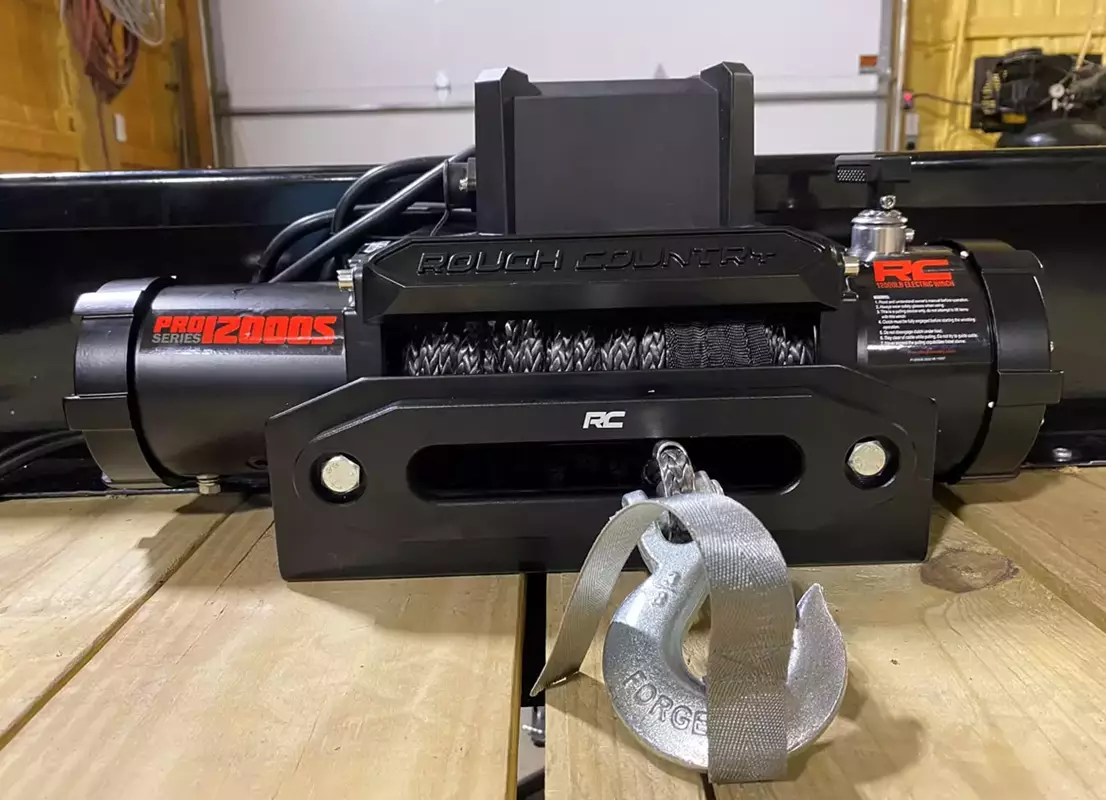
Electric winches use a 12-volt DC motor powered by your tow vehicle's battery. Press a button or flip a switch, and the motor does the pulling for you. Electric winches handle heavy loads effortlessly and reduce loading time significantly. Most models include a free-spool mode that lets you unspool cable quickly without running the motor.
Electric winches cost more upfront and require wiring to your trailer's electrical system or directly to the tow vehicle battery. They also add weight and need periodic maintenance on the motor, solenoid, and electrical connections. Despite these trade-offs, electric winches are the better choice for anyone who loads and unloads frequently or works with payloads above 1,500 pounds.
Choosing the Right Winch Capacity
Selecting the correct winch size is critical for both safety and performance. The general rule is to choose a winch rated at least 1.5 times the weight of the heaviest load you plan to pull. This safety margin accounts for friction, incline angle, and the extra force needed to start a stationary load moving.
For example, if you regularly load a 2,000-pound boat, you need a winch rated for at least 3,000 pounds. If you haul a 4,000-pound vehicle onto a flatbed, aim for a 6,000-pound winch or higher. Undersizing a winch creates a safety hazard and drastically shortens its lifespan.
Trailer Winch Comparison by Type
The table below compares key specifications across the most common trailer winch categories to help you match the right winch to your hauling needs.
| Winch Type | Capacity Range | Avg. Price | Power Source | Best For |
| Manual (Single Speed) | 600 - 2,500 lbs | $25 - $80 | Hand crank | Light boats, PWC, small ATVs |
| Manual (Two Speed) | 1,500 - 3,500 lbs | $50 - $150 | Hand crank | Mid-size boats, motorcycles |
| Electric (Standard) | 2,000 - 6,000 lbs | $150 - $400 | 12V DC battery | Boats, vehicles, heavy equipment |
| Electric (Heavy Duty) | 6,000 - 12,000 lbs | $400 - $1,200 | 12V DC battery | Large boats, cars, construction gear |
NeighborsTrailer.com
How to Install a Trailer Winch
Installing a manual winch is straightforward. Most bolt directly to a winch stand or mounting plate at the front of the trailer using four bolts. Make sure the mounting surface is strong enough to handle the full rated load of the winch, because the mounting point absorbs all the pulling force.
Electric winch installation adds a wiring step. You will need to run power cables from the winch motor to your tow vehicle's battery or to a dedicated trailer battery. Use properly rated wiring (typically 8-gauge or heavier for winches above 3,000 pounds) and include an inline circuit breaker or fuse to protect against shorts. Route wiring away from moving parts, sharp edges, and heat sources. If you are not comfortable with electrical work, a trailer shop can complete the wiring in under an hour. You can also find detailed walkthroughs in our guide on upgrading and improving your trailer setup.
Winch Maintenance Tips for Longevity
A well-maintained winch can last a decade or more. Inspect the cable or strap before every use for fraying, kinks, or wear spots. Replace the cable immediately if you find damage, because a snapped cable under load is extremely dangerous.
For manual winches, lubricate the gear mechanism and pawl at least twice a year with marine-grade grease. For electric winches, check all electrical connections for corrosion quarterly, especially if the trailer is exposed to rain or saltwater. Test the free-spool clutch regularly to make sure it engages and disengages smoothly. After saltwater exposure, rinse the entire winch with fresh water and re-lubricate moving parts.
If you list your trailer for rent on Neighbors Trailer, keeping the winch in top working order is part of being a responsible owner. Every booking on the platform automatically includes NT Protect, mandatory coverage applied at the time of rental for just a few dollars per day with a $500 deductible. Maintaining your equipment well reduces the chance of issues during rentals and keeps your listing ratings high.
Common Winch Problems and How to Fix Them
The most frequent issue with manual winches is a slipping pawl, which means the gear does not hold position under load. This usually means the pawl spring is worn or the gear teeth are damaged. Replacing the pawl spring is a quick, inexpensive fix. If the gear teeth are stripped, the winch needs replacement.
Electric winches most commonly suffer from corroded electrical connections, which cause intermittent operation or complete failure. Clean the terminals with a wire brush, apply dielectric grease, and ensure all ground connections are solid. If the motor runs but the drum does not turn, the clutch mechanism may need adjustment or the internal brake disc may be worn. For winches that refuse to start at all, check the solenoid and remote switch before assuming the motor has failed.
Frequently Asked Questions
Can I use a trailer winch to pull my trailer out of mud or sand?
Trailer winches are designed for loading cargo onto the trailer bed, not for vehicle recovery. They are mounted to pull forward along the trailer, not backward or sideways. Using a trailer winch for recovery can damage the mounting hardware and void the winch warranty. Use a dedicated recovery winch mounted on your tow vehicle for extraction situations.
How long does an electric trailer winch battery last during use?
Most electric trailer winches draw between 50 and 200 amps during operation. A standard automotive battery can support multiple loading cycles before needing a recharge, but extended continuous use will drain the battery. Keep your tow vehicle running while operating the winch to maintain battery voltage, especially with heavier loads.
Do I need a winch if my trailer has a ramp?
A ramp makes loading easier, but a winch makes it safe. Ramps reduce the incline angle, but you still need a way to pull disabled vehicles, heavy equipment, or boats that cannot drive themselves onto the trailer. Even with a ramp, a winch gives you complete control over the loading process.
What is the difference between a winch cable and a winch strap?
Steel cables are stronger and more durable but can kink, rust, and cause injury if they snap under tension. Synthetic straps are lighter, easier to handle, and safer if they break, but they wear faster from UV exposure and abrasion. For boat trailers and general utility use, synthetic straps are the more popular choice. For heavy-duty commercial applications, steel cables remain the standard.
Related Articles
- How to Properly Load a Motorcycle on Your Trailer
- Heavy Hauling Safety Tips Every Trailer Owner Should Know
- Common Towing Mistakes to Avoid with a Flatbed Trailer
- Loading a Vehicle on a Car Hauler for Safe Towing
Content updated March 2026