Towing Mistakes to Avoid When Pulling a Trailer
 Neighbors Trailer
Sep 12, 2023 1355 7 min read flatbed trailer rental
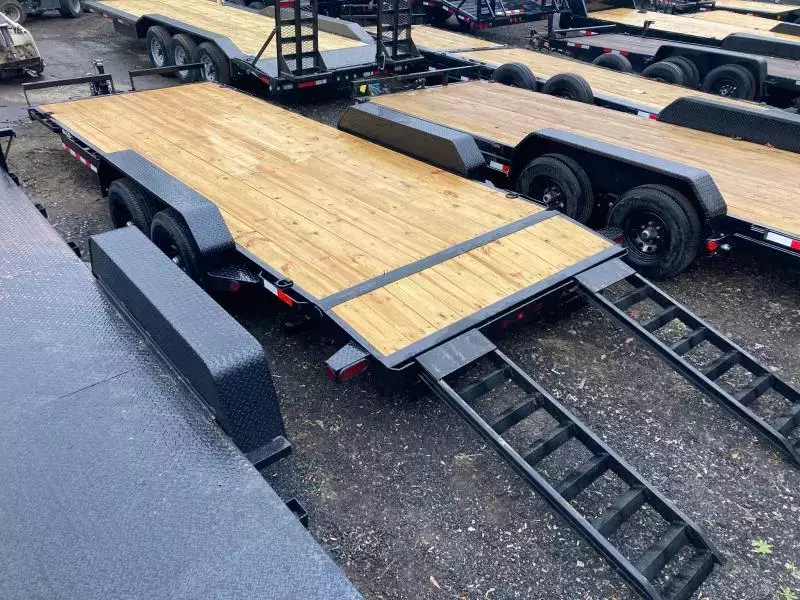
Flatbed trailer rentals are incredibly versatile - whether you're hauling a tractor, a loaded pallet of materials, or a piece of construction equipment, a flatbed gets the job done. But flatbeds are also one of the most misused trailer types because their open design makes people underestimate the hazards of improper loading and towing. This guide walks through the most common and costly mistakes renters make - and how to avoid every one of them. Browse available flatbed trailers near you at Neighbors Trailer.
Mistake #1: Overloading Beyond the GVWR
The most dangerous mistake you can make with a flatbed rental is exceeding its Gross Vehicle Weight Rating (GVWR). The GVWR is the maximum total weight the trailer is designed to carry, including its own weight. Overloading stresses the axles, blows tires, compromises braking, and can cause trailer frame failure.
How to avoid it: Always weigh your load before you rent, or estimate conservatively. Subtract the trailer's empty weight from the GVWR to get your actual payload capacity. When in doubt, rent a heavier-rated trailer than you think you need.
Mistake #2: Ignoring Tongue Weight Limits
Tongue weight - the downward force the trailer exerts on your hitch - must fall within a specific range. Too little tongue weight (under 10% of trailer weight) causes the trailer to sway dangerously at highway speeds. Too much (over 15% of trailer weight) pushes the rear of your truck down, lifting the front wheels and reducing steering control.
Poor load placement is the most common cause of incorrect tongue weight. Loading everything toward the rear of the deck makes the trailer tail-heavy; loading too far forward overloads your hitch.
Common Flatbed Towing Mistakes and Their Consequences
| Mistake | What Goes Wrong | How to Prevent It |
| Exceeding GVWR | Axle failure, tire blowout, frame damage | Weigh load, check trailer capacity plate |
| Incorrect tongue weight | Trailer sway (too light) or front-axle lift (too heavy) | Place 60% of load weight forward of axles |
| Inadequate tie-down straps | Load shifts, falls off deck, strikes other vehicles | Use straps rated to 1/3 of load weight each; use 4 minimum |
| Wrong strap anchor points | Straps slip or D-rings pull out | Use designated tie-down D-rings, not frame holes |
| No wheel chocks on equipment | Wheeled equipment rolls during braking | Always chock all four wheels on loaded equipment |
| Skipping brake controller setup | Extended stopping distance, potential collision | Calibrate brake controller before every trip |
| Not checking trailer lights | Rear-end collisions, traffic violations | Walk around and verify all lights before leaving |
| Driving at normal highway speed | Increased sway, tire heat, blowout risk | Maintain 55â65 mph maximum when towing |
| Ignoring load height | Bridge strikes, overpass collisions | Measure load height; avoid routes with low clearances |
Mistake #3: Using the Wrong Tie-Down Straps
Ratchet straps are the standard for securing loads on flatbeds, but many renters use straps that are undersized, worn, or improperly rated for their load. The rule of thumb: the combined Working Load Limit (WLL) of all your straps must equal at least half the weight of your cargo. For a 4,000-lb load, use straps with a combined WLL of at least 2,000 lbs.
Tie-down strap WLL by strap width:
| Strap Width | Typical WLL (per strap) | Typical Breaking Strength | Best Use |
| 1-inch ratchet strap | 500 lbs | 1,500 lbs | Light cargo, motorcycles, equipment covers |
| 1.5-inch ratchet strap | 1,000 lbs | 3,000 lbs | ATVs, light construction materials |
| 2-inch ratchet strap | 3,300 lbs | 10,000 lbs | Standard flatbed loads, vehicles, equipment |
| 3-inch ratchet strap | 5,400 lbs | 16,200 lbs | Heavy equipment, large machinery |
| 4-inch ratchet strap | 6,000-10,000 lbs | 20,000+ lbs | Extremely heavy or awkward loads |
Mistake #4: Not Adjusting Mirrors Before Departure
A flatbed trailer is typically wider and longer than your truck's natural field of vision. If you haven't adjusted your mirrors to account for the trailer, you'll have blind spots on both sides of the deck. This is especially dangerous when changing lanes or backing into a driveway or job site. Before you move an inch, adjust both side mirrors downward and outward until you can see the rear corners of the trailer clearly.
Mistake #5: Making Wide Turns Too Tightly
Flatbed trailers don't follow the same arc as your truck in turns. The trailer's rear wheels cut the corner tighter than you expect - a phenomenon called "off-tracking." On a 20-ft flatbed, the rear wheels can cut 3-5 feet inside your truck's turning arc. If you turn too tightly in a parking lot or intersection, you risk mounting curbs, clipping poles, or running over pedestrians walking in the crosswalk behind the trailer.
Fix: Pull further through intersections before initiating your turn. Watch your trailer's inside rear corner on turns using your mirrors.
Mistake #6: Not Inspecting the Rental Trailer Before Use
Accepting a trailer without inspection is a significant financial and safety risk. If the trailer has pre-existing damage and you haven't documented it, you may be held responsible when you return it. Safety issues such as worn tires, damaged lights, bent D-rings, or weak ramp hinges can also put you and other drivers at risk.
Before you accept any flatbed rental, conduct a thorough pre-use inspection and photograph any existing damage. Review the Neighbors Trailer guide on trailer inspections: what you need to know to walk through every checkpoint systematically.
Protecting Yourself from Unexpected Costs with NT Protect
Even experienced operators make mistakes, and accidents on flatbeds can be expensive. NT Protect - available through Neighbors Trailer for a few dollars per day - provides damage coverage with a $500 deductible. It protects you from paying out of pocket for trailer damage that occurs during your rental period.
Frequently Asked Questions
How many tie-down straps do I need on a flatbed trailer?
Federal law (FMCSA regulations for commercial carriers) requires a minimum of 4 tie-downs for most cargo over 10 feet long and 1,100 lbs. For personal use rentals, follow the same standard: at minimum, 4 straps, with the combined WLL totaling at least half the cargo weight. For vehicles, use 4 straps in a diamond pattern securing each wheel basket or frame point.
Can I use a flatbed trailer in the rain?
Yes, but wet flatbeds are slippery. Wheeled equipment can slide, and tie-down straps loosen more quickly under vibration from wet road surfaces. In rainy conditions, add extra straps, check strap tension every hour of driving, and consider tarping loads that are sensitive to water damage. Drive at reduced speeds - wet roads and a loaded flatbed require significantly more stopping distance.
Is it legal to haul a vehicle on a flatbed rental without wheel straps?
No. Towing a vehicle on a flatbed without proper wheel net straps or axle straps is both illegal and extremely dangerous. The vehicle can roll forward, backward, or off the trailer during sudden braking or cornering. Always use four dedicated vehicle wheel basket straps or frame straps when loading any vehicle onto a flatbed.
Do I need a permit to haul oversized loads on a rented flatbed?
Yes. If your load extends beyond 8.5 feet wide, 14 feet tall, or varies in length restrictions by state (typically 48-65 feet combined), you'll need an oversize load permit from each state you travel through. Permits are typically obtained online through each state's department of transportation. Plan these at least a few days in advance as processing times vary.
Conclusion
The difference between a successful flatbed haul and a costly accident usually comes down to preparation and attention to detail. By knowing your load weight, using the right straps in the right places, distributing weight correctly, and verifying your equipment before every trip, you eliminate most of the risk. Start your next rental at neighborstrailer.com, where you'll find a wide selection of flatbed trailers from local owners at competitive rates.
Related Articles
- Ultimate Trailer Towing Safety Guide | Neighbors Trailer
- Trailer Towing Laws by State (2026 Guide): Speed Limits, Brake Requirements & Weight Rules | Neighbors Trailer
- Can Your Vehicle Safely Tow a Trailer? | Neighbors Trailer
- Tips for Beginners on Towing a Large Flatbed Trailer Rental
- Trailer Inspections: What You Need to Know Before Every Rental
Content Update: This guide was substantially updated in March 2026 with expanded towing safety guidance, improved equipment recommendations, and additional resources to help trailer owners tow safely and confidently.