

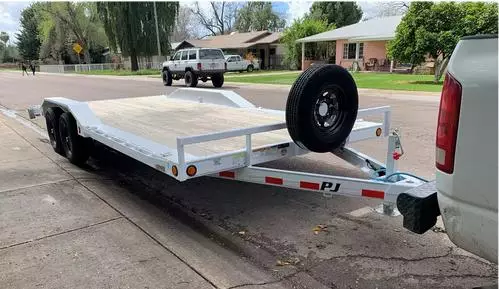
Flatbed Trailer Rental Hitch Guide: Classes & Fit
 Neighbors Trailer
Sep 24, 2023 798 7 min read trailer hitch instal
A flatbed trailer is only as safe as the hitch that connects it to your tow vehicle. Pick the wrong class, mount it at the wrong height, or skip a weight-distribution bar, and you turn an otherwise capable rig into a sway-prone, brake-worn hazard. This 2026 flatbed trailer rental hitch guide covers the five hitch classes, how to pick the right one for your load, step-by-step install and setup on the tow vehicle, and the small errors that cost most first-time flatbed renters a towing ticket or a swaying trailer on the highway.
Everything here applies equally to owners listing their flatbeds on the Neighbors Trailer marketplace and to renters who pull up with a truck for a weekend hauling job. Get the hitch right and the rest of the trailer conversation becomes simple.
Hitch Classes Explained
Trailer hitches are sorted into five classes by gross trailer weight capacity, tongue weight capacity, and receiver opening size. The class determines not only what you can legally tow but also how safely the combination will behave on the road under load and in crosswinds.
- Class I: Up to 2,000 lbs GTW, 200 lbs tongue, 1.25 inch receiver. Small cargo trailers and bike racks.
- Class II: Up to 3,500 lbs GTW, 350 lbs tongue, 1.25 inch receiver. Small utility flatbeds.
- Class III: Up to 8,000 lbs GTW, 800 lbs tongue, 2 inch receiver. Most single-axle flatbed trailer rentals.
- Class IV: Up to 10,000 lbs GTW, 1,000 lbs tongue, 2 inch receiver. Tandem-axle flatbeds and light equipment haulers.
- Class V: Up to 20,000 lbs GTW, 2,500 lbs tongue, 2 or 2.5 inch receiver. Gooseneck, fifth-wheel, and heavy commercial loads.
Matching Hitch to Flatbed Trailer
Before you rent a flatbed, check two numbers on the trailer plate: Gross Vehicle Weight Rating (GVWR) and empty trailer weight. Subtract the empty weight from GVWR and add the weight of your planned cargo; that is the total your hitch has to pull. Add a 10 to 15 percent safety margin and choose a class at least one tier above that number. Never tow at the exact rated capacity of your hitch; it leaves no room for road flex or sudden braking.
Tongue weight matters almost as much as gross weight. A flatbed loaded so that too much cargo sits behind the axle will lift the tongue and cause sway at highway speed. Aim for 10 to 15 percent of total trailer weight on the tongue. For more help choosing the right trailer for your job, see the Neighbors Trailer flatbed selection guide.
Hitch Classes at a Glance
Use the table below to quickly match a hitch class to the flatbed trailer you plan to rent. All figures are rounded industry standards for spring 2026 and apply to standard receiver hitches on North American tow vehicles.
| Class | Max Gross Weight | Max Tongue Weight | Receiver Size | Best Use |
| Class I | 2,000 lbs | 200 lbs | 1.25 inch | Light cargo |
| Class II | 3,500 lbs | 350 lbs | 1.25 inch | Small utility flatbed |
| Class III | 8,000 lbs | 800 lbs | 2 inch | Single-axle flatbed |
| Class IV | 10,000 lbs | 1,000 lbs | 2 inch | Tandem-axle flatbed |
| Class V | 20,000 lbs | 2,500 lbs | 2 or 2.5 inch | Gooseneck or heavy haul |
Flatbed Load Range by Hitch Class
The chart below shows the maximum gross trailer weight for each hitch class so you can visually match your intended load to the right receiver setup. The jump from Class IV to Class V is the most dramatic; most casual renters will never need more than Class III or IV.
NeighborsTrailer.com
Installing a Receiver Hitch on Your Tow Vehicle
Most modern pickups come from the factory with a Class III or IV receiver already bolted to the frame; check under the rear bumper for a square opening before buying anything new. If your tow vehicle needs a receiver, installing one is a two-hour job for a competent DIY mechanic with a torque wrench and a floor jack.
Position the receiver flush against the frame rails, install all supplied bolts hand-tight first, then torque each bolt to the manufacturer spec in a cross pattern. After the receiver is in place, install the ball mount at the correct drop or rise so that the trailer sits level under load; a trailer that tilts nose-up or nose-down will transfer weight unevenly and cause sway. Finish with a hitch pin and clip; the clip is not optional, it is what keeps the pin in the hole over 10,000 miles of bumps.
Ball Size, Drop, and Weight Distribution
Trailer balls come in three common sizes in North America: 1 7/8 inch, 2 inch, and 2 5/16 inch. The ball size has to match the coupler stamped on the trailer tongue; the wrong size feels right when you drop the coupler but will lift under load and detach. Always verify the printed size before leaving the owner's driveway.
Drop refers to how far the ball sits below the receiver opening. Pull your tow vehicle onto level ground and measure from the ground to the top of the receiver, then from the ground to the bottom of the coupler on the trailer. Pick a ball mount with the drop that matches the difference. For heavier loads above 6,000 lbs gross, add a weight-distribution hitch: a set of spring bars that transfer tongue weight forward onto the tow vehicle's front axle, keeping all four wheels planted and headlights level.
Gooseneck and Fifth-Wheel Flatbed Considerations
If you are renting a gooseneck or fifth-wheel flatbed, the rules change. Those trailers mount directly over the tow vehicle's rear axle using a ball or kingpin inside the truck bed, not a receiver. A gooseneck installation involves cutting the bed for a ball plate; it is usually handled by a shop. For more on gooseneck haulers, see the Neighbors Trailer guide on gooseneck flatbed trailer rentals.
Once the ball or kingpin is in place, the renter drops the trailer onto it with two clicks, pins it, plugs in the trailer wiring, and attaches safety chains or safety cables where applicable. Gooseneck setups are more stable than receivers at highway speed but require more care when connecting, because the truck bed blocks most visual cues.
Frequently Asked Questions
What hitch class do I need for a typical flatbed trailer rental?
Most single-axle flatbeds on the Neighbors Trailer marketplace rent under 8,000 lbs gross, so a Class III receiver with a 2 inch ball is the right fit. Tandem-axle flatbeds often push into Class IV territory, so verify the trailer GVWR before confirming your booking.
Can I tow a flatbed trailer with an SUV?
Yes, as long as the SUV has a rated receiver and a tow package with factory wiring. Most mid-size SUVs are rated for 5,000 to 7,500 lbs, which covers a small utility flatbed. Full-size SUVs and pickups are better for anything over 8,000 lbs.
Do I need weight-distribution bars on a flatbed?
On a load under 5,000 lbs, no. Above 6,000 lbs, weight-distribution bars dramatically improve towing stability and brake performance. Above 10,000 lbs, they are strongly recommended regardless of tow vehicle capacity.
What is the best ball size for a flatbed trailer?
Most mid-size flatbeds use a 2 inch ball, while heavy-duty and gooseneck flatbeds use a 2 5/16 inch ball. The size is stamped on top of the coupler on every trailer; match the ball to that stamp and nothing else.
Final Thoughts
A proper flatbed trailer hitch setup is the invisible backbone of every safe rental trip. Match the class to the load, get the ball size right, level the trailer with the correct drop or rise, and add weight-distribution bars on anything over 6,000 lbs. Do that, and the flatbed will ride as steady as the tow vehicle behind you, whether you are hauling landscaping gear across town or a project tractor across three states.
Related Articles
- Should You Buy an Adjustable Hitch for Your Trailer
- Selecting the Right Hitch for Your Trailer
- How to Prevent Rust on Your Trailer Hitch
- Beginner Tips for Towing a Large Flatbed Trailer
Content updated April 2026