

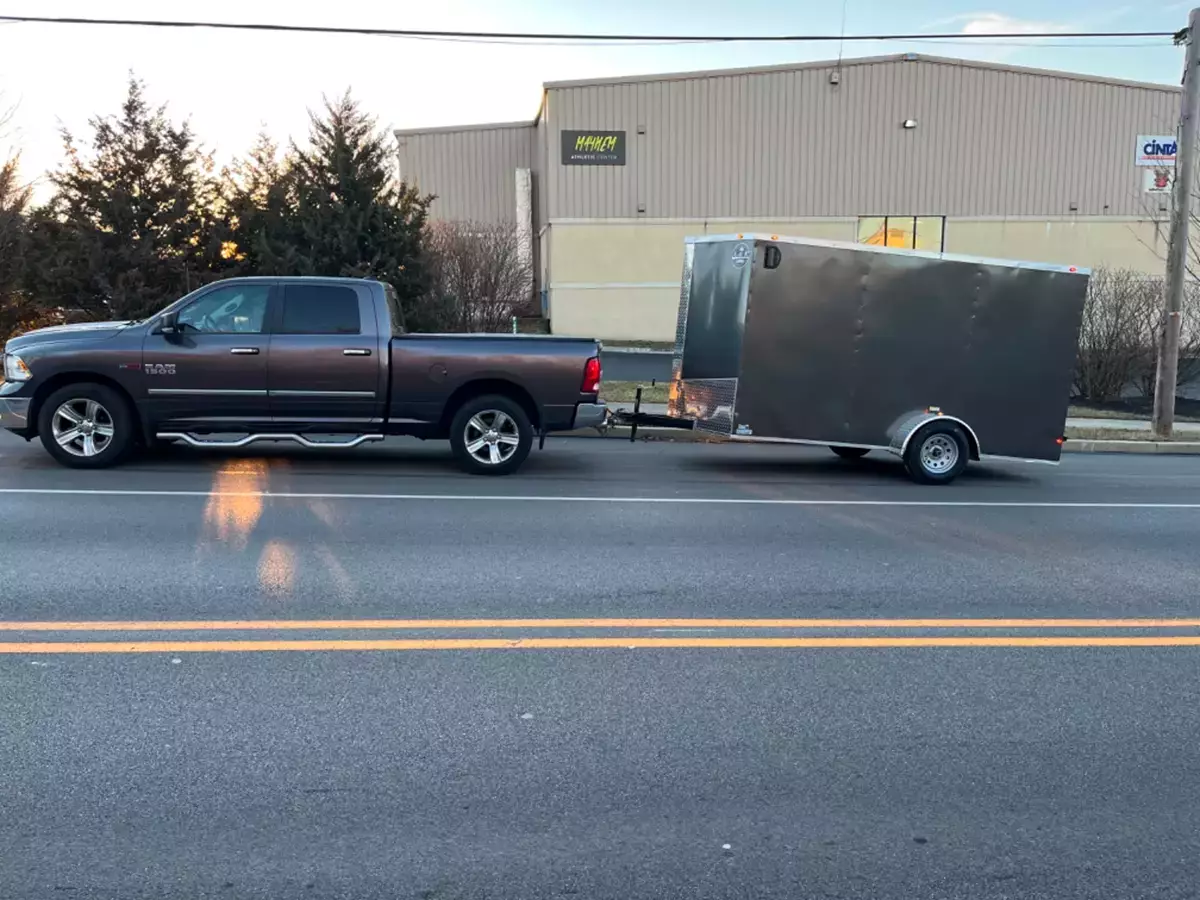
Trailer Upgrade Guide - A Guide to Selecting the Right Hitch for Your Trailer
 Neighbors Trailer
Mar 30, 2023 1055 8 min read trailer upgrade guide
Choosing the right trailer hitch is one of the most important decisions you will make before towing. The hitch connects your tow vehicle to the trailer, and selecting the wrong class, type, or weight rating can lead to dangerous situations on the road. Whether you are towing a small utility trailer for a weekend project or hauling a large enclosed trailer cross-country, this guide covers everything you need to know about selecting, installing, and maintaining the right hitch for your trailer.
Every rental on Neighbors Trailer includes NT Protect, mandatory coverage that is automatically charged to the renter at booking for just a few dollars per day. NT Protect gives both owners and renters peace of mind, so you can focus on choosing the right equipment for the job.
Why Hitch Selection Matters More Than You Think
A trailer hitch is not a one-size-fits-all component. Hitches are rated by class, each with a specific gross trailer weight (GTW) and tongue weight (TW) capacity. Installing a hitch that is too small for your load creates a serious safety risk, including frame damage, loss of steering control, and trailer sway. On the other hand, choosing a hitch rated well above your needs adds unnecessary cost and weight to your vehicle.
The right hitch matches your tow vehicle's capacity, the trailer's loaded weight, and the type of coupler or connection the trailer uses. Before renting or buying any trailer, confirm your vehicle's towing capacity and compare it against the hitch class ratings below.
Trailer Hitch Classes Explained
| Hitch Class | Max GTW (lbs) | Max TW (lbs) | Receiver Size | Common Uses |
| Class I | 2,000 | 200 | 1.25 in | Small utility trailers, bike racks |
| Class II | 3,500 | 350 | 1.25 in | Small boats, cargo trailers |
| Class III | 8,000 | 800 | 2 in | Mid-size campers, car haulers |
| Class IV | 12,000 | 1,200 | 2 in | Large trailers, RVs, heavy equipment |
| Class V | 17,000+ | 1,700+ | 2.5 in | Gooseneck, fifth-wheel, commercial |
Source: Trailer hitch manufacturer specifications, 2026
Class III hitches are the most popular for general towing because they handle the widest range of trailers, from mid-size enclosed trailers to flatbed rentals. If you are unsure which class you need, start with your trailer's gross vehicle weight rating (GVWR) and pick the hitch class that exceeds it by at least 10 to 15 percent.
Types of Trailer Hitches
Beyond class ratings, hitches come in several physical configurations. Each type is designed for specific towing scenarios.
Receiver hitches are the most common type. They bolt to the vehicle frame and accept a removable ball mount. Receiver hitches work with Class I through Class V ratings and are the standard choice for most trailer rentals on Neighbors Trailer.
Fifth-wheel hitches mount inside the bed of a pickup truck and connect to a kingpin on the trailer. They offer superior stability for heavy loads (typically 16,000 to 30,000 lbs) and are used for large RVs, horse trailers, and heavy equipment haulers.
Gooseneck hitches also mount in the truck bed using a ball that sits flush with the bed floor. Gooseneck setups handle up to 30,000 lbs and are popular for flatbed and livestock trailers. When the trailer is disconnected, the ball folds flat so you can still use the truck bed normally.
Bumper hitches attach directly to the vehicle's bumper. These are limited to very light loads (under 2,000 lbs) and are not recommended for trailer towing. If your vehicle only has a bumper-mounted ball, consider upgrading to a proper receiver hitch before towing any rental trailer.
Pintle hitches use a hook-and-loop connection instead of a ball and coupler. Pintle systems are common on commercial and military trailers. They handle heavy loads and rough terrain but are louder on the road than ball-mount setups.
If you are towing a heavy enclosed trailer, a sway control hitch can significantly improve stability at highway speeds.
How to Determine the Right Hitch for Your Trailer
Follow these steps to select the correct hitch:
Step 1: Check your vehicle's tow rating. Look in your owner's manual or on the driver's door jamb sticker. This number is the absolute maximum your vehicle can safely tow.
Step 2: Determine your trailer's GVWR. The GVWR is the maximum loaded weight of the trailer, including cargo. For rental trailers, this information is listed in the trailer details on Neighbors Trailer.
Step 3: Calculate tongue weight. Tongue weight should be 10 to 15 percent of the total loaded trailer weight. Your hitch must support this tongue weight without exceeding its TW rating.
Step 4: Match hitch class to your load. Use the table above. Choose a hitch class where the GTW and TW ratings both exceed your trailer's loaded weight and tongue weight.
Step 5: Verify receiver size compatibility. Make sure the ball mount and ball size match your trailer's coupler. Common ball sizes are 1-7/8 inch, 2 inch, and 2-5/16 inch.
Weight Distribution Hitches: When You Need One
If your loaded trailer weighs more than 50 percent of your tow vehicle's weight, a weight distribution hitch (WDH) is strongly recommended. A WDH uses spring bars to redistribute the tongue weight across all axles of the tow vehicle and trailer, reducing rear sag, improving steering response, and leveling the entire rig.
Without a WDH on a heavy load, you may notice the front of your tow vehicle lifting, reduced braking performance, and trailer sway. Many states and most trailer rental agreements require a WDH when the trailer exceeds a certain weight threshold.
Hitch Installation: Professional vs. DIY
Receiver hitches for Class I through Class III can often be installed at home with basic hand tools. Most bolt directly to the vehicle frame using pre-drilled holes. Installation typically takes 30 to 90 minutes depending on the vehicle.
Class IV and Class V hitches, as well as fifth-wheel and gooseneck installations, are best handled by a professional. These require precise mounting, torque specifications, and sometimes welding or drilling into the truck bed. A faulty installation can compromise the vehicle frame and create a dangerous towing situation.
Whether you install it yourself or hire a shop, always torque every bolt to the manufacturer's specification and inspect the hitch before each tow.
Hitch Maintenance and Inspection
A hitch requires regular inspection to stay safe. Before each towing trip, check for the following:
Inspect the receiver tube and ball mount for cracks, rust, or deformation. Look at the hitch pin and clip to make sure they are secure. Check the ball for wear, pitting, or a loose fit in the coupler. Verify that safety chains are properly attached and crossed under the tongue. Confirm that all electrical connections for brake lights and turn signals are working.
Between trips, apply grease to the ball and any moving parts. Store your ball mount indoors or use a receiver tube cover to prevent rust and corrosion. If you notice any structural damage, replace the hitch immediately. For more trailer upkeep tips, read our trailer maintenance guide for safe towing.
NeighborsTrailer.com
Common Hitch Selection Mistakes to Avoid
Choosing a hitch based only on the ball size is one of the most frequent errors. The ball size determines coupler compatibility, but it tells you nothing about weight capacity. A 2-inch ball can appear on hitches ranging from 3,500 to 12,000 lbs, so always check the class rating.
Another common mistake is ignoring tongue weight. Even if your hitch's GTW rating is high enough, exceeding the TW rating puts excessive stress on the rear axle and can cause the tow vehicle to bottom out over bumps.
Finally, never use a hitch extender or riser that reduces the rated capacity. Any accessory between the receiver and the ball mount must be rated for the same or higher capacity as the hitch itself.
Frequently Asked Questions
What hitch class do I need for a utility trailer?
Most utility trailers weigh between 1,000 and 5,000 lbs when loaded. A Class II hitch handles lighter loads up to 3,500 lbs, while a Class III hitch covers the full range up to 8,000 lbs. When in doubt, go with Class III for the extra margin.
Can I install a trailer hitch on any vehicle?
Most trucks, SUVs, and crossovers can accept a receiver hitch. Some sedans and compact cars can accept Class I or Class II hitches. Check with the hitch manufacturer for vehicle-specific fit guides before purchasing.
How do I know if my hitch needs to be replaced?
Replace your hitch if you see visible cracks, significant rust or corrosion, bent or deformed receiver tubes, or if the hitch was involved in a collision. Even minor structural damage can compromise the hitch's rated capacity.
What is the difference between a weight-carrying and weight-distributing hitch?
A weight-carrying (WC) hitch supports the tongue weight at a single point on the receiver. A weight-distributing (WD) hitch uses spring bars to spread tongue weight across all axles of the tow vehicle and trailer. WD hitches are recommended for heavier loads, typically when the trailer weighs more than half the tow vehicle's weight.
Do I need a special hitch for a rental trailer?
No special hitch is needed. Most rental trailers on Neighbors Trailer use standard 2-inch or 2-5/16 inch ball couplers, which are compatible with Class III and Class IV receiver hitches. Confirm the ball size before your rental pickup date.
Related Articles
- Enclosed Trailer Weight Distribution Hitch Guide
- Flatbed Trailer Rental Hitch Guide
- Cargo Trailer Rental Sway Control Hitch
- How to Choose a Trailer Hitch Weight Distribution System
Content updated March 2026