

Tips for Beginners on Towing a Large Flatbed Trailer
 Neighbors Trailer
Jun 21, 2023 762 7 min read flatbed trailer rental, tips for towing trailers
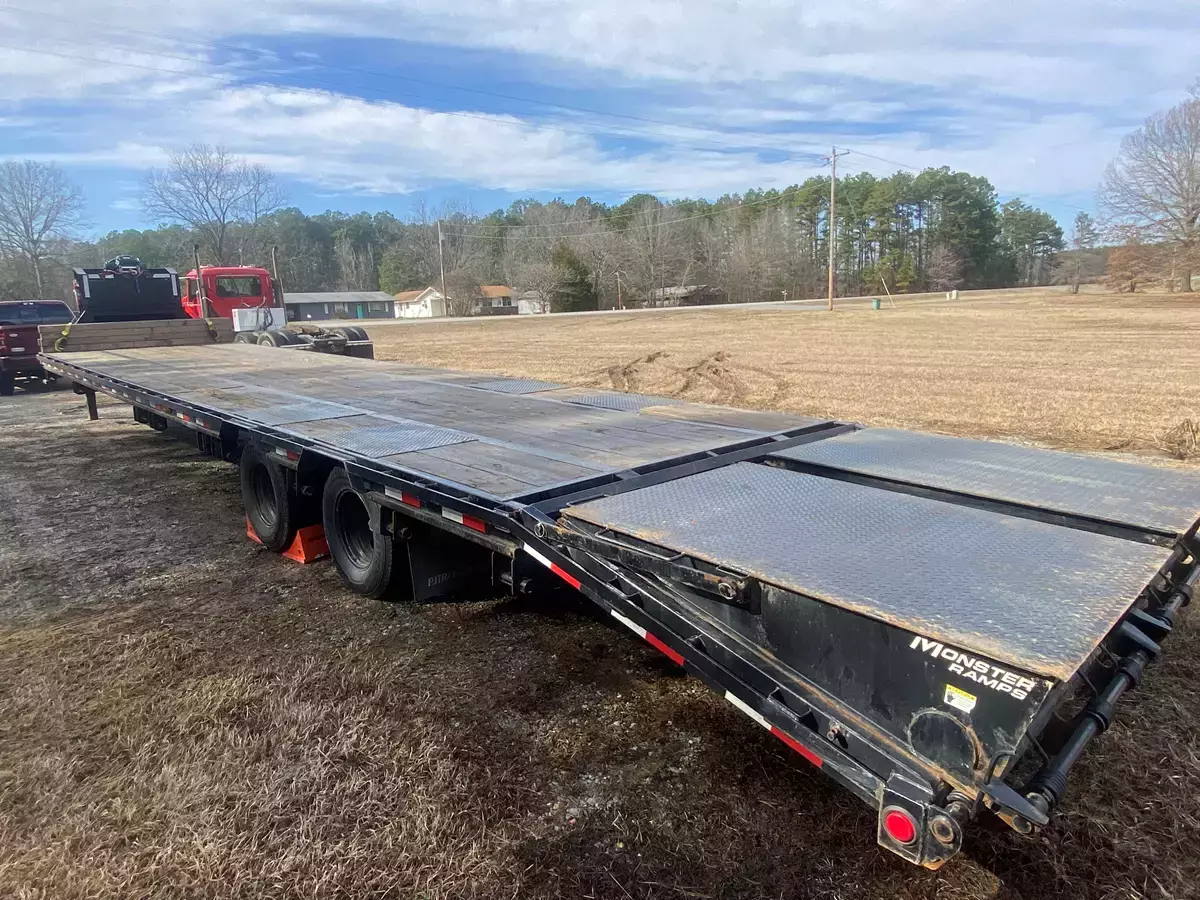
If you've never towed a large flatbed trailer before, the idea can feel overwhelming. A 20- or 24-foot flatbed behind your truck handles completely differently from solo driving - it's wider, longer, slower to stop, and requires new habits for turning, backing, and lane changes. But with the right preparation and knowledge, first-time towers are towing confidently within a few miles of pickup. This guide covers everything a beginner needs to know before and during their first large flatbed trailer rental through Neighbors Trailer.
Know Your Trailer Before You Pull It
Large flatbed trailers vary significantly in size, weight, and handling. Before you load and go, take 10 minutes to understand the specific trailer you've rented:
- Deck length; A 20-ft flatbed swings very differently in turns than a 30-ft flatbed
- Total trailer weight: Know the empty trailer weight so you can calculate how much load you're adding
- Axle configuration: Single-axle trailers (one axle) track differently than tandem-axle trailers (two axles) in turns
- Ramp type: Know whether the trailer has fold-down ramps, slide-out ramps, or a tilt deck before you try to load
- Brake type: Does the trailer have electric brakes? If so, is your brake controller configured correctly?
Flatbed Trailer Size Comparison for Beginners
| Trailer Size | Total Length w/ Truck | Beginner Difficulty | Typical Payload | Best Starting Use |
| 16 ft flatbed | ~36 ft total | Moderate - good starter size | 5,000-7, 000 lbs | ATVs, light equipment, lumber |
| 20 ft flatbed | ~40 ft total | Moderate - manageable with care | 8,000-10,000 lbs | Skid steers, small tractors |
| 24 ft flatbed | ~44 ft total | Challenging - practice backing first | 10,000-14,000 lbs | Construction equipment, vehicles |
| 30 ft flatbed | ~50 ft total | Advanced - not recommended for first-timers alone | 14,000-18,000 lbs | Large machinery, multi-piece loads |
Beginner Tip #1: Start in an Empty Parking Lot
Before loading your trailer or driving on a public road, find an empty parking lot and spend 15-20 minutes getting familiar with how the trailer moves. Practice:
- Wide, sweeping turns in both directions - `note how much further you need to pull before initiating the turn
- Straight-line backing - this is where most beginners struggle, as the trailer steers opposite to what feels natural
- Gradual braking - feel how much distance the loaded trailer requires to stop
- Lane changes - get comfortable checking mirrors and judging trailer clearance before switching lanes
This 15-minute investment prevents the most common beginner mistakes on public roads and at busy job sites.
Beginner Tip #2: Master the Physics of Backing Up
Backing a trailer is counterintuitive. When you turn the steering wheel left, the trailer moves right - and vice versa. Many beginners jackknife their trailer within the first few reversing attempts.
The simplest method for beginners: Place your hand at the bottom of the steering wheel. Move your hand left to move the trailer left; move it right to move it right. Use small steering inputs - overcorrecting is the most common error. Look at the trailer in your mirrors, not out the rear window.
If you get into an angle you can't recover from, pull forward and straighten out before trying again. There's no shame in pulling forward multiple times - it's far better than jackknifing.
Beginner Tip #3: Load Your Flatbed Correctly
Improper loading is the most dangerous mistake beginners make, and it doesn't become apparent until you're on the highway at 60 mph. Follow these principles:
- 60/40 rule: Place approximately 60% of the load's weight in front of the trailer axles and 40% behind
- Center side-to-side: Uneven left-right loading causes the trailer to pull to one side and creates axle strain
- Keep the center of gravity low: Stack heavy items on the deck, not on top of lighter items
- Secure before moving: Never move the truck until every strap is tensioned and you've walked the full perimeter of the load
Beginner Loading Checklist
| Step | Action | Why It Matters |
| 1 | Park trailer on flat, level ground before loading | Prevents trailer from rolling or tilting during loading |
| 2 | Check ramp pins and hinges before driving on | Prevents ramp collapse under load weight |
| 3 | Load heaviest items first, furthest forward | Establishes correct 60/40 weight distribution |
| 4 | Center load left-to-right on deck | Prevents axle overload on one side |
| 5 | Chock wheels on all wheeled equipment | Prevents rolling during braking and acceleration |
| 6 | Apply 4+ tie-down straps using designated D-rings | Secures load against shifting in transit |
| 7 | Walk full perimeter and tug each strap | Confirms all anchor points are secure |
| 8 | Check load height at tallest point | Prevents bridge and overpass strikes |
Beginner Tip #4: Drive Slower Than You Think You Need To
First-time flatbed towers consistently underestimate how much a loaded trailer changes their vehicle's dynamics. At highway speeds, even a small input - a pothole, a wind gust from a passing semi, or a sharp steering correction - can trigger trailer sway. The single best thing a beginner can do is keep speed to 55 mph or below until they're comfortable. You'll gain confidence quickly; there's no rush to prove anything on your first trip.
Beginner Tip #5: Check Your Straps Every 50-100 Miles
Ratchet straps loosen due to road vibration, especially in the first 30 minutes of travel. Pull over at the first rest stop or truck stop and re-tension all straps. After that first check, inspect again every 100 miles or whenever you hear an unusual noise from the trailer. A strap that was tight at the rental pickup may be loose 45 minutes later.
Protecting Your First Rental with NT Protect
Every beginner experiences some learning curve, and that's okay. What you don't want is a minor mistake to turn into a major expense. NT Protect provides rental damage coverage for just a few dollars per day, with a $500 deductible - far less than even minor trailer repair costs. For your first large flatbed rental especially, adding NT Protect is a smart move.
Frequently Asked Questions
Is it hard to tow a flatbed trailer for the first time?
It's manageable with preparation, but it requires adjustment. Most beginners find straight-line driving easy, but turns and backing require practice. Spending 15-20 minutes in an empty parking lot before hitting the road dramatically reduces first-trip stress. Within 30-60 minutes of driving, most beginners feel comfortable with basic maneuvering.
What's the biggest beginner mistake when towing a large flatbed?
Incorrect load placement is the most dangerous mistake - particularly placing too much weight at the rear of the deck. Rear-heavy loads cause trailer sway that can quickly become uncontrollable at highway speeds. Always load 60% of the weight forward of the trailer's axle centerline.
Do I need a spotter to load equipment on a flatbed ramp?
A spotter is strongly recommended for first-time operators driving equipment up the ramps. The spotter can watch the ramp stability, confirm clearances on both sides, and signal if the load begins to shift. Even experienced operators prefer a spotter for unusual or oversized equipment.
How do I prevent trailer sway as a beginner?
The three main sway prevention strategies are: (1) correct front-heavy load placement, (2) keeping your speed at or below 65 mph, and (3) ensuring tongue weight is 10-15% of total trailer weight. If sway begins, do not brake hard - instead, hold the wheel straight and gradually reduce speed. Your truck's trailer sway control system (if equipped) will help correct it automatically.
Conclusion
Your first large flatbed trailer rental doesn't need to be stressful. By understanding your trailer's dimensions, loading it correctly, taking 15 minutes to practice in a parking lot, and keeping your speed moderate, you'll complete the job safely and with confidence. Find the right flatbed for your project at neighborstrailer.com and connect with a local owner who can answer any questions specific to their trailer before you pick up.
Related Articles
- Towing Mistakes to Avoid When Using a Flatbed Trailer Rental
- Trailer Safety 101: How to Safely Tow a Trailer
- Taking Good Care of Your Trailer: Essential Maintenance Tips
- Everything to Know About a Gooseneck Flatbed Trailer Rental
Content Update: This guide was substantially updated in March 2026 with expanded towing safety guidance, improved equipment recommendations, and additional resources to help trailer owners tow safely and confidently.