How to Choose the Right Flatbed Trailer Rental
 Neighbors Trailer
Apr 7, 2023 2033 11 min read flatbed trailer rental, flatbed trailer for rent
How to Choose the Right Flatbed Trailer Rental for Your Next Project
Renting a flatbed trailer is one of the smartest decisions you can make when you need to haul equipment, materials, or vehicles without committing to a full purchase. Whether you are moving construction supplies across town, transporting an ATV to a weekend trail, or helping a friend relocate heavy furniture, the right flatbed trailer rental makes all the difference. The challenge is knowing which trailer fits your specific situation, and that is exactly what this guide covers.
At Neighbors Trailer, our peer-to-peer marketplace connects you directly with trailer owners in your area. That means more selection, better pricing, and trailers maintained by people who take pride in their equipment. Every rental on our platform includes NT Protect, mandatory coverage that is automatically applied at booking for just a few dollars per day, giving both renters and owners peace of mind on every trip.
Understanding the Two Main Types of Flatbed Trailers
Before you start browsing listings, it helps to understand the two primary flatbed trailer designs: bumper-pull and gooseneck. Each serves different hauling needs, and choosing the wrong type can lead to safety issues or wasted money.
Bumper-Pull Flatbed Trailers
Bumper-pull flatbed trailers connect to a ball hitch mounted on the frame of your tow vehicle, not the bumper itself despite the name. The coupler sits at the front of the trailer tongue and latches onto a hitch ball, typically a 2-inch or 2-5/16-inch size depending on the trailer's weight rating. These trailers generally range from 10 to 24 feet in length and handle gross vehicle weight ratings (GVWR) between 3,500 and 14,000 pounds.
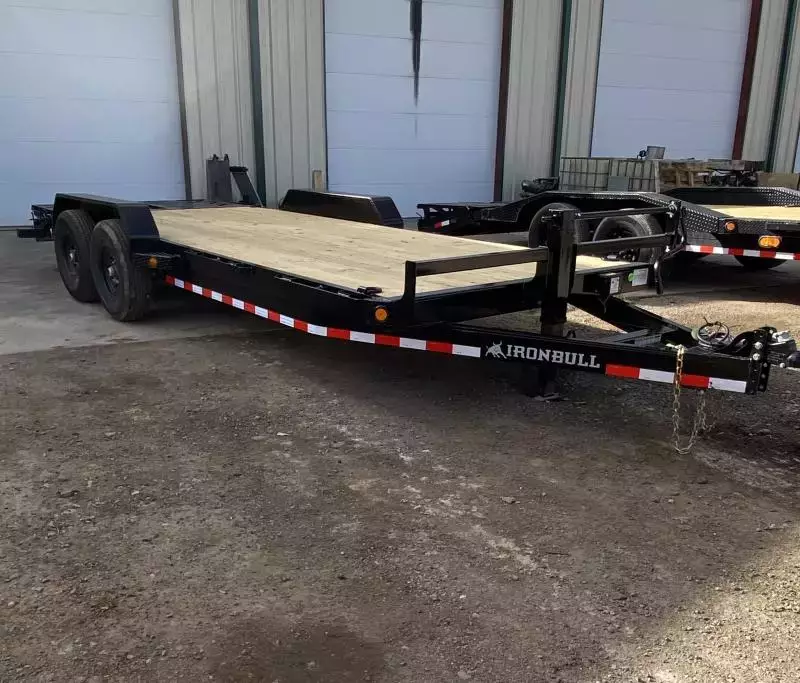
Bumper-pull models are the most common flatbed trailer rentals for everyday hauling. They work with most half-ton and three-quarter-ton pickup trucks, and many SUVs with a Class III or higher hitch receiver. Their lower deck height also makes loading and unloading easier for most cargo types. If you are hauling a single vehicle, a load of lumber, or landscaping equipment, a bumper-pull flatbed is likely your best option.
Gooseneck Flatbed Trailers
Gooseneck flatbed trailers use a hitch ball mounted in the bed of your truck, directly over the rear axle. The trailer's coupler extends up and over the tailgate on a curved arm that resembles the neck of a goose. This design shifts more of the trailer's tongue weight directly over the tow vehicle's rear axle, which dramatically improves stability at highway speeds and when carrying heavy loads.
Gooseneck flatbeds typically range from 20 to 40 feet and can handle GVWR ratings of 14,000 to 30,000 pounds or more. They are the go-to choice for hauling heavy equipment, multiple vehicles, or oversized loads. The tradeoff is that you need a truck with a gooseneck hitch installed in the bed, which limits them to three-quarter-ton and one-ton pickups in most cases.
Key Factors for Choosing the Right Flatbed Trailer Rental
Picking the right trailer is not just about size. Several factors work together to determine which flatbed trailer rental will be safest, most efficient, and most cost-effective for your specific job.
Match the Trailer Size to Your Cargo
Start by measuring your cargo. You need a trailer bed long enough and wide enough to fit everything you plan to haul, with room left over for proper tie-down placement. A good rule of thumb is to add at least 2 feet of length beyond your cargo's footprint. This extra space lets you secure loads with ratchet straps without crowding. If you are hauling a full-size ATV or side-by-side, you will typically need a minimum 16-foot bed. For a standard car or small truck, plan on 18 to 20 feet.
Verify Tow Vehicle Compatibility
Your tow vehicle's towing capacity must exceed the combined weight of the trailer and your cargo. Check your vehicle's owner manual or the sticker inside the driver's door jamb for the exact towing and payload ratings. Do not forget to account for the trailer's own weight (curb weight), which is separate from its cargo capacity. A 20-foot bumper-pull flatbed might weigh 3,000 pounds empty, meaning a truck rated for 10,000 pounds of towing can only carry 7,000 pounds of cargo on that trailer.
Inspect the Trailer's Condition
When you pick up your rental, take 10 minutes to inspect it thoroughly. Check the tires for proper inflation and tread depth, test all lights (brake, turn, running), examine the hitch coupler and safety chains for wear, and look at the trailer deck for rust, cracks, or warped boards. A quick walkaround protects you from liability and ensures you will not have problems on the road. On Neighbors Trailer, you can message the owner directly with any questions about maintenance history before you book.
Confirm the Weight Capacity
Every trailer has a Gross Vehicle Weight Rating (GVWR) stamped on its VIN plate. This number represents the maximum total weight the trailer can safely carry, including its own weight. Subtract the trailer's empty weight from the GVWR to find your actual cargo capacity. Loading beyond this limit puts stress on the axles, tires, and frame, and creates a serious safety hazard on the road. When in doubt, rent a trailer rated for more weight than you think you need.
Consider the Loading Method
Think about how you will get cargo onto the trailer. Some flatbed rentals come with built-in ramps, while others require you to use a forklift, crane, or drive-on approach. Tilt-bed flatbed trailers use hydraulics to angle the entire deck, making it easy to load vehicles and equipment without separate ramps. If you are hauling something that cannot be driven or rolled onto the trailer, make sure the listing includes the loading equipment you need, or plan to bring your own.
| Feature | Bumper-Pull Flatbed | Gooseneck Flatbed |
| Typical Length | 10 to 24 feet | 20 to 40 feet |
| GVWR Range | 3,500 to 14,000 lbs | 14,000 to 30,000+ lbs |
| Hitch Type | Ball mount (frame) | Gooseneck ball (truck bed) |
| Best For | Single vehicles, lumber, equipment | Heavy equipment, multiple vehicles |
| Tow Vehicle Needed | Half-ton truck or larger SUV | Three-quarter-ton or one-ton truck |
| Average Daily Rental Cost | $50 to $125 | $75 to $200 |
| Stability at Highway Speed | Good | Excellent |
NeighborsTrailer.com
What Does It Cost to Rent a Flatbed Trailer?
Flatbed trailer rental pricing varies based on several factors, including trailer size, location, weight capacity, and any special features like winches or tilt beds. On Neighbors Trailer, you deal directly with the owner, which typically means lower rates than traditional rental dealerships that add mileage fees and hidden surcharges.
To give you a realistic picture of what renters are paying across the country, we pulled average daily rates from our marketplace data. Smaller bumper-pull flatbeds in the 16 to 20-foot range typically rent for $50 to $100 per day, while larger gooseneck models can range from $75 to $200 per day depending on capacity and features. Location also plays a role, as rates tend to be slightly higher in metropolitan areas where demand is stronger.
NeighborsTrailer.com
Keep in mind that weekly and multi-day rentals often come with discounted rates. Many trailer owners on our platform offer reduced pricing for rentals of three days or longer, so it pays to ask. You can also compare multiple listings in your area to find the best combination of price, proximity, and trailer features.
Safety Tips for Towing a Flatbed Trailer
Even the perfect trailer rental can lead to problems if you do not follow basic towing safety practices. Before you hit the road, secure your cargo with ratchet straps rated for the load weight, and use at least four tie-down points spread evenly across the trailer deck. Cross-strap heavy items in an X pattern for maximum stability.
Always perform a "tug test" after hitching up. Pull forward a few feet and brake firmly to make sure the coupler is fully latched and the safety chains are properly connected. Check that your brake lights, turn signals, and running lights are all functioning through the trailer's electrical connection. If the trailer has its own braking system, test that as well before leaving the pickup location.
On the road, give yourself extra following distance, take turns wider than you normally would, and reduce your speed on highways by 5 to 10 mph compared to your usual pace. Flatbed trailers have an open deck that can catch crosswinds, so stay alert in gusty conditions and keep a firm grip on the steering wheel.
Where to Find the Best Flatbed Trailer Rental Near You
Traditional rental dealerships charge by the mile, tack on insurance fees, and limit your rental windows. Neighbors Trailer works differently. Our peer-to-peer marketplace lets you rent directly from trailer owners in your community, which means transparent flat-rate pricing, flexible pickup and return times, and a wider selection of trailer types and sizes than any single dealership can offer.
Searching for a flatbed trailer rental takes just a few minutes. Browse listings by location, filter by trailer type and size, read reviews from previous renters, and book online instantly. Every booking on our platform includes NT Protect coverage automatically, so you are covered from the moment you hitch up until you return the trailer. There is no need to purchase separate rental insurance or worry about unexpected liability.
Whether you need a guidance on buying vs. renting a trailer, a hydraulic tilt trailer for easy vehicle loading, or a standard bumper-pull for a weekend project, you will find it on Neighbors Trailer. Download the Neighbors Trailer app for Renters on iOS or Android, sign up for free, and start browsing trailers available near you today.
Frequently Asked Questions
What size flatbed trailer do I need to haul a car?
For most standard sedans and small trucks, you will need a flatbed trailer that is at least 16 to 18 feet long. Full-size trucks and SUVs require 18 to 20 feet. Always measure your vehicle's length and add 2 feet for tie-down space. Confirm that the trailer's weight capacity exceeds your vehicle's curb weight plus any additional cargo you plan to load.
Can I tow a flatbed trailer with an SUV?
Yes, many SUVs can tow bumper-pull flatbed trailers, provided the SUV's towing capacity exceeds the combined weight of the trailer and cargo. Most mid-size and full-size SUVs have towing ratings between 5,000 and 8,000 pounds, which is sufficient for smaller flatbed rentals. Gooseneck trailers, however, require a pickup truck with a gooseneck hitch installed in the bed.
How do I secure cargo on a flatbed trailer?
Use ratchet straps rated for your load weight, positioned at a minimum of four tie-down points. For vehicles, use wheel straps or tire nets at all four wheels. For loose materials like lumber or pallets, use edge protectors under the straps to prevent damage. Always cross-strap heavy items in an X pattern and check strap tension after the first mile of driving.
What is the difference between GVWR and payload capacity?
GVWR (Gross Vehicle Weight Rating) is the maximum total weight a trailer can handle, including its own empty weight. Payload capacity is what remains after you subtract the trailer's empty weight from the GVWR. For example, a trailer with a 10,000-pound GVWR that weighs 3,000 pounds empty has a payload capacity of 7,000 pounds. Always use payload capacity when calculating how much cargo you can load.
Do I need a special license to tow a flatbed trailer?
In most U.S. states, a standard driver's license is sufficient for towing a trailer for personal use, as long as the combined weight of your vehicle and trailer stays under 26,000 pounds. Some states have additional requirements for trailers over a certain weight. Check your state's DMV website for specific regulations before booking your rental.
Related Articles
- When Is a Deckover Flatbed Trailer Rental a Great Option to Consider
- Essential Safety Tips for Using a Flatbed Trailer Rental
- Preparing Your Flatbed Trailer for Safe Towing in the Spring
- How to Choose the Right Tires for Your Trailer
Content updated April 2026