Safe Towing Tips | Should You Buy an Adjustable Hitch for Your Trailer?
 Neighbors Trailer
Dec 19, 2022 317 8 min read safe towing tips
Should You Buy an Adjustable Hitch for Your Trailer?
Your hitch is the single connection point between your tow vehicle and your trailer. It handles every pound of tongue weight, absorbs road vibrations, and keeps your trailer tracking straight behind you at highway speeds. Using the wrong hitch, or one that is set at the wrong height, creates dangerous sway, uneven braking, and accelerated wear on both your truck and your trailer. If you tow different trailers or switch between vehicles, an adjustable hitch solves problems that a fixed-height hitch simply cannot.
This safe towing guide breaks down the differences between adjustable and fixed hitches, explains how to match a hitch to your towing setup, and covers the key safety factors every trailer owner and renter should understand before hitting the road.
What Is an Adjustable Hitch?
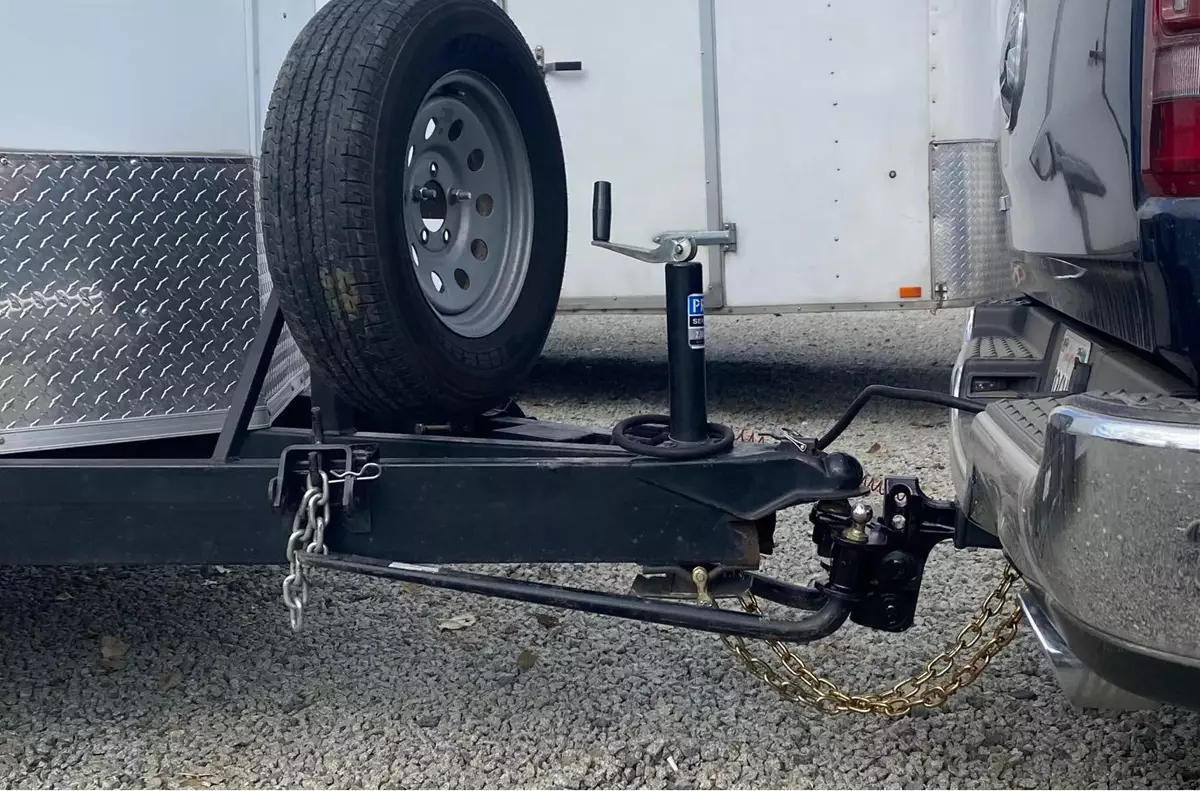
An adjustable hitch (also called a drop hitch or adjustable ball mount) lets you raise or lower the ball height to match the coupler height of different trailers. Most adjustable hitches use a solid steel shank with multiple pin holes, allowing you to set the ball at the exact height needed to keep your trailer level when connected. Some models also include interchangeable ball sizes (1-7/8 inch, 2 inch, and 2-5/16 inch) built into a single platform, so you can switch between trailers without carrying separate ball mounts.
Adjustable Hitch vs. Fixed Hitch: Key Differences
A fixed ball mount has a single, welded drop or rise that cannot be changed. It works perfectly if you always tow the same trailer with the same vehicle. The moment you switch trailers, change vehicles, or add a lift kit, the fixed mount may put your trailer at an angle that causes sway, poor braking, and uneven tire wear.
An adjustable hitch eliminates that problem by letting you dial in the exact height every time. The tradeoff is weight and cost. Adjustable hitches are heavier than fixed mounts (typically 25 to 40 pounds vs. 5 to 10 pounds for a basic fixed mount) and cost more upfront. However, buying one adjustable hitch is almost always cheaper than buying multiple fixed mounts to cover different trailer heights.
| Feature | Adjustable Hitch | Fixed Hitch |
| Height Adjustment | Multiple positions (typically 6-10 inches range) | Single fixed height |
| Average Price | $80 - $250 | $20 - $60 |
| Weight | 25 - 40 lbs | 5 - 10 lbs |
| Ball Sizes | Often dual or tri-ball built in | Single ball size |
| Best For | Multiple trailers or vehicles | Single trailer/vehicle combo |
| Versatility | High | Low |
Why Trailer Height Matters for Safe Towing
When your trailer sits level behind your tow vehicle, weight distributes evenly across all tires, the brakes engage properly, and the trailer tracks in a straight line. When the trailer tilts nose-down (too much drop), excess weight shifts to the tongue and overloads your truck's rear axle. When the trailer tilts nose-up (not enough drop), the rear of the trailer carries too much weight, the tongue gets light, and you lose steering control on the tow vehicle. Either scenario increases the risk of trailer sway, which is one of the most dangerous situations you can encounter on the highway.
How to Measure for the Correct Hitch Height
Park your tow vehicle on level ground and measure the distance from the ground to the top of the inside of your hitch receiver. Then measure the distance from the ground to the bottom of your trailer's coupler. The difference between those two measurements tells you how much drop (or rise) you need from your ball mount. An adjustable hitch lets you set this precisely, while a fixed mount forces you to find a pre-made option that matches closely enough.
Understanding Hitch Classes and Weight Ratings
Every hitch has a weight rating that must meet or exceed the gross trailer weight (GTW) and tongue weight (TW) of your loaded trailer. Exceeding these ratings is dangerous and can cause the hitch to fail. Here is a breakdown of the standard hitch classes:
Class I
Rated for trailers up to 2,000 pounds GTW and 200 pounds TW. Common on sedans and small crossovers. Suitable for small utility trailers and bike racks.
Class II
Rated for trailers up to 3,500 pounds GTW and 350 pounds TW. Found on midsize SUVs and some trucks. Handles small enclosed trailers and medium utility trailers.
Class III
Rated for trailers up to 8,000 pounds GTW and 800 pounds TW. The most common class for half-ton trucks and full-size SUVs. Covers most recreational and light commercial towing needs.
Class IV and V
Class IV handles up to 10,000 pounds GTW, and Class V handles up to 17,000 pounds or more. These are for three-quarter-ton and one-ton trucks pulling heavy trailers like car haulers, large enclosed trailers, and equipment haulers.
NeighborsTrailer.com
Ball Size: Getting the Right Fit
Trailer couplers are designed for a specific ball diameter. Using the wrong size ball creates a loose connection that can separate while towing. The three standard ball sizes are 1-7/8 inch (for light trailers under 2,000 pounds), 2 inch (the most common size for trailers up to 8,000 pounds), and 2-5/16 inch (for heavy trailers above 8,000 pounds). Always verify your trailer's required ball size before connecting, and never assume that a ball that fits is the correct size. A 2-inch coupler will sit on a 1-7/8-inch ball, but the fit is dangerously loose.
Tongue Weight and Why It Matters
Tongue weight is the downward force the trailer exerts on the hitch ball. Proper tongue weight should be 10 to 15 percent of the total loaded trailer weight. Too little tongue weight causes the rear of the trailer to sag, creating sway. Too much tongue weight overloads the rear of your tow vehicle, reducing front-tire traction and steering response. You can measure tongue weight with a bathroom scale and a simple lever setup, or with a dedicated tongue weight scale available at most trailer supply stores.
Safe Towing Tips for Every Trip
Pre-Trip Checklist
Before every tow, walk around the trailer and check that the coupler is fully seated and locked on the ball, the safety chains are crossed under the tongue and attached to the tow vehicle frame, the breakaway cable is connected, all lights work (running, brake, and turn signals), tire pressure matches the sidewall rating, and the load is secured and balanced with heavier items forward and low.
On the Road
Drive at moderate speeds, especially in crosswinds. Allow extra following distance because trailers increase your stopping distance significantly. Use your mirrors frequently and take wider turns to avoid clipping curbs. If you feel sway developing, do not hit the brakes. Instead, ease off the accelerator gradually and let the trailer stabilize on its own. If your trailer has electric brakes, apply the trailer brake controller manually to help dampen the sway.
Renting a Trailer? Your Hitch Still Matters
If you rent a trailer on Neighbors Trailer, the same hitch rules apply. Check the listing for the trailer's coupler height and required ball size before you show up. An adjustable hitch is especially valuable for renters because different rental trailers have different coupler heights. One adjustable mount handles them all. Every rental on Neighbors Trailer automatically includes NT Protect, which is mandatory coverage included in every booking at just a few dollars per day. It covers both the owner and the renter during the rental period, so you can focus on the job instead of worrying about what-ifs.
Frequently Asked Questions
Is an adjustable hitch worth the extra cost?
If you tow more than one trailer or plan to switch tow vehicles in the future, yes. A single adjustable hitch replaces multiple fixed mounts and ensures a level tow every time. The upfront cost pays for itself in safety and convenience.
Can I use an adjustable hitch with a weight distribution system?
Yes. Many adjustable hitches are compatible with weight distribution systems. Check the manufacturer's specifications to confirm compatibility and ensure the hitch's weight rating accounts for the additional load from the WD bars.
How do I know if my trailer is level?
Connect the loaded trailer to your tow vehicle on flat ground. Place a level on the trailer frame or tongue. The bubble should be centered. You can also measure from the ground to the front and rear of the trailer frame; the measurements should be within an inch of each other.
What happens if my hitch class is too low for my trailer?
Overloading a hitch beyond its rated capacity can cause the hitch to bend, crack, or separate from the receiver. This is extremely dangerous at any speed. Always match or exceed the trailer's GVWR with your hitch class rating. If you are unsure, consult a trailer class guide or visit a qualified hitch installer.
Related Articles
- Trailer Safety 101: Heavy Hauling Tips
- Hitch and Utility Trailer Rental Guide
- Towing Capacity Explained: GVWR, GCWR, and Payload
- Hitch Size Compatibility Chart: Find the Right Hitch
Content updated March 2026