Everything to Know About a Deckover Tilt Flatbed Trailer
 Neighbors Trailer
Aug 18, 2023 431 5 min read deckover tilt flatbed traile
Tilt Flatbed Trailer Rental: When a Ground Level Deck Saves the Day
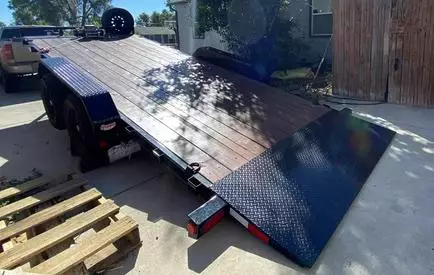
Getting a low clearance car, a mower, or a skid steer onto a standard flatbed usually means fighting with steel ramps, a winch, and a lot of pinched fingers. A tilt flatbed trailer solves that problem. The deck itself is hinged; it pivots down to ground level, you drive the load on, and gravity plus the hinge return the bed to tow position. For anyone hauling equipment that sits low or is hard to push, a tilt deck rental is the difference between a 10 minute load and a 40 minute one.
How a Tilt Trailer Works
Two mechanisms dominate the market. Gravity tilt trailers use the weight of the load to rotate the deck back to horizontal as you drive on. Hydraulic tilt trailers use a cylinder to raise and lower the deck on command, making them ideal for uneven loading sites. Both styles keep the deck close to the axle for a low loading angle, usually between 10 and 14 degrees compared with 18 to 22 degrees for a fixed deck trailer with ramps.
Who Should Rent a Tilt Flatbed
Classic car owners, zero turn mower operators, ATV and UTV riders, skid steer contractors, and anyone renting a short term piece of equipment from an auction yard are the typical tilt renters. The low deck angle is especially important for vehicles with front air dams or low ground clearance, which scrape on standard ramps.
Comparing Tilt Flatbeds to Other Rental Options
| Trailer Type | Deck Angle | Best For | Typical Daily Rate |
| Tilt Flatbed (gravity) | 10 to 12 degrees | Cars, mowers, ATVs | $95 to $165 |
| Tilt Flatbed (hydraulic) | 8 to 10 degrees | Low clearance vehicles, skid steers | $140 to $225 |
| Ramp Flatbed | 18 to 22 degrees | General freight, pallets | $80 to $130 |
| Car Hauler (ramped) | 14 to 16 degrees | Most passenger vehicles | $95 to $150 |
Time Savings by Load Type
The chart below aggregates owner reported loading times comparing a tilt flatbed to a fixed deck with ramps of the same length.
NeighborsTrailer.com
Key Features to Ask About Before Booking
Not all tilt trailers are built equally. When you browse listings on the Neighbors Trailer marketplace, ask the owner about these specifics before confirming:
Tilt lock: a pin or hydraulic detent that prevents the deck from tilting during the haul.
Cushion cylinder: slows the deck down during load transitions so your equipment does not slam the bed.
Stake pockets: lets you strap tall or oddly shaped loads on any side.
Treated deck: pressure treated pine or Apitong wood outlasts standard pine by several years and grips tires better when wet.
Many Neighbors Trailer owners share these specs directly in the listing. If you want a deep dive into flatbed configurations before choosing, our guide to deckover flatbed rentals compares tilt versus deckover for heavy and oversized loads.
Safe Loading Technique on a Tilt Deck
Chock the tow vehicle, set the parking brake, and stand clear of the tilt path before releasing the lock. Drive the load on slowly in a low gear; the bed will begin returning to horizontal as the load center passes the pivot. Once flat, set the tilt lock, then tie down with at least four ratchet straps or two chains per load. For wheeled equipment, straps must cross both tires or axle housings, not just the frame. For a refresher on towing fundamentals, see our profitable flatbed uses guide, which covers load distribution rules that also apply to tilt trailers.
NT Protect Is Included With Every Rental
NT Protect coverage is automatically added to every Neighbors Trailer booking for a few dollars per day. It is not an optional upgrade and not charged separately; the cost is rolled into your rental total at checkout. The $500 renter deductible applies if a claim is filed, but the core liability and physical damage protection is always in place the moment you hook up.
Frequently Asked Questions
Can I load a low clearance sports car on a tilt trailer?
Yes, which is the primary reason renters choose tilt over ramp. Hydraulic tilt trailers with 8 to 10 degree load angles work for most factory lowered vehicles. Message the owner to confirm deck angle before booking.
Do tilt trailers require a special tow vehicle?
Any truck or SUV with a tow rating matching the trailer GVWR can pull a tilt flatbed. Most residential tilt trailers are between 7,000 and 10,000 pound GVWR and tow cleanly behind a half ton pickup.
How long does it take to load on a tilt deck?
Renters report loading times of 3 to 6 minutes for a passenger car versus 12 to 25 minutes on ramp style trailers. Time saved adds up fast on multi stop days.
What is the main drawback of tilt flatbeds?
They are usually shorter than ramped car haulers, and they cost more per day. If you are hauling multiple vehicles or a full size pickup, a ramped car hauler may actually be the better fit.
Conclusion
A tilt flatbed trailer rental is the easiest way to load low or awkward equipment without a forklift or crane. The lower deck angle prevents scrapes, the faster load cycle saves serious time, and every booking comes with NT Protect rolled in. If your next hauling job involves a low clearance car, a riding mower, or a skid steer, browse tilt flatbed listings on Neighbors Trailer today.
Related Articles
- Hydraulic Tilt Flatbed Trailer for Rent in Denver, CO
- How to Choose the Right Flatbed Trailer Rental
- Safely Loading ATVs and UTVs on Your Trailer
- How to Load a Vehicle on a Car Hauler for Safe Towing
Content updated April 2026