Trailer Rental Guide - When is a Deckover Flatbed Trailer Rental a Great Option to Consider?
 Neighbors Trailer
Apr 26, 2023 632 10 min read trailer rental gui
Content updated April 2026.
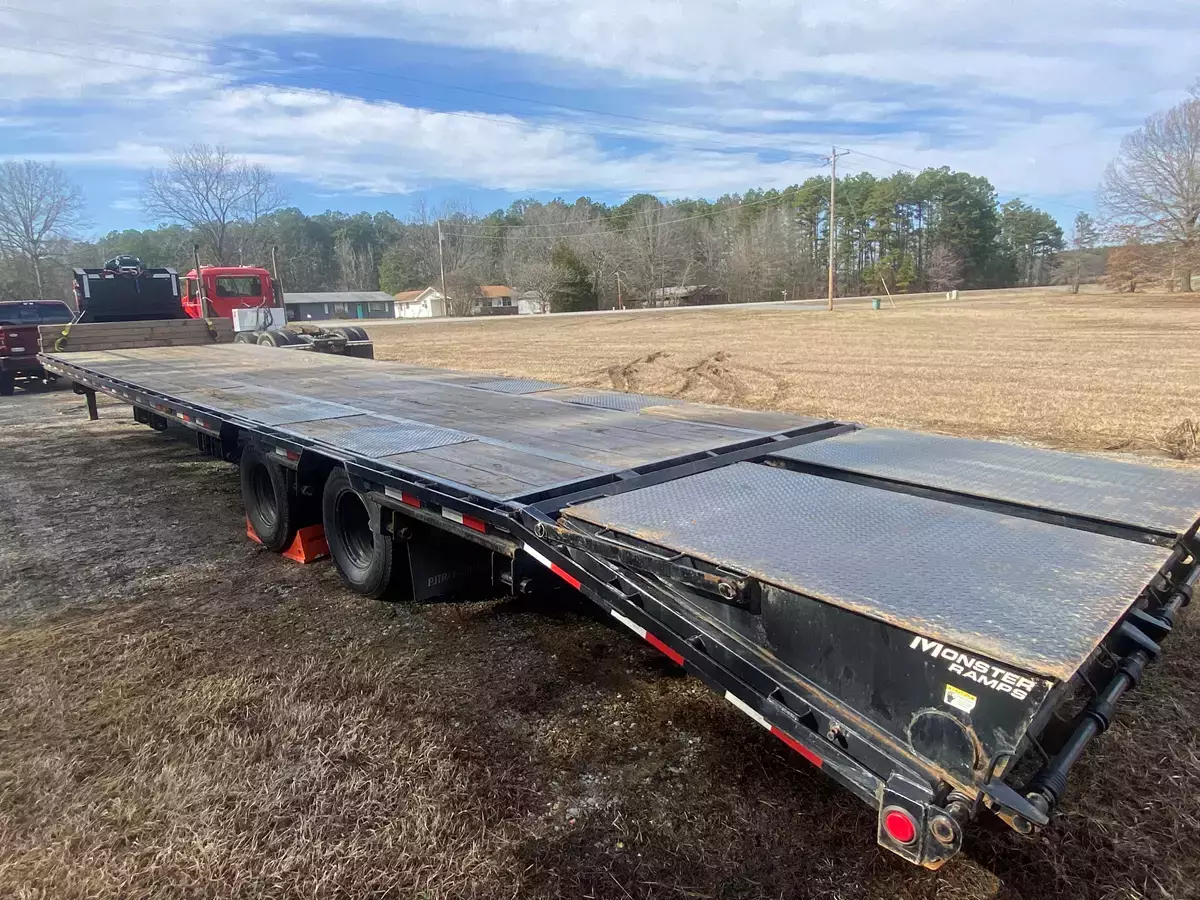
Flatbed trailers come in several configurations, and the deckover design stands out as one of the most capable options for hauling wide, heavy, and irregularly shaped loads. A deckover flatbed trailer positions the deck surface above the wheels rather than between them, creating a full-width loading platform that eliminates the wheel well intrusions found on standard flatbed trailers. This design difference opens up a range of hauling capabilities that make deckover flatbeds the preferred choice for contractors, equipment operators, farmers, and weekend haulers who need maximum usable deck space.
If you are shopping for a flatbed trailer rental and wondering whether a deckover model is worth choosing, this guide covers the key advantages, the best use cases, load capacity comparisons, and practical tips for getting the most out of your rental.
What Sets a Deckover Flatbed Apart from a Standard Flatbed
The defining feature of a deckover flatbed trailer is where the deck sits relative to the axles. On a standard flatbed trailer, the deck drops down between the wheel wells, which narrows the usable width in those areas by 8 to 12 inches on each side. A deckover flatbed raises the entire deck above the tires, giving you the full width of the trailer from front to back with zero obstructions.
Most deckover flatbed trailers measure between 8 and 8.5 feet wide, compared to 6 to 6.5 feet of usable width between the wheel wells on a standard flatbed. That additional width is critical when hauling wide equipment like skid steers, compact track loaders, palletized materials, or vehicles that need every inch of clearance.
The trade-off is deck height. Because the platform sits above the wheels, the loading height on a deckover flatbed is typically 30 to 36 inches from the ground, compared to 18 to 24 inches on a standard drop-deck flatbed. This means loading ramps are longer and steeper, which is worth factoring in when you plan how you will get equipment on and off the trailer.
Another important distinction is the tie-down configuration. Deckover flatbeds typically feature stake pockets and rub rail tie-down points along both edges of the full-width deck. This perimeter anchor system gives you more flexibility when securing wide loads because you can run straps straight down from the cargo edge to the nearest rail point without angling them around wheel wells. Standard flatbeds often require creative strap routing to work around the fender intrusions, which can compromise hold-down angles and reduce the effective restraining force on your cargo.
Weight distribution also differs between the two designs. On a deckover, the load sits higher above the axle centerline, which raises the center of gravity. This means proper weight placement becomes more critical for safe towing. However, the benefit is that the entire load footprint rests on a single flat plane with no steps or transitions, making it much easier to slide or roll items into position during loading.
Top Use Cases for a Deckover Flatbed Trailer Rental
Construction and Contractor Work
Deckover flatbeds are a staple on construction sites because they handle the widest range of equipment and materials. A single deckover can carry a mini excavator in the morning, a pallet of concrete blocks at midday, and a load of framing lumber in the afternoon. The unobstructed deck makes it easy to position loads with a forklift from either side, which speeds up loading and unloading on busy job sites.
Farm and Agricultural Hauling
Farmers and ranchers rely on deckover flatbeds to transport implements, hay bales, feed pallets, livestock panels, and compact tractors between properties. The full-width deck accommodates round hay bales placed side by side without worrying about wheel well clearance, and the open platform makes it straightforward to secure irregularly shaped implements with ratchet straps and chain binders.
Equipment Transport and Heavy Hauling
For anyone moving equipment that exceeds the usable width of a standard flatbed, a deckover is the clear solution. Skid steers, compact excavators, scissor lifts, and wide utility vehicles all fit comfortably on the full-width platform. Many deckover models are rated for 10,000 to 14,000 pounds GVWR, giving you the payload capacity to handle machines that would overload a standard utility trailer.
Recreational and Seasonal Projects
Outside of commercial applications, deckover flatbeds are popular for hauling side-by-side UTVs, multiple ATVs, large furniture during moves, and bulky seasonal items like hot tubs or sheds. The flat, open deck makes loading simple when you are dealing with items that do not fit neatly into an enclosed trailer or standard flatbed.
Deckover Flatbed vs Standard Flatbed: Side-by-Side Comparison
The table below compares the key specifications and capabilities of deckover flatbed trailers against standard flatbed trailers across the features that matter most when choosing a rental.
| Feature | Deckover Flatbed | Standard Flatbed |
| Usable Deck Width | 8 to 8.5 feet (full width) | 6 to 6.5 feet (between wheel wells) |
| Deck Height from Ground | 30 to 36 inches | 18 to 24 inches |
| Typical GVWR Range | 10,000 to 14,000 lbs | 7,000 to 10,000 lbs |
| Best For | Wide equipment, pallets, side loading | Lumber, vehicles, lighter loads |
| Forklift Accessible | Yes (both sides) | Limited (wheel wells obstruct) |
| Average Rental Cost per Day | $75 to $125 | $50 to $90 |
| Ramp Length Required | Longer (higher deck) | Shorter (lower deck) |
| Tow Vehicle Requirement | 3/4-ton truck minimum | 1/2-ton truck (lighter models) |
Specifications reflect common models available for rental in 2025. Actual specs vary by manufacturer and configuration.
Load Capacity by Trailer Type: Average GVWR Comparison
The bar chart below shows average gross vehicle weight ratings across five common trailer types, illustrating where deckover flatbeds rank in overall hauling capacity.

Chart: NeighborsTrailer.com
How to Choose the Right Deckover Flatbed Rental
Selecting the right deckover flatbed rental starts with understanding your payload requirements and tow vehicle capabilities. Measure the width and weight of the heaviest item you plan to haul, then add a 15 percent safety margin to your weight estimate. This accounts for fuel, tools, tie-down hardware, and any additional materials you might add to the load.
Check your tow vehicle's gross combined weight rating (GCWR) in the owner manual or on the driver door jamb sticker. Subtract the weight of your loaded truck and passengers from the GCWR to find your maximum trailer weight. Most deckover flatbeds require a three-quarter-ton or one-ton pickup truck for safe towing because of their higher empty weight and payload ratings.
Look for rental trailers equipped with electric brakes, LED lighting, heavy-duty ramps with spring assist, and multiple tie-down anchor points along both rails. These features make loading, securing, and towing significantly safer and more efficient. If you are hauling equipment with tracks or rubber tires, confirm that the trailer has steel ramps rated for the drive-on weight of your machine.
Consider the type of loading you will be doing most often. If you frequently use a forklift or telehandler to place loads, a deckover is the better choice because the full-width deck allows side loading from either direction without wheel well interference. If most of your loads will be driven onto the trailer under their own power, pay close attention to the ramp specifications. Look for ramps that are at least 16 inches wide per track and rated for the full weight of the heaviest machine you plan to drive onto the trailer.
Deck material is another factor worth evaluating. Most deckover flatbed rentals feature either treated wood plank decks or steel mesh flooring. Wood decks provide good traction for rubber tires and are easier on equipment finishes. Steel mesh decks are more durable for tracked machines and allow water and debris to drain through rather than pooling on the surface. Both options work well, but matching the deck type to your primary cargo makes the rental experience smoother.
Safety Tips for Towing a Deckover Flatbed
The higher center of gravity on a deckover flatbed means load placement is even more important than on a standard trailer. Position the heaviest portion of your load forward of the axles so that tongue weight accounts for 10 to 15 percent of the total loaded trailer weight. Insufficient tongue weight causes trailer sway, which is one of the leading causes of towing accidents on highways.
Use at least four ratchet straps rated at or above the weight of your cargo. Secure each corner of the load to a separate anchor point on the trailer rail. For equipment with hydraulic arms or moving components, lock all cylinders and boom positions before transport and add additional restraints to prevent shifting during braking or lane changes.
Perform a complete walk-around inspection before every trip. Verify tire pressure matches the rating printed on the sidewall, check that all lights and turn signals are working, test the breakaway brake system, and confirm the coupler is fully seated on the hitch ball with the locking mechanism engaged and the safety pin inserted.
Rent a Deckover Flatbed Through Neighbors Trailer
Neighbors Trailer is a peer-to-peer trailer rental marketplace that connects renters with trailer owners across the country. The platform offers a wide selection of deckover flatbed trailers in various sizes and weight ratings, often at daily rates well below what national rental chains charge for comparable equipment.
Every rental booked through Neighbors Trailer includes NT Protect, which is automatically applied to safeguard both the renter and the trailer owner during the rental period. This coverage adds just a few dollars per day and provides peace of mind whether you are hauling a compact excavator to a job site or moving heavy furniture across town.
Browsing available trailers is simple. Enter your location on the Neighbors Trailer website, filter by trailer type and size, and review listings from verified owners in your area. The platform handles scheduling, payment processing, and rental agreements so you can focus on getting your hauling done safely and affordably.
Cost Advantages of Renting vs Buying a Deckover Flatbed
Deckover flatbed trailers are among the more expensive trailer types to purchase, with new models typically ranging from $6,000 to $15,000 depending on size, weight rating, and features. For individuals and businesses that only need a deckover a few times per year, renting makes significantly more financial sense. At average rental rates of $75 to $125 per day, you would need to rent for 80 to 120 days before approaching the cost of ownership, not including the maintenance, insurance, registration, and storage costs that come with owning a trailer.
Renting also eliminates the depreciation factor. A deckover flatbed loses roughly 15 to 20 percent of its purchase value in the first two years, which represents a significant cost that rental customers never absorb. For project-based work where you need heavy hauling capacity for a week or two at a time, the per-project rental cost is a fraction of what ownership would cost on an annualized basis.