Top Benefits of Tilt-Deck Flatbed Trailer Rentals
 Neighbors Trailer
Jul 26, 2023 400 8 min read flatbed trailer rental
Choosing the right flatbed trailer for your job can save you hours of loading time, reduce the risk of equipment damage, and make the entire hauling process significantly easier. Among the different flatbed trailer designs available, tilt-deck models stand out for their ability to simplify loading and unloading heavy cargo without the need for separate ramps. Whether you are hauling construction equipment, vehicles, landscaping machinery, or heavy pallets, a tilt-deck flatbed trailer offers practical advantages that standard flatbed trailers simply cannot match. This guide explains exactly how tilt-deck trailers work, why they are gaining popularity, and how to decide whether renting one is the right move for your next project.
How a Tilt-Deck Flatbed Trailer Works
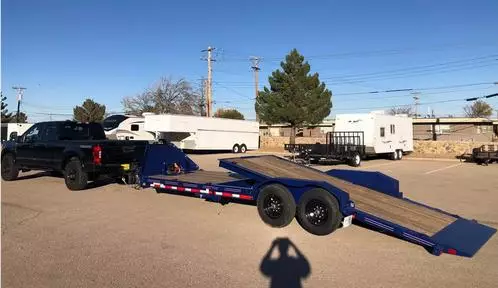
A tilt-deck flatbed trailer uses a hydraulic or gravity-operated mechanism that allows the entire cargo bed, or a portion of it, to tilt backward toward the ground. This creates a low-angle ramp that heavy equipment, vehicles, and wheeled cargo can drive or roll onto directly. On a standard flatbed trailer, you need to carry separate loading ramps and set them up before every load. With a tilt-deck design, the trailer bed itself becomes the ramp, eliminating that extra step entirely. Most tilt-deck trailers use a fixed front section and a tilting rear section. The front portion stays level and supports the tongue weight, while the rear section tilts down to meet the ground. Once the cargo is loaded and positioned, the deck locks back into its flat, level position for safe transport. This design is especially useful for loading items that are difficult to lift or that need to be rolled or driven onto the trailer.
Key Advantages of Renting a Tilt-Deck Flatbed Trailer
1. Faster and Easier Loading
The single biggest advantage of a tilt-deck trailer is how much easier it makes loading and unloading. Instead of wrestling with heavy steel ramps, aligning them with the trailer edge, and carefully driving or pushing equipment up a steep incline, you simply tilt the deck and load directly. This saves 10 to 20 minutes per load cycle, which adds up quickly over a full day of hauling. For contractors and landscapers who load and unload equipment multiple times per day, this time savings translates directly into more billable hours and less physical strain on your crew.
2. Reduced Risk of Cargo and Equipment Damage
Loading equipment up steep ramps increases the chance of scraping undercarriages, bottoming out on the transition point, or losing control on the incline. A tilt-deck trailer creates a much gentler loading angle, which dramatically reduces the risk of damage to both the cargo and the trailer itself. Low-clearance vehicles, skid steers, and compact excavators benefit the most from this design because the gradual angle eliminates the harsh transition between the ground and the trailer bed. For a detailed comparison of how tilt-deck models stack up against standard flatbeds, see our guide on tilt vs. regular flatbed trailer rentals.
3. More Usable Deck Space
Many tilt-deck flatbed trailers use a deckover design, which means the cargo bed sits on top of the wheel wells rather than between them. This gives you a wider, fully flat loading surface with no wheel well intrusions eating into your usable space. A standard flatbed trailer with fenders and recessed wheel wells can lose 6 to 12 inches of width on each side, which limits the size of equipment you can haul. A deckover tilt-deck trailer gives you the full width of the frame to work with, making it easier to position wide loads and secure them properly.
4. Improved Safety for Operators
Loading heavy equipment onto a trailer is one of the most dangerous parts of any hauling job. Steep ramp angles, unstable footing, and the risk of equipment rolling backward all contribute to loading-related injuries. A tilt-deck trailer reduces these risks by providing a low, stable loading angle that keeps equipment firmly grounded throughout the entire loading process. The locking mechanisms on tilt-deck trailers also add a layer of security by holding the deck firmly in the transport position during transit, preventing any unexpected movement. Always perform a thorough trailer inspection before each use to verify that the tilt mechanism, locks, and safety chains are all functioning properly.
5. Versatility Across Multiple Industries
Tilt-deck flatbed trailers are not limited to a single use case. Construction crews use them to haul mini excavators, skid steers, and compact track loaders. Landscapers load riding mowers, utility vehicles, and material pallets. Auto enthusiasts and mechanics use them to transport non-running vehicles that cannot be driven up traditional ramps. Agricultural operations rely on them for moving tractors, implements, and heavy feed equipment between fields and storage areas. This versatility makes a tilt-deck trailer rental a smart choice for anyone who needs to move heavy wheeled or tracked equipment.
Tilt-Deck vs. Standard Flatbed Trailer: Side-by-Side Comparison
The table below highlights the key differences between tilt-deck and standard flatbed trailers to help you decide which type is right for your job.
| Feature | Tilt-Deck Flatbed | Standard Flatbed |
| Loading method | Built-in tilting deck | Requires separate ramps |
| Loading angle | Low, gradual incline | Steeper with ramps |
| Average load time | 5 - 10 minutes | 15 - 25 minutes |
| Usable deck width | Full frame width (deckover) | Reduced by wheel wells |
| Best for | Heavy equipment, vehicles, low-clearance loads | General cargo, lumber, materials |
| Risk of cargo damage | Lower due to gradual angle | Higher at ramp transition point |
| Typical rental cost per day | $75 - $150 | $50 - $100 |
Time Saved Per Load: Tilt-Deck vs. Standard Flatbed
The chart below compares the average time required to complete one full load and unload cycle for common equipment types using a tilt-deck trailer versus a standard flatbed with ramps.
NeighborsTrailer.com
Renting a Tilt-Deck Flatbed Trailer Through Neighbors Trailer
Whether you need a tilt-deck flatbed trailer for a single day or an extended project, Neighbors Trailer makes it easy to find the right trailer near you. Our peer-to-peer marketplace connects renters with local trailer owners across the country, giving you access to a wide selection of trailer types and sizes without the markup of traditional rental companies. Every rental on Neighbors Trailer includes NT Protect, mandatory coverage that is automatically applied at the time of booking for just a few dollars per day. NT Protect gives renters confidence that they are covered if something goes wrong during the rental period, and it gives owners peace of mind knowing their equipment is protected every time it goes out.
Frequently Asked Questions
What is the weight capacity of a tilt-deck flatbed trailer?
Most tilt-deck flatbed trailers have a gross vehicle weight rating between 7,000 and 14,000 pounds, with payload capacities ranging from 5,000 to 10,000 pounds depending on the size and construction of the trailer. Always check the specific trailer listing for its rated capacity before booking to make sure it can handle the weight of your equipment.
Do I need a special license to tow a tilt-deck trailer?
In most states, you do not need a commercial driver's license (CDL) to tow a tilt-deck flatbed trailer as long as the combined weight of your tow vehicle and loaded trailer stays under 26,000 pounds. A standard driver's license is sufficient for most residential and light commercial towing. Check your state's specific towing regulations before renting to confirm the requirements for your setup.
Can I load a non-running vehicle onto a tilt-deck trailer?
Yes, this is one of the biggest advantages of a tilt-deck design. Since the deck tilts down to meet the ground at a low angle, you can use a winch to pull a non-running vehicle onto the trailer without needing to lift it. This makes tilt-deck trailers the preferred choice for towing companies, mechanics, and anyone who needs to transport a vehicle that cannot be driven under its own power.
How much does it cost to rent a tilt-deck flatbed trailer?
Tilt-deck flatbed trailer rentals on Neighbors Trailer typically range from $75 to $150 per day depending on the size, location, and features of the trailer. Multi-day and weekly rentals often come with discounted rates. Browse listings in your area to compare pricing and find the best deal for your project.
Conclusion
A tilt-deck flatbed trailer is one of the most practical and efficient options for hauling heavy equipment, vehicles, and oversized cargo. The built-in tilting deck eliminates the need for separate ramps, speeds up loading and unloading, reduces the risk of cargo damage, and provides a wider, more usable deck surface than most standard flatbed trailers. Whether you are a contractor moving equipment between job sites, a landscaper hauling mowers and materials, or a homeowner transporting a vehicle, renting a tilt-deck trailer through Neighbors Trailer gives you access to the right equipment without the cost of ownership.
Related Articles
- When is a Deckover Flatbed Trailer Rental a Great Option?
- Tilt Flatbed Trailer Rental Guide
- Flatbed Trailer Rental Loading Ramps
- How to Choose the Right Flatbed Trailer Rental
Content updated April 2026