

How to Choose Between a Tilt & Regular Flatbed Trailer Rental
 Neighbors Trailer
Nov 14, 2023 1031 7 min read flatbed trailer renta
If you have a heavy load to move and a pickup truck waiting in the driveway, a flatbed trailer rental can save you a small fortune compared with hiring a transport company. The catch: not every flatbed is built the same. The biggest fork in the road is choosing between a regular flatbed and a tilt deck. Picking the wrong one can turn a one-day haul into a two-day headache, so this guide walks through how the two compare and which one fits the job you actually have.
What Is a Regular Flatbed Trailer?
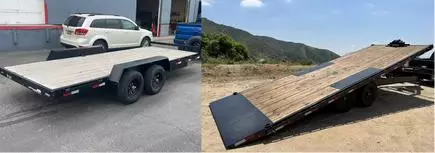
A regular flatbed trailer is the workhorse most people picture when they hear the words "flatbed rental." It is a fixed, level deck mounted over one, two, or three axles, with no walls, no roof, and nothing to limit how you load it. You can drive cargo on with a forklift, slide it on with loading ramps, or pick it up with a crane.
Regular flatbeds are popular for a reason. Their straightforward design keeps the cost down, the deck height predictable, and the maintenance simple. They handle steel, lumber, pallets, machinery, and wide loads with ease, which is why landscapers, contractors, and weekend movers reach for them first.
Strengths of a Regular Flatbed
The main advantages show up when the load is heavy, oddly shaped, or coming off a loading dock. Specifically, regular flatbeds shine for:
- Wide cargo that overhangs the deck
- Heavy equipment loaded by forklift or crane
- Long loads where a fixed surface keeps balance simple
- Multi-stop hauls where ramps stay strapped to the side
What Is a Tilt Deck Flatbed Trailer?
A tilt deck flatbed looks similar at first glance, but the deck itself pivots. With a release of the pin or a push of a hydraulic switch, the back of the deck drops to the ground and forms a long, gentle ramp. You drive the load straight up, lock the deck back into place, and you are ready to roll.
Tilt decks come in two flavors: gravity tilt, which uses the weight of your cargo to lower the deck, and hydraulic tilt, which uses a powered piston for smoother, more controlled movement. Both eliminate the need for separate loading ramps, which is the single biggest reason renters choose them.
Strengths of a Tilt Deck Flatbed
Tilt decks are built for cargo that rolls, drives, or scoots. They cut loading time dramatically and reduce the risk of a wheeled load slipping off a narrow ramp. They are the go-to choice for:
- Cars, motorcycles, and ATVs
- Riding mowers and compact tractors
- Skid steers and small construction equipment
- Anything with wheels that you would rather drive on than lift
Tilt vs Regular Flatbed: Side-by-Side Comparison
The clearest way to choose is to compare the two formats across the criteria that matter most for a typical rental.
| Feature | Regular Flatbed | Tilt Deck Flatbed |
| Deck design | Fixed, level deck | Pivots to form a ramp |
| Loading method | Forklift, crane, ramps | Drive-on or roll-on |
| Best cargo | Pallets, lumber, machinery | Vehicles, mowers, ATVs |
| Loading time | Slower, often 15+ min | Fast, often under 7 min |
| Setup complexity | Ramps must be carried, attached | No external ramps needed |
| Daily rental cost | Lower | Slightly higher |
| Best for | Heavy mixed cargo, multi-stop jobs | Single wheeled loads, frequent loading |
Loading Time, Visualized
One of the clearest differences is how long it takes to actually get cargo on the deck. The chart below shows typical loading times we see across our network of rentals.
NeighborsTrailer.com
How to Pick the Right One for Your Job
The right trailer is the one that matches your cargo and your loading situation, not the cheapest line item on the rental page. A few quick questions will get you most of the way there.
Does Your Load Have Wheels?
If the answer is yes and you do not have a forklift, lean tilt deck. The simple act of driving the load on cuts loading time, eliminates the risk of slipping off a narrow ramp, and saves your back. Tilt deck flatbed trailer rentals were designed for exactly this scenario.
Is the Cargo Wide, Long, or Heavy in an Awkward Way?
If your load is wider than a parking space or longer than a car, a regular flatbed is usually the smarter pick. The fixed deck gives you a stable, predictable surface to strap to. A flatbed trailer rental guide can help you size the deck to the load.
Where Are You Loading From?
If you are loading from a dock or have a forklift on site, a regular flatbed is faster and safer. If you are loading from flat ground with no equipment, a tilt deck is your friend.
Cost, Insurance, and What to Watch For
Tilt decks usually cost a few dollars more per day than regular flatbeds because of the moving parts. Hydraulic tilt models cost more than gravity tilt models. When comparing rentals, check the deck length, the gross vehicle weight rating, and the tongue weight; a deck that is too short for your load is just as bad as the wrong format.
Coverage on Neighbors Trailer is included with every rental and built into the booking, so you do not have to shop for separate insurance. The owner gets paid through Stripe within a few business days, and the renter is covered from the moment the rental starts.
Frequently Asked Questions
Can a tilt deck trailer haul cargo that does not roll?
Yes. A tilt deck still works as a regular flatbed once it is locked level. You can stack pallets, lumber, or machinery on it and strap them down the same way. The tilt is a bonus for wheeled loads, not a limitation.
Do I need a special hitch for a tilt deck trailer?
For most consumer-grade tilt decks, a standard 2 inch ball hitch is enough. Larger commercial tilt decks may require a gooseneck or pintle hitch. Always confirm the listing for the specific trailer you are renting.
How heavy a load can I put on a flatbed trailer rental?
It depends on the trailer's gross vehicle weight rating, not the format. A 14,000 pound regular flatbed and a 14,000 pound tilt deck can both haul up to that limit, minus the trailer's own weight. Check the GVWR on the listing before you book.
Is a tilt deck safer than using ramps?
For wheeled loads, yes. The deck itself becomes the ramp, which is wider and more stable than two separate aluminum ramps. There is also no chance of the ramps slipping out from under the load when you reach the top.
Can I rent either trailer for a single day?
Most listings on Neighbors Trailer offer single-day rentals, with discounts for multi-day bookings. Renters must be at least 21 to book.
The Bottom Line
For wheeled cargo and quick, frequent loading, a tilt deck wins on speed and safety. For heavy, wide, or oddly shaped cargo, a regular flatbed wins on stability and price. Match the trailer to the job, not the other way around, and your rental will pay for itself in time saved and headaches avoided. When you are ready, browse local listings and book the trailer that fits your load.
Related Articles
- Tilt Deck Flatbed Trailer Rental Advantages
- Tilt Flatbed Trailer Rental Overview
- Hydraulic Tilt Flatbed Trailer for Rent in Denver, CO
- How to Choose the Right Flatbed Trailer Rental
Content updated May 2026