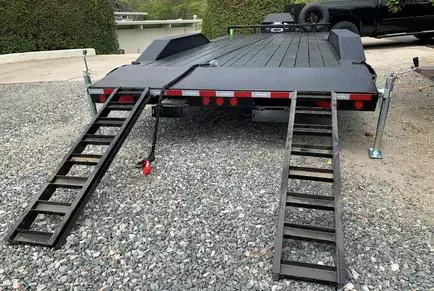
How to Choose Loading Ramps for Your Flatbed Trailer
 Neighbors Trailer
Aug 27, 2023 936 7 min read trailer ramp
Loading ramps make or break a flatbed trailer rental. Pick the wrong size, angle, or material and you end up with bent metal, damaged cargo, or a trip to the emergency room. This updated guide walks through every factor that matters when choosing ramps for a flatbed trailer, so your next load goes on smoothly and comes off intact.
Why the Right Loading Ramps Matter
Bent ramps are one of the most common calls owners make to Neighbors Trailer support. When a ramp is too short, too weak, or pitched too steeply, operators tend to force the load. That leads to tipped equipment, torn deck boards, and permanent ramp deformation. Welding a bent ramp back into shape rarely works long term because the heat weakens the steel and it collapses under the next heavy load. Investing in the right ramps the first time saves money and downtime.
Modern flatbed trailers are used for everything from skid steers and mini excavators to motorcycles, ATVs, and pallets of landscaping material. Each of those loads has a different footprint and weight, and each one deserves a ramp that matches it. Before you hook up, take a few minutes to work through the four variables below.
The Four Variables That Drive Ramp Selection
1. Deck Height and Load Angle
Measure from the ground to the top of the trailer deck where the ramp will connect. Most loaders aim for a load angle no steeper than 15 to 20 degrees. Anything above 20 degrees risks high-centering low-clearance equipment, and above 25 degrees you start stressing the front drivetrain of wheeled vehicles. A longer ramp reduces the angle for any given deck height.
2. Cargo Weight and Ramp Capacity
Weight ratings on loading ramps are published as a pair per ramp, meaning a set rated at 3,000 lb handles 3,000 lb total across both ramps. Always account for operator weight and attachments, not just the listed machine weight. If your skid steer weighs 6,800 lb with a full bucket, do not buy a pair rated at 7,000 lb. Buy the 10,000 lb pair and give yourself margin.
3. Tire or Track Width
Ramps come in single-runner, double-runner, and full-width configurations. Wheeled equipment with wider axle spacing often needs separate runners that sit further apart than a standard pair will allow. Tracked equipment should always use full-width arched ramps with center support to prevent the track from pinching the ramp surface.
4. Material and Surface Grip
Aluminum ramps are light, rust-proof, and easy to handle, but they dent more easily than steel. Steel ramps carry more weight and take more abuse but add 40 to 80 lb to the daily lift. Whichever material you choose, the top surface needs serrated or punched-plate tread. Smooth ramps combined with wet tires are a known cause of loading accidents.
Ramp Length Recommendations by Deck Height
The table below maps common flatbed deck heights to a safe minimum ramp length for a 15 to 20 degree load angle. These are starting points, not final specs. Heavier or longer cargo may still need an even longer ramp to stay within a safe approach angle.
| Trailer Deck Height | Minimum Ramp Length | Target Load Angle | Best For |
| 20 in (51 cm) | 5 ft (60 in) | ~19 degrees | ATVs, mowers, motorcycles |
| 24 in (61 cm) | 6 ft (72 in) | ~19 degrees | UTVs, small tractors |
| 30 in (76 cm) | 7 ft (84 in) | ~21 degrees | Compact skid steers, forklifts |
| 36 in (91 cm) | 8 ft (96 in) | ~22 degrees | Mid-size skid steers, mini excavators |
| 42 in (107 cm) | 10 ft (120 in) | ~21 degrees | Low-clearance equipment, vehicles with long overhang |
Capacity Comparison: Common Ramp Types
Ramp capacity varies widely by style. Arched aluminum ramps sacrifice capacity for weight savings, while steel straight ramps carry heavy machinery but weigh more. Bi-fold and folding ramps offer storage convenience at a middle-of-the-road capacity. The chart below compares typical capacities for the four ramp styles a flatbed renter is most likely to see.
NeighborsTrailer.com
Setting Up the Ramps Safely
Even a perfectly sized ramp causes problems if it is set up wrong. Always hook or pin the ramps so they cannot kick out when weight shifts. Place the trailer on level ground before loading, chock the trailer wheels, and lower the tongue jack or trailer stabilizers to keep the deck steady. If the flatbed has a tilt deck, loading ramps may still be required for low-clearance vehicles.
Spotters matter. A second person watching the tires against the ramp edges catches drift before it becomes a problem. For skid steers and front-end loaders, back up the ramp with the bucket raised slightly and the heavy end uphill. That keeps the center of gravity over the trailer axle and away from the ramp tips.
Maintenance and Storage Tips
A well-cared-for set of ramps lasts for years. After each use, hose off dirt, especially in the hinge points where debris grinds down metal. Store ramps flat and out of direct sunlight or weather when possible. Inspect welds and pin points every month for hairline cracks, and replace safety straps or retention pins as soon as they show wear. Aluminum ramps are susceptible to galvanic corrosion where they touch steel trailer rails, so a thin layer of dielectric grease at the contact point extends their life.
Cost Considerations for Flatbed Renters
Renters on Neighbors Trailer often ask whether to buy ramps or pay a surcharge to the owner for use of their ramps. The answer depends on how often you haul. For a one-time move, renting or paying the ramp surcharge is almost always cheaper. For anyone loading equipment monthly, a high-quality aluminum pair pays for itself within a year in back-strain avoidance alone. If you are new to flatbed rentals, the flatbed rental selection guide pairs nicely with this article to help you size the trailer before picking the ramps.
Frequently Asked Questions
Can I use two-by-tens as loading ramps in a pinch?
Wood planks are never a safe substitute for purpose-built loading ramps. Lumber flexes, splinters, and has no grip surface. It also has no published weight rating, so you have no way to know its failure point. If you do not have ramps, postpone the load and rent or buy a proper pair.
Do aluminum ramps hold up to skid steers?
Some heavy-duty aluminum arch ramps are rated for 10,000 lb per pair and handle compact skid steers comfortably. Always check the published capacity and keep the load angle below 20 degrees. For full-size skid steers above 8,000 lb operating weight, steel ramps are the safer choice.
What angle is too steep for a flatbed loading ramp?
A load angle above 20 degrees starts risking high-centering and front-drivetrain stress. Above 25 degrees you enter dangerous territory for most wheeled equipment. If your ramps are producing a steep angle, switch to a longer pair or raise the landing point with a gradual mound of dirt.
How do I know if my ramps are worn out?
Look for visible cracks near welds, elongated pin holes, loose hinge pins, dented tread surfaces, and any permanent bowing. Any of these signs means retire the ramp. For more on keeping trailer accessories in service longer, see the spring flatbed maintenance guide.
Do I need ramps if the flatbed has a tilt deck?
Tilt-deck flatbeds cut the load angle in half but still produce an angle steep enough to high-center low-clearance vehicles or stall compact tractors. For anything under 10 inches of ground clearance, ramps stay in the kit.
Bringing It All Together
Loading ramps are one of the cheapest pieces of trailer gear, yet they are responsible for more injuries and equipment damage than almost anything else in the hauling world. Match the ramp to the deck height, the cargo weight, the tire width, and the material you are comfortable handling. Maintain the hinges, store them dry, and inspect welds monthly. Do those five things and the ramps you buy this year will still be in the kit a decade from now.
Related Articles
- How to Choose the Right Flatbed Trailer Rental
- How to Properly Load a Motorcycle on Your Trailer Rental
- When a Deckover Flatbed Trailer Rental is a Great Option
- Preparing Your Flatbed Trailer for Safe Towing in Spring
Content updated April 2026