Renting a Trailer to Haul Your Snowmobile: Enclosed vs. Open, How Many Sleds Fit, and Winter Loading
 Neighbors Trailer
Oct 22, 2026 12 10 min read
Snowmobile season does not wait for convenient logistics. The first good snow drops, and suddenly you need your sled two or three hours north at a trailhead, a friend's cabin, or a riding area that the groomers have finally opened. Unless you ride from your own backyard, getting there means getting the sled there, and that is where the right trailer makes or breaks the trip.
For a lot of riders, owning a dedicated snowmobile trailer is hard to justify. It sits in the yard eleven months a year, takes salt and weather abuse, and costs money to register and store. Renting one for the weekend, or for the stretch of the season you actually ride, puts the right trailer under your sled without the year-round burden. This guide covers the enclosed-versus-open decision, how many sleds fit on what size trailer, and how to load, secure, and tow a snowmobile through winter conditions without damaging your machine or yourself.
Enclosed vs. Open: The Winter Trade-off
The first decision is the one that matters most, because snowmobiling happens in exactly the conditions that punish an exposed load. An open trailer, whether a utility deck or a flatbed, is cheaper to rent, lighter to tow, and quicker to load. The sled rides in the open, which is fine for a short tow in dry cold but rough when you are running highway miles through snow, slush, and road salt.
An enclosed trailer costs more and tows heavier, but it is built for this. It keeps blowing snow, road spray, and salt off your sled, it locks so you can leave the machine loaded overnight at a motel or cabin, and it doubles as a changing room and gear storage out of the wind. That last point is easy to underrate until you have tried to pull on bibs and boots in a parking lot at twenty degrees. For anyone towing a distance, riding multiple days, or hauling a newer sled they care about, enclosed is usually worth the premium. If you are weighing the same trade-off for other machines, our comparison of enclosed, flatbed, and utility trailers covers the same logic across powersports.
When Open Makes Sense
A single rider making a short local tow in dry conditions, or someone on a tight budget hauling one sled to a nearby trail, is well served by an open utility or tilt trailer. Just plan to clean the salt off your sled and the trailer afterward, and accept that the machine takes the weather for the whole drive.
When Enclosed Is Worth It
Long tows, multi-day trips, newer or high-value sleds, and any time you want to leave the machine loaded and locked overnight all point to enclosed. The weather and theft protection, plus the dry space to gear up, change the trip from an endurance test into a comfortable one.
How Many Sleds Fit on What Size Trailer
Snowmobile trailers are often described by how many sleds they hold, a "2-place" or "4-place," as much as by length. Use the guide below as a representative starting point, then confirm the actual deck length and width against your sled, since a long touring sled with a stretched track needs more room than a short mountain sled. Two-up touring machines and long-track mountain sleds eat deck length fast, so measure your longest sled rather than trusting that a listed sled count fits every machine.
| Trailer Size | Sleds It Typically Holds | Best For |
|---|---|---|
| 8 to 10 ft open / tilt | 1 sled | A solo rider making a short, local tow |
| 10 to 12 ft open, or a 2-place deck | 2 sleds (side by side on a wide deck, or nose to tail) | A couple or two friends riding together |
| 12 to 14 ft enclosed | 2 sleds plus gear | Weekend and multi-day trips that need weather protection |
| 22 to 28 ft enclosed (4-place) | 3 to 4 sleds plus gear | A group, family, or race weekend |
If you are hauling more than two sleds, the loading pattern and weight balance matter as much as the raw length. Our guide on how to haul more than one vehicle at a time walks through arranging a multi-machine load so it tows straight. Not sure what size you need? The what trailer do I need tool matches your sleds and gear to a size in a couple of minutes.
Loading and Securing a Snowmobile the Right Way
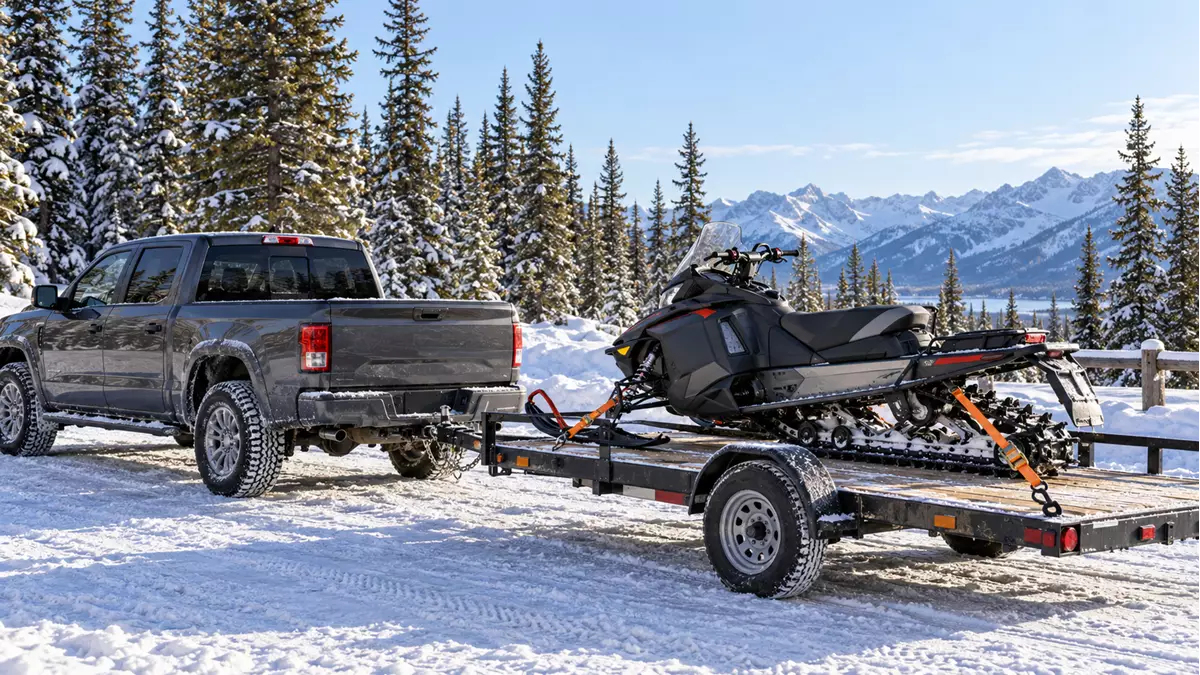
Loading a sled is not loading a four-wheeler, and the differences are where damage happens. Many snowmobile trailers are drive-on, drive-off tilt decks, which let you pull straight through rather than backing down a ramp. Whatever the format, load on the flattest ground you can find, go slow, and keep your weight centered.
If the trailer is a tilt deck, confirm it tilts back level once the sled is on and latches before you tow. If it uses ramps, make sure they are rated for the machine and clear of ice before you drive up, and use a spotter if the approach is steep or slick. A sled that slips off a ramp in the driveway is a far better place to learn the lesson than the side of a highway.
Securing a sled is its own skill. Use a front tie-down strap or a dedicated ski tie-down at the front, and secure the rear around the bumper or rear bulkhead, never by cinching down on suspension components. Snowmobiles ride on carbides and hyfax that can gouge a bare trailer deck, so many sled trailers have slides or a traction surface, and it is worth confirming the trailer has them before you load. Tie the machine down firmly enough that it cannot shift, but do not crank so hard that you compress and damage the rear suspension. Walk around and recheck every strap before you pull out, and again after the first few miles once everything has settled.
Winter Towing: Snow, Ice, and Salt
Towing a trailer in winter adds a layer that summer hauling never deals with. Loading on packed snow or ice is slippery for both you and the sled, so clear a path to the ramp or deck if you can, and never gun it up a slick ramp. On the road, a loaded trailer behind you lengthens your stopping distance on cold or icy pavement, so leave more room and brake earlier than instinct says.
Salt is the quiet enemy. Highway salt spray coats everything on an open trailer and works into every connector and bearing, which is exactly why enclosed trailers earn their keep in the salt belt. Whatever you tow, rinse the sled and the trailer when you get home, and confirm the trailer's tires, bearings, and lights are sound before a cold-weather trip, since winter is the worst time to find out a bearing was dry. Winter days are short, too, so plan the drive so you are not loading or unloading in the dark on a slick surface. Before you hitch up, make sure your truck is actually rated to pull the loaded trailer through winter grades; our towing capacity calculator is a quick check.
One Sled or the Whole Crew
Snowmobiling is social, and a lot of trips are two, three, or four riders heading up together. Renting one larger enclosed trailer for the group is often cheaper and simpler than everyone towing separately, and it keeps all the sleds and gear in one secure, weatherproof box. The thing to get right is the load order and balance, heavier sleds centered over the axles, so the trailer tows straight and the tongue weight stays in range. Too much weight at the back makes a trailer sway; too much at the front overloads the hitch. Coordinate with your group on who is renting and from where, and settle the sled order before you start loading rather than shuffling machines around on an icy ramp.
What It Costs and Why to Book Early
Renting keeps the cost tied to how much you actually ride. Instead of buying a trailer that depreciates in the yard and needs registration, storage, and salt-season upkeep, you pay for the weekends or the stretch of winter you are on the snow. For a rider who gets out a handful of times a season, that math almost always favors renting, and it means you can size up to an enclosed trailer for the big trip and down to an open one for a quick local tow without owning either.
The catch is timing. Snowmobile demand is concentrated into the weeks right after the first good snow, and the enclosed trailers in snow country are the first to go. When a cold snap lines up with a weekend, every rider in the region is chasing the same trailer at once. Book as soon as you know your dates and your destination, rather than scrambling the week of the trip when the nearby inventory is already spoken for. Booking ahead also leaves room to get the size right instead of taking whatever is still on the lot.
Before You Return the Trailer
The trip is not quite over when you pull into the driveway. Salt and slush that rode home will keep eating at the trailer if you leave them, so give the deck, the frame, and the lights a rinse, and knock the packed snow and ice off before it refreezes. If you hauled on an open trailer, your sled wants the same treatment. A few minutes with a hose protects the machine and the trailer both.
Return the trailer the way you would want to receive it: swept out, straps coiled, and free of the snow and grit that collect on a winter haul. On a peer-to-peer rental, leaving it clean is what keeps your deposit intact and keeps you on good terms with an owner you may want to rent from again next season. If anything came loose or a light went out on the road, a quick note to the owner is better than letting them discover it later.
Your Pre-Trip Snowmobile Haul Checklist
Run through these five before you leave for the trailhead. Each one prevents a common cold-weather headache.
- Match the trailer to the sleds. Deck length and width for your specific machines, plus room for gear, checked against the trailer's rated capacity and your truck's towing limit.
- Choose enclosed for distance or weather. Long tows, multi-day trips, and salted highways favor an enclosed trailer; short dry tows can go open.
- Load on flat, cleared ground. Drive on slowly and centered, and clear snow or ice off the ramp or deck first.
- Tie down at the ski and rear, not the suspension. Firm enough that nothing shifts, not so hard that you damage the rear suspension.
- Prep for winter roads. Check trailer tires, bearings, and lights, leave extra stopping distance, and plan to rinse salt off afterward.
Rent the Right Sled Trailer This Winter
The ride is the reward, and the trailer is just how you get there, so it should not be the part that goes wrong. Matching the trailer to your sleds, choosing enclosed when the distance or the weather calls for it, and tying down and towing with winter in mind is what turns a cold, salty haul into a non-event. Neighbors Trailer connects you with trailers from owners near you, so you can rent the right snowmobile trailer for the weekend or the season and hand it back when the snow melts. Find a trailer near you and book it before the first big snow fills the calendar.