

Trailer Rental Guide - How to Choose the Right Trailer to Haul Your Offroad Vehicles
 Neighbors Trailer
May 5, 2023 998 11 min read offroad vehicle, trailer renta
Taking your ATVs, UTVs, or dirt bikes out for a weekend on the trails is one of the best ways to spend your free time. But before the fun begins, you need a reliable way to get your offroad vehicles from your garage to the trailhead. Since offroad vehicles cannot be legally driven on public roads in most states, a trailer is the safest and most practical solution. Whether you own a single ATV or a fleet of side-by-sides, picking the right trailer makes the difference between a smooth trip and a stressful one.
This guide breaks down everything you need to know about choosing the right trailer for hauling offroad vehicles, from sizing and trailer types to hitch configurations and material choices. If you are buying your first trailer or searching for a Neighbors Trailer rental near you, this information will help you make a confident decision.
How to Determine the Right Trailer Size for Your Offroad Vehicles
Before you start comparing trailer models, you need to figure out how much space and weight capacity you actually need. Offroad vehicles vary widely in size and weight. A lightweight dirt bike might weigh 250 pounds, while a full-size side-by-side UTV can tip the scales at 1,800 pounds or more. If you plan to haul multiple vehicles on a single trip, those numbers add up quickly.
Start by adding up the total weight of every vehicle you plan to transport, then add roughly 200 to 300 pounds for gear, fuel, coolers, and tie-down equipment. That combined number is your minimum payload requirement. Your trailer's Gross Vehicle Weight Rating (GVWR) must exceed this total, and your tow vehicle's towing capacity must also be rated for the combined weight of the loaded trailer.
For deck length, measure each vehicle bumper to bumper and add at least two feet of clearance per vehicle for proper tie-down spacing. A single ATV typically needs an 8 to 10 foot deck. Two full-size ATVs usually require a 14 to 16 foot trailer. If you are hauling a UTV alongside an ATV, look at 16 to 20 foot options to give yourself enough room to load and secure everything safely.
Comparing Trailer Types for Offroad Vehicle Hauling
Not all trailers are built the same, and each type has strengths depending on what you haul and how often you haul it. Here is a breakdown of the four most common trailer types used for offroad vehicle transport.
Open Flatbed Trailers
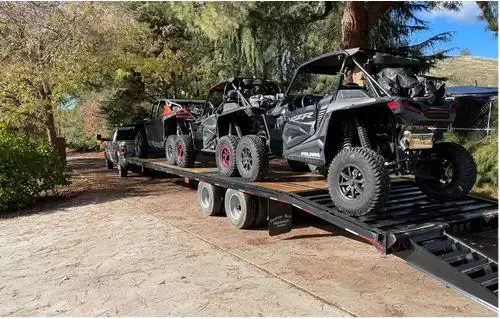
Flatbed trailers are the most versatile option for hauling offroad vehicles. Their open, flat deck gives you full access to load from the rear or sides using ramps. Without walls or a roof to work around, you can fit wider vehicles like side-by-sides with ease. Flatbeds are also lighter than enclosed options, which means your tow vehicle works less hard and you use less fuel. The tradeoff is zero weather protection, so your vehicles will be exposed to rain, dust, and road debris during transit. For weekend trail trips where weather is predictable, a flatbed trailer rental is often the best value.
Enclosed Trailers
If you want maximum protection for your offroad vehicles, an enclosed trailer is the way to go. These trailers have solid walls and a roof, shielding your ATVs or UTVs from weather, theft, and road debris. Many enclosed trailers include built-in tie-down points, interior lighting, and side doors for easier access. The downsides are higher cost, more weight, and reduced maneuverability on tight forest roads. Enclosed trailers also require a stronger tow vehicle due to their increased curb weight.
Utility Trailers
Utility trailers sit between flatbeds and enclosed trailers in terms of features. They have an open deck with low side rails, which help contain your cargo without adding the bulk of full walls. Utility trailers work well for hauling a single ATV or a couple of dirt bikes. They are affordable, lightweight, and easy to tow with mid-size trucks and SUVs. However, they typically have lower weight capacities than flatbed or enclosed options, so they may not be the best choice for heavier UTVs or multiple vehicles.
Car Trailers
Car trailers, sometimes called auto transport trailers, are designed for heavier loads and come with built-in ramps or tilt-deck mechanisms. While they are primarily designed for cars and trucks, they can easily accommodate large UTVs and side-by-sides. Car trailers usually have a higher GVWR than utility trailers, making them a strong choice when you need to haul two or three heavy offroad vehicles at once. These trailers also feature wider decks, which gives you more room to position vehicles side by side.
| Trailer Type | Best For | Typical GVWR | Weather Protection | Avg. Rental Cost/Day |
| Open Flatbed | UTVs, multiple ATVs | 7,000 - 14,000 lbs | None | $50 - $85 |
| Enclosed | High-value vehicles, long trips | 7,000 - 12,000 lbs | Full | $75 - $125 |
| Utility | Single ATV, dirt bikes | 2,000 - 5,000 lbs | Minimal (side rails) | $35 - $60 |
| Car Trailer | Heavy UTVs, multiple vehicles | 7,000 - 10,000 lbs | None | $60 - $100 |
Aluminum vs. Steel Trailers: Which Material is Better?
The frame and deck material of your trailer affects its weight, durability, maintenance requirements, and cost. The two primary options are aluminum and steel, and each has clear advantages depending on your priorities.
Aluminum trailers are significantly lighter, which translates to better fuel economy and lower strain on your tow vehicle. They resist corrosion naturally, so they require less maintenance over time and hold their resale value well. The downside is higher upfront cost. Aluminum trailers typically run 15 to 25 percent more expensive than comparable steel models.
Steel trailers are more affordable to buy or rent and are incredibly strong. Steel handles heavy loads and rough terrain without flexing. However, steel is prone to rust, especially if you frequently drive on wet or muddy roads (which is practically guaranteed when you are hauling offroad vehicles). Regular painting, coating, and rust inspection are necessary to keep a steel trailer in good condition.
For occasional weekend haulers who rent trailers through Neighbors Trailer, the material choice matters less since the trailer owner handles maintenance. For buyers planning to own long-term, aluminum is often the smarter investment despite the higher purchase price.
NeighborsTrailer.com
Understanding Trailer Hitch and Coupling Styles
The way your trailer connects to your tow vehicle plays a major role in stability, weight capacity, and ease of use. There are three main coupling styles to consider.
Bumper-Pull (Receiver Hitch)
Bumper-pull trailers connect to a standard receiver hitch mounted at the rear of your tow vehicle. This is by far the most common setup for recreational hauling and works well for trailers up to about 10,000 pounds GVWR. Bumper-pull hitches are affordable, available on most trucks and SUVs, and easy to connect and disconnect. The downside is that the trailer's weight sits entirely behind the rear axle, which can cause sway at highway speeds if the load is not balanced properly.
Gooseneck
Gooseneck trailers use a ball mounted in the bed of a pickup truck, placing the connection point directly over the rear axle. This design distributes weight more evenly and significantly reduces trailer sway. Gooseneck setups are preferred for larger, heavier trailers in the 10,000 to 30,000 pound range. If you regularly haul three or more full-size UTVs, a gooseneck trailer provides the stability you need. The catch is that you need a pickup truck with a gooseneck ball installed in the bed.
Fifth Wheel
Fifth wheel hitches mount a large coupling plate in the truck bed, similar to the setup used on semi-trucks. Fifth wheel trailers offer the highest stability and weight capacity, handling loads well above 20,000 pounds. For recreational offroad hauling, a fifth wheel is typically more trailer than you need unless you are also transporting a toy hauler RV with a built-in garage for your offroad vehicles. The installation cost and truck bed space required make this option impractical for most casual haulers.
Essential Tips for Loading Offroad Vehicles Safely
Once you have the right trailer, how you load your vehicles matters just as much as which trailer you choose. Poor loading can lead to shifted cargo, damaged vehicles, or dangerous towing conditions on the highway.
Always load your heaviest vehicle first and position it as far forward on the trailer deck as possible. This places more weight over or ahead of the trailer axle, which improves stability and reduces tongue weight issues. Use proper loading ramps rated for the weight of your heaviest vehicle. Flimsy ramps can bend or collapse under load, causing serious injury or vehicle damage.
Secure each vehicle with a minimum of four tie-down straps, attached at four separate anchor points to create an X-pattern that prevents forward, backward, and lateral movement. Ratchet straps rated for at least 1,500 pounds breaking strength are recommended for ATVs, and you should use 3,000-pound-rated straps for UTVs and side-by-sides. Check all straps after driving 15 to 20 minutes, as vibration can cause them to loosen.
Renting vs. Buying a Trailer for Offroad Adventures
If you only take your offroad vehicles out a few times per year, buying a trailer may not make financial sense. Between the purchase price, insurance, registration, storage space, and ongoing maintenance, trailer ownership adds up fast. Renting a trailer through a peer-to-peer platform like Neighbors Trailer lets you get the exact size and type you need for each trip without the long-term commitment.
Every rental booked through Neighbors Trailer includes NT Protect, which is mandatory coverage automatically applied at checkout for just a few dollars per day. NT Protect covers accidental damage during the rental period, giving both the trailer owner and the renter peace of mind on every trip. You do not need to purchase separate insurance or worry about liability gaps.
For people who haul offroad vehicles more than once a month, buying a trailer and listing it on Neighbors Trailer when you are not using it can help offset your ownership costs. Many trailer owners earn steady passive income by renting out their trailers between their own trips.
Frequently Asked Questions
What size trailer do I need for two ATVs?
Most standard ATVs are about 4 feet wide and 6 to 7 feet long. For two ATVs loaded side by side, a 6.5 x 12 foot utility trailer or a 7 x 14 foot flatbed provides enough room for both vehicles plus tie-down clearance. Make sure the trailer's weight capacity exceeds the combined weight of both ATVs plus your gear.
Can I haul a UTV on a utility trailer?
It depends on the UTV's weight and the trailer's GVWR. Many full-size UTVs weigh 1,500 to 2,000 pounds, which exceeds the capacity of lighter utility trailers rated at 2,000 to 3,000 pounds GVWR. If your UTV is on the heavier side, a flatbed or car trailer with a higher rating is a safer choice.
Do I need a special license to tow a trailer with offroad vehicles?
In most U.S. states, a standard driver's license covers trailers and combined loads under 26,000 pounds GVWR. Since most recreational offroad hauling setups fall well below this threshold, you typically do not need a commercial driver's license. However, some states require a trailer endorsement or separate registration for trailers over a certain weight, so check your local DMV requirements before your trip.
How do I keep my offroad vehicles from shifting during transport?
Use at least four ratchet straps per vehicle, anchored at the frame or designated tie-down points. Avoid strapping to handlebars, bumpers, or plastic body panels, as these can break under load. Tighten straps firmly enough to compress the suspension slightly, which prevents the vehicle from bouncing. Check all straps after the first 20 minutes of driving and at every fuel stop.
Is it cheaper to rent or buy a trailer for occasional offroad trips?
For fewer than 10 trips per year, renting is almost always more cost-effective. A quality flatbed trailer costs $3,000 to $8,000 to purchase, plus annual costs for insurance, registration, and storage. Renting the same trailer for a weekend typically costs $50 to $100 per day through Neighbors Trailer, with no long-term expenses.
Related Articles
- How to Properly Load a Motorcycle on Your Trailer Rental
- Choosing Between Enclosed, Flatbed, and Utility Trailers for ATVs
- Flatbed Trailer Loading Ramps: What You Need to Know
- Common Towing Mistakes to Avoid with a Flatbed Trailer
Content updated April 2026