

ATV Hauling Guide: Enclosed, Flatbed or Utility Trailer Rental?
 Neighbors Trailer
Aug 4, 2023 1119 9 min read utility trailer re
The Best Trailer Types for Hauling ATVs: Enclosed, Flatbed, and Utility Compared
Hauling an ATV safely requires the right trailer for the job. Whether you are heading to a weekend trail ride, transporting a machine to a buyer, or moving multiple ATVs for a guided tour operation, the trailer you choose affects how securely your vehicle travels, how easy it is to load and unload, and how much protection it gets from the elements along the way.
Three trailer types dominate the ATV hauling market: enclosed trailers, flatbed trailers, and utility trailers. Our what trailer do I need calculator recommends the best type and size from your ATV details and how you plan to use it. Each has distinct advantages depending on your budget, the number of machines you need to move, and the conditions you expect to encounter. This guide breaks down the strengths and trade-offs of each option so you can make a confident decision, whether you plan to buy a trailer or rent one through Neighbors Trailer.
Enclosed Trailers for ATV Hauling
Full Weather and Theft Protection
An enclosed trailer wraps your ATV in a protective shell that shields it from rain, road debris, dust, and UV exposure during transit. If you are hauling a high-value machine or traveling long distances, the enclosed design also deters theft at rest stops and overnight parking. Many enclosed trailers feature locking rear doors and side entry doors that let you secure the vehicle inside without exposing it to prying eyes.
Interior Tie-Down Flexibility
Most enclosed trailers come with D-ring anchor points along the floor and walls, giving you multiple options for strapping down your ATV at different angles. The walls and ceiling also create a contained space that prevents straps from slipping off anchor points during bumps and turns. For owners who want to understand proper strap technique, the complete guide to tiedowns in an enclosed trailer covers everything from ratchet strap placement to working load limits.
Storage and Versatility
Beyond hauling ATVs, an enclosed trailer doubles as a mobile storage unit for gear, tools, spare parts, and camping equipment. Some owners add shelving, workbenches, or generator mounts inside the trailer to create a self-contained base camp for trail weekends. This versatility makes enclosed trailers a strong investment for owners who want to list their trailer on Neighbors Trailer between personal trips, since renters value the weather protection and security for a wide range of cargo types.
Flatbed Trailers for ATV Hauling
Easy Loading From Any Angle
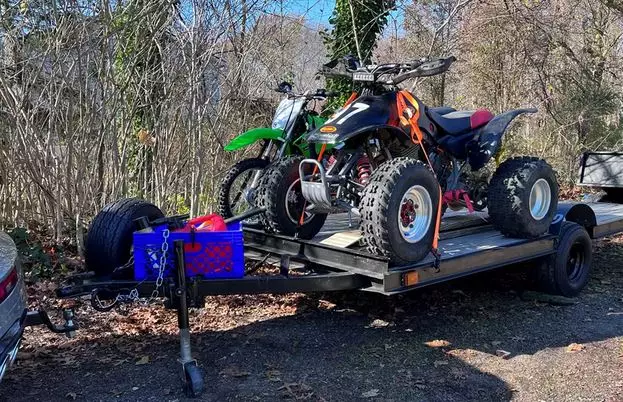
Flatbed trailers have no walls or roof, which means you can drive an ATV onto the deck from the rear, side, or even use a crane for machines that are not running. This open access makes flatbeds the fastest trailer type to load and unload, especially when you are working alone or on uneven terrain where backing up to a ramp is tricky. Many ATV owners prefer flatbeds for short local hauls where weather protection is less of a concern.
Wider Deck for Multiple Machines
A standard flatbed trailer offers more usable deck width than an enclosed trailer of the same length because there are no interior walls eating into the cargo space. This extra width lets you park two ATVs side by side on a single-axle flatbed or fit three or more on a tandem-axle model. If you frequently haul multiple machines for group rides, a flatbed gives you the most payload flexibility per dollar spent.
Lower Purchase and Rental Cost
Flatbed trailers cost less than enclosed models of similar size because they require fewer materials and less fabrication. This cost advantage carries over to the rental market, where flatbed daily rates on Neighbors Trailer tend to run lower than enclosed rates. For renters who need to move an ATV once or twice a year, the savings add up quickly. If you are choosing the right trailer for off-road vehicles, the guide to hauling off-road vehicles offers detailed advice on matching trailer size to vehicle weight.
Utility Trailers for ATV Hauling
Compact Size for Single-Machine Hauling
Utility trailers are the smallest and lightest option for hauling a single ATV. Most utility trailers measure between 4 by 6 feet and 5 by 10 feet, which is enough deck space for one full-size ATV with room for a small gear bag or cooler. Their lighter weight means almost any truck or SUV with a Class II hitch can tow one safely, making utility trailers accessible to a wider range of vehicle owners.
Mesh or Solid Side Rails for Containment
Unlike a fully open flatbed, most utility trailers come with low side rails or mesh panels that prevent cargo from sliding off the edges during transit. These rails do not offer the same protection as enclosed walls, but they add a useful safety margin when hauling an ATV over bumpy roads or through tight turns. Some models include a fold-down rear gate that doubles as a loading ramp, eliminating the need for a separate ramp.
Affordable and Easy to Store
Utility trailers are the most budget-friendly option for ATV hauling. Their compact footprint also means they fit in a standard garage bay or alongside a house without taking up excessive driveway space. For trailer owners who want to rent out a utility trailer for ATV hauling, the low buy-in cost makes it easy to earn back the purchase price through a handful of rental bookings on Neighbors Trailer.
Trailer Type Comparison for ATV Hauling
The table below compares the three trailer types across the factors that matter most when hauling ATVs, so you can see the trade-offs at a glance before deciding which option fits your needs and budget.
| Feature | Enclosed Trailer | Flatbed Trailer | Utility Trailer |
| Weather Protection | Full | None | Minimal (side rails) |
| Theft Security | High (lockable) | Low | Low |
| ATV Capacity | 1 - 3 | 2 - 4 | 1 - 2 |
| Typical Daily Rental | $75 - $150 | $40 - $90 | $25 - $60 |
| Loading Ease | Rear ramp | Any side | Fold-down gate |
| Tow Vehicle Required | Half-ton truck+ | Half-ton truck+ | SUV or midsize truck |
| Storage Footprint | Large | Medium | Small |
NeighborsTrailer.com
How to Secure Your ATV on Any Trailer Type
Regardless of which trailer you choose, proper tie-down technique is critical for safe transport. Position the ATV centered on the deck with the front wheel facing forward. Compress the suspension slightly by pulling the front end down with a ratchet strap anchored to the trailer frame, then secure the rear with two additional straps forming a V pattern. Wheel chocks add an extra layer of stability, especially on flatbed and utility trailers where there are no walls to prevent lateral movement. Always check strap tension after the first mile of driving, as vibration and settling can loosen even properly tightened straps.
Renting vs Buying a Trailer for ATV Hauling
If you haul ATVs a few times per year, renting a trailer through Neighbors Trailer is almost always more cost-effective than buying one. Our compare tool weighs the full cost of buying versus renting so you can see which makes sense for your usage. You avoid the upfront purchase price, insurance costs, registration fees, storage hassles, and ongoing maintenance. When you do rent, every booking on Neighbors Trailer automatically includes NT Protect, which is mandatory coverage charged to the renter at the time of booking for just a few dollars per day. That coverage protects both you and the trailer owner during the rental period, so neither party needs to arrange separate insurance.
For frequent haulers or trailer owners looking to earn passive income, buying a trailer and listing it on Neighbors Trailer puts the equipment to work when you are not using it. Owners keep 80 percent of the rental price, and the platform handles bookings, payments, and renter communication.
Frequently Asked Questions
Which trailer type is safest for hauling an ATV long distance?
An enclosed trailer offers the most protection for long-distance ATV transport. The walls and roof shield the machine from road debris, weather, and theft at rest stops. If you are driving more than a few hours, the added security of a lockable enclosed space is worth the higher rental or purchase cost.
Can I haul two ATVs on a utility trailer?
It depends on the trailer size and the combined weight of the machines. A 5 by 10 foot utility trailer can typically fit two smaller ATVs side by side if their combined weight stays within the trailer's gross vehicle weight rating. Always check the GVWR plate on the trailer tongue before loading.
Do I need a special license to tow a trailer with an ATV on it?
In most US states, a standard driver's license covers towing a single-axle or light tandem-axle trailer with an ATV. However, if the combined weight of the trailer and cargo exceeds your state's threshold for non-commercial towing, you may need an endorsement. Check your state's DMV website for current regulations.
What size hitch ball do I need for an ATV trailer?
Most ATV-rated trailers use a 2-inch hitch ball with a Class II or Class III receiver. Enclosed trailers for multiple ATVs may require a 2-5/16 inch ball due to higher tongue weight. Verify the coupler size printed on the trailer before selecting a hitch ball.
How does NT Protect work when I rent a trailer for my ATV?
NT Protect is mandatory coverage that is automatically included in every Neighbors Trailer booking for a few dollars per day. It is charged to the renter at the time of booking and covers the rental period, giving both the renter and the trailer owner peace of mind without the need for separate insurance arrangements.
Related Articles
- ATV Trail Utility Trailer Rental Guide
- Choosing the Right Utility Trailer Size for Your ATV
- How to Choose the Right Trailer for Off-Road Vehicles
- Complete Guide to Tiedowns in an Enclosed Trailer
Content updated April 2026