How to Haul More Than One Vehicle At a Time
 Neighbors Trailer
Mar 27, 2025 992 5 min read
Hauling more than one vehicle at a time is the kind of project that looks intimidating until you have the right trailer and a real plan. Whether you are moving two project cars, picking up a pair of motorcycles, or relocating an ATV and a side-by-side, doubling up saves trips, gas, and rental fees. This guide walks through the trailers, hitches, loading order, and on-road habits that make hauling more than one vehicle at a time safe and uneventful in 2026.
Pick the Right Multi-Vehicle Trailer
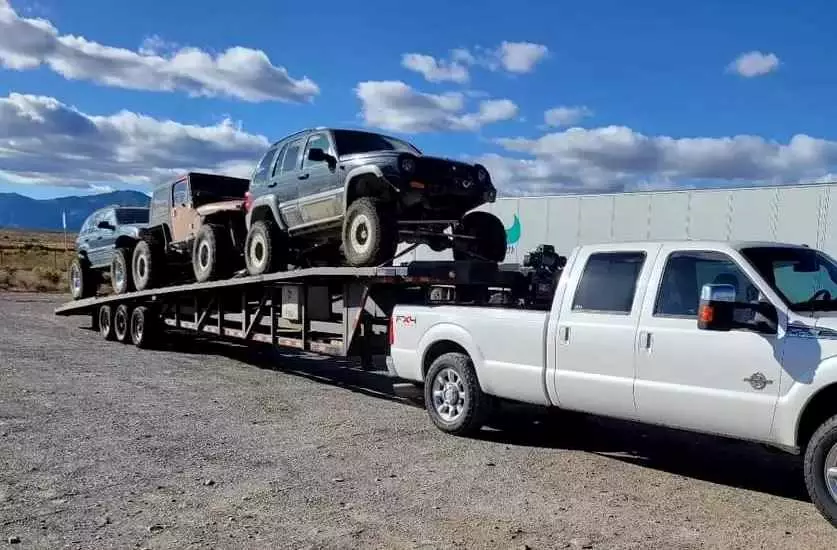
Two-car wedge haulers, stacker trailers, and 30-foot car haulers are the most common multi-vehicle rentals. For motorcycles and ATVs, 16 to 20 foot enclosed trailers with floor tie-downs handle most loads. Match the trailer GVWR to the loaded weight of both vehicles plus cargo and gear.
Calculate the Combined Load First
Add the curb weight of both vehicles, plus any fuel, tools, and gear. Most midsize cars weigh 3,200 to 3,700 lbs each, so a two-car haul often crosses 7,000 lbs of payload before the trailer itself. Confirm your truck's GCWR can handle truck + trailer + cargo with a 10 to 15 percent safety margin.
Tongue Weight on a Stacked Load
Tongue weight should sit between 10 and 15 percent of total trailer weight. On stacker or wedge trailers, position the heavier vehicle slightly ahead of the axle to keep tongue weight in range.
Load the Heaviest Vehicle First
Drive the heavier of the two vehicles onto the trailer first, slightly forward of the axle. The second, lighter vehicle goes behind, balanced to keep tongue weight on target. Backing onto a wedge trailer is also common; either way the heavier vehicle anchors the front.
Strap Each Vehicle Independently
Use four straps per vehicle minimum: two front, two rear, attached to the frame or wheel cradles, not the suspension or body panels. Wheel-strap systems (Mac's or similar) are the gold standard for car haulers because they let the suspension move.
Mind Tire and Axle Capacity
Multi-vehicle hauls quickly exceed single-axle capacity. Tandem-axle and triple-axle trailers spread the load and give you a margin if one tire fails on the highway. Check trailer tire pressure cold; underinflated trailer tires are the leading cause of multi-vehicle haul blowouts.
Plan the Route Like You Mean It
Avoid tight residential streets, low overpasses, weight-restricted bridges, and steep grades when possible. Highway routing with truck stops every 100 to 150 miles makes for predictable fuel and inspection breaks. Apps like Trucker Path help drivers spot accessible parking.
Drive Slow and Inspect Often
Stay 5 to 10 mph below the posted limit, keep an extra two car lengths of following distance, and inspect straps, tires, and lights every 100 miles or two hours. Long downhills require gearing down to keep brakes cool with the heavier combined load.
Unload Safely at the Destination
Reverse the loading order: lighter vehicle off first, then the heavier one. Use wheel chocks on the trailer while one vehicle is off and the other is still aboard. Keep all bystanders clear during ramp deployment and drive-off.
Trailer Choice by Multi-Vehicle Haul Type
| Load | Recommended Trailer | Min Tow Vehicle | Approx Combined Weight |
| Two midsize cars | 24 to 28 ft tandem car hauler | 3/4 ton truck | 7,500 to 9,500 lbs |
| Two motorcycles | 14 to 16 ft enclosed | Midsize SUV / half-ton | 3,000 to 4,000 lbs |
| Two ATVs or side-by-sides | 14 to 18 ft utility | Half-ton truck | 2,500 to 4,500 lbs |
| Two project cars (one inop) | Wedge or stacker with winch | 3/4 ton truck | 7,000 to 10,000 lbs |
| Two snowmobiles | 14 ft enclosed | Midsize SUV / half-ton | 1,400 to 2,200 lbs |
| Vehicle + cargo trailer combo | Use two separate trips | N/A | Not towing both at once |
Typical Combined Weight of Common Two-Vehicle Hauls
NeighborsTrailer.com
FAQ
Can I tow two trailers at once?
Most states prohibit double-towing for non-commercial drivers, and the few that allow it cap the second trailer at small sizes. Use a multi-vehicle trailer instead.
Do I need a CDL for a two-car haul?
Personal use under 26,001 lbs combined weight is exempt in most states. Always confirm your state's rules first.
What if one vehicle does not run?
Use a wedge or stacker with a winch. Never push a non-running vehicle onto a ramp by hand.
Is it cheaper to make two trips or rent a bigger trailer?
For trips over 100 miles, a single larger trailer usually wins on fuel and time. For local jobs, two trips on a smaller rental can be cheaper.
Doubling Up Done Right
Hauling more than one vehicle at a time is straightforward once you pick the right trailer, load by weight, strap each unit independently, and drive smooth. Plan the route, check the load often, and unload in reverse order. Neighbors Trailer makes it easy to find a properly sized car hauler, stacker, or enclosed trailer for your next multi-vehicle move.
Related Articles
- Car Hauler Trailer Rental Examples
- Choose the Right Trailer for Offroad Vehicles
- Can Your Vehicle Safely Tow a Trailer?
- Trailer Towing Capacity Explained: GVWR, GCWR, Payload
Content updated May 2026