

Renting a Stock Trailer to Haul Livestock: Cattle, Goats, Sheep & More
 Neighbors Trailer
Sep 23, 2026 5 11 min read
Whether you are running a load of feeder calves to the sale barn, hauling your kid's 4-H steer to the county fair, or moving a few goats to new pasture, getting livestock from one place to another safely is its own skill. And you do not need to own a stock trailer to do it. Renting one gets the animals moved without the cost of buying, storing, and maintaining a trailer you might only need a handful of times a year. But livestock hauling has rules and realities that a furniture move does not, and getting them wrong can stress or injure the animals. This guide covers what a stock trailer actually is, how to size one to your load, what the law requires when you cross state lines, and how to haul your animals calmly and safely.
What Makes a Stock Trailer Different
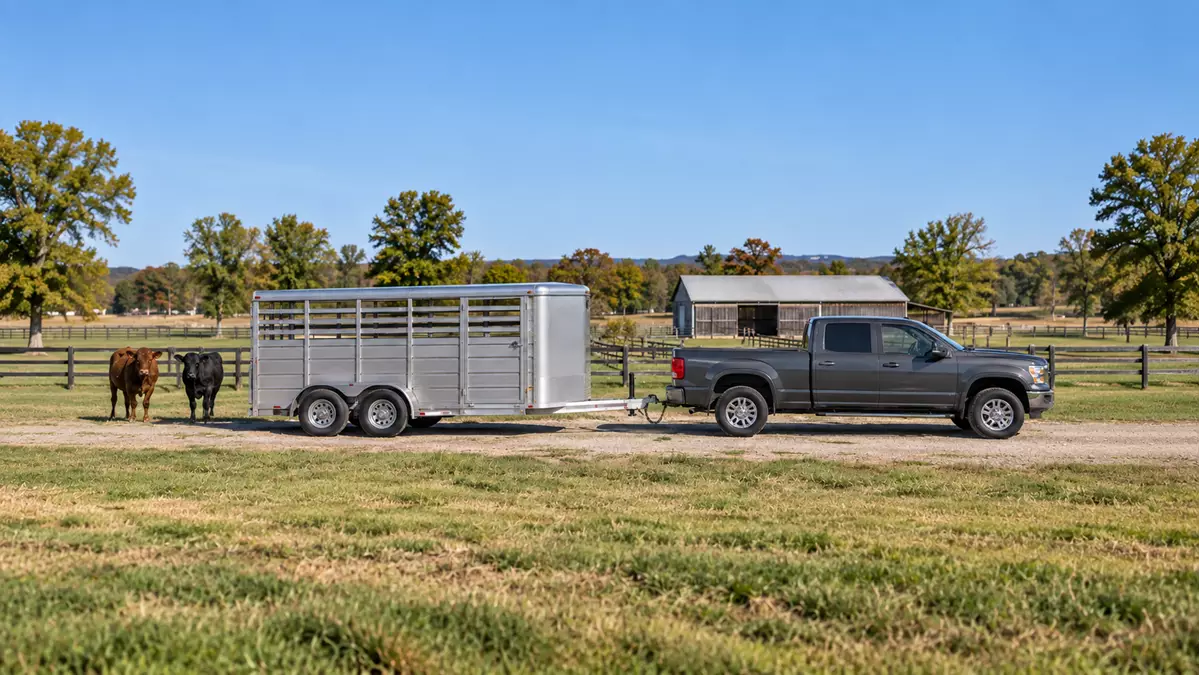
A stock trailer is a livestock-specific trailer, and it is built differently from the enclosed cargo trailers or horse trailers you may be picturing. The defining feature is ventilation: stock trailers have open, slatted, or barred upper sides rather than solid walls, so air moves through the trailer and keeps the animals cool and breathing clean air while you drive. That open-side design is exactly why you do not haul livestock in a sealed cargo trailer, where heat and ammonia from waste would build up fast.
Inside, a stock trailer is a mostly open bay, sometimes with a center gate or a rear divider so you can separate animals or hold them toward the front for balance. The floor is designed for grip and drainage, and many have rubber mats to cushion the ride and give footing. This is a different animal from a horse trailer, which typically has individual padded stalls, chest and butt bars, and a more enclosed body built for one or two large animals standing in place. A stock trailer is built to move a group of cattle, goats, sheep, or pigs together, loose in the bay.
Sizing a Stock Trailer to Your Load
The right size depends on what you are hauling and how many. Livestock trailers are measured by length and by how many head of a given animal they carry, and packing them correctly matters for the animals' safety, not just for fitting them in. The table below gives a rough guide to common stock trailer sizes and what each handles.
| Stock Trailer Size | Approx. Cattle Capacity | Best For |
|---|---|---|
| 16 ft bumper pull | 4 to 6 head | Small herds, a few goats/sheep/pigs, fair runs |
| 20 ft bumper pull | 7 to 9 head | Mid-size loads, sale-barn trips |
| 24 ft gooseneck | 10 to 14 head | Larger herds, longer hauls |
| 28 to 32 ft gooseneck | 15 to 20+ head | Commercial loads, ranch operations |
These are representative capacities for average-weight animals, not exact figures. Actual head count depends heavily on the size and weight of the specific animals: a trailer that carries 14 feeder calves might carry only 8 or 9 mature cows. Smaller livestock like goats, sheep, and pigs pack more per foot, but they still need room to stand without crowding.
The counterintuitive part of livestock loading is that a stock trailer should be packed reasonably snug, not sparse. Animals hauled loose in a too-large space get thrown around on turns and stops and can lose their footing and go down, which is dangerous in a moving trailer. A properly filled trailer lets the animals brace against each other and stay standing. If you are hauling only a few animals in a large trailer, use the center gate or divider to pen them into a smaller section rather than letting them slide around the full bay.
Crossing State Lines: The Paperwork You Need
This is the part that catches first-time livestock haulers off guard, because it has no equivalent in an ordinary move. Moving livestock across state lines is regulated, and the requirements travel with the animals, not the trailer. Before you haul animals into another state, you generally need specific documentation, and the exact rules vary by state and by species.
The two documents that come up most often are a Certificate of Veterinary Inspection, sometimes called a health certificate, issued by a licensed veterinarian confirming the animals are healthy and free of reportable disease, and proof of ownership or a brand inspection in states that require one. Many states also require specific disease testing or vaccination records depending on the species, and some require the animals carry official identification. Because these rules differ from state to state and change over time, check the destination state's department of agriculture requirements before you load, and build in time to get a veterinary inspection scheduled, since it cannot be done the morning of the haul. Moving animals within your own state is usually far simpler, but a long interstate haul needs this paperwork sorted first.
Common Livestock Hauls and What They Need
Different trips put different demands on your trailer and your planning.
The Sale-Barn or Auction Run
Hauling animals to a livestock auction is often a same-week decision, and it usually means a mid-size load over a moderate distance. Size the trailer to the number of head you are selling, pack it snug enough that the animals stay on their feet, and give yourself margin on timing, because sale barns have set intake windows. If you are selling only part of your herd, a divider lets you keep the sale animals separate and load them cleanly.
The 4-H or FFA Fair Trip
Hauling a show animal or two to the county or state fair is a smaller, higher-stakes haul: the animal is groomed, valuable to the kid showing it, and needs to arrive calm and clean. A smaller stock trailer is plenty, and the priorities shift to a smooth, low-stress ride and keeping the animal clean on arrival. Bedding the floor well and driving gently matter more here than raw capacity.
Moving Animals to New Pasture or a New Home
Rotating animals between properties or bringing home newly bought stock is the everyday livestock haul. Match the trailer to the load, sort out any interstate paperwork if you are crossing a line, and plan the route to minimize time the animals spend standing in the trailer, especially in hot weather.
Loading and Hauling Livestock Calmly
Animals load and ride best when the process is quiet and unhurried. The diagram below outlines the flow of a low-stress livestock haul from start to finish.
A few points deserve emphasis. Loading is where most livestock injuries and stress happen, so back the trailer to a chute, alley, or solid footing that leads the animals in naturally, and let them walk on at their own pace rather than forcing them. Once loaded, your driving is what the animals feel: every hard brake, fast corner, or sudden lane change throws them off balance. Drive as if you have a full cup of water on the dash. On longer hauls, especially in warm weather, the open-side ventilation of the stock trailer does a lot of the work, but you should still check the animals at stops and never leave a loaded trailer sitting in direct sun with no airflow.
Different Animals, Different Needs
Livestock is not one thing, and the animal you are hauling changes how you set up the trailer.
Cattle are the heaviest and the reason stock trailers are built as tough as they are. They need solid footing and enough packing to stay upright, and a full load pushes weight and hitch requirements toward gooseneck territory fast. Goats and sheep are lighter and pack more densely, but they are also more agile and prone to climbing or slipping through gaps, so the trailer's lower panels need to be solid enough to contain them, and dividers help keep a small group from bunching in a corner. Pigs are low to the ground, do not tolerate heat well, and can be stubborn to load, so ventilation and a patient, quiet loading approach matter more with hogs than almost any other animal. Mixed loads generally should not travel together loose: animals of very different sizes, or animals that do not know each other, can injure one another in transit, so use dividers to separate them or make separate trips.
Across all species, the constants are footing, ventilation, and not crowding animals against much larger or unfamiliar ones. Match the trailer's dividers and size to the specific animals rather than assuming one setup works for everything.
Rent or Own a Stock Trailer?
For a working ranch that hauls livestock every week, owning a stock trailer makes sense. For nearly everyone else, the math favors renting. A stock trailer that sits in a field between a couple of sale-barn runs and one fair trip a year still costs money to maintain, register, insure, and store, and livestock trailers take hard use and need real upkeep to stay safe. Renting means you pay only for the hauls you actually make, and you can rent the right size for each job rather than owning one trailer that is too big for the fair run and too small for the fall sale. If you haul only a handful of times a year, a local rental sized to each trip is almost always the lower-cost, lower-hassle path than ownership.
Weight and Tow Vehicle Matter More Than You Think
Livestock is heavy, live, and shifting, which makes the tow vehicle and hitch match especially important. A load of cattle can easily run several thousand pounds of animal on top of the trailer's own weight, and unlike a static load, animals move, which changes the balance as you drive. Confirm your tow vehicle's rating against the loaded weight of trailer plus animals, and make sure your hitch setup is rated for it. Larger stock trailers are goosenecks precisely because the weight of a full load of cattle exceeds what a bumper-pull hitch should carry. If you are renting a large gooseneck stock trailer, be sure your truck has the gooseneck hitch and the towing capacity to match before you commit.
Before Your First Livestock Haul
If you have never hauled livestock before, a little preparation removes most of what goes wrong. Confirm the trailer size against your actual head count and animal weights, not a rough guess, and make sure the trailer has working dividers if your load needs sectioning. Check that your tow vehicle is rated for the loaded weight and has the correct hitch, especially for a gooseneck. If you are crossing a state line, start the paperwork early: call your veterinarian about a health certificate and check the destination state's agriculture department for testing, identification, or brand-inspection requirements well before haul day.
Then plan the trip itself around the animals. Pick the coolest part of the day for a hot-weather haul, map a route that keeps the animals moving rather than idling, and give yourself enough time that you are never tempted to drive faster or harder than the animals can handle. Livestock hauling goes smoothly when it is unhurried and planned; it goes wrong when it is rushed. A few minutes of setup the day before turns a stressful first haul into an ordinary one.
Rent the Right Stock Trailer for the Job
Livestock hauling rewards planning: the right-size stock trailer packed for good footing, the interstate paperwork sorted before you load, a tow vehicle rated for the live weight, and a calm, smooth drive. Get those right and your animals arrive healthy and unstressed, whether the destination is the sale barn, the fairgrounds, or a new pasture. And because most livestock owners only need to haul a few times a year, renting a stock trailer sized to each specific job beats owning one that sits empty between uses.
Need to move livestock? Browse stock and livestock trailers on Neighbors Trailer to find a local, appropriately sized trailer for your haul, book it for the day or trip you need, and get your animals where they are going safely. Match the trailer to your load, sort your paperwork, and haul with confidence.