Do I Need a CDL License to Tow a Gooseneck? A Comprehensive Guide
 Neighbors Trailer
Mar 11, 2025 2152 5 min read GooseneckTrailers
A gooseneck trailer is one of the most capable rigs you can hitch up. It also raises the most common towing question we hear: do I need a CDL to tow one. The short answer is usually no for personal use, but the full answer depends on the trailer's GVWR, the combined weight of your truck and trailer, and what you are hauling. This comprehensive guide explains when a CDL is required, when it is not, and how to stay legal on every haul in 2026.
What a CDL Actually Is
A Commercial Driver's License (CDL) is a federally regulated license required for operating certain commercial motor vehicles. There are three classes. Class A covers combinations over 26,000 pounds with a towed unit over 10,000 pounds. Class B covers single vehicles over 26,000 pounds. Class C covers smaller commercial vehicles with passengers or hazardous materials.
The 26,000 Pound Threshold
For most gooseneck towing, the key number is 26,001 pounds combined gross vehicle weight rating (GCWR). If your truck and trailer together are rated 26,001 pounds or more, AND the trailer alone is rated over 10,000 pounds, you need a Class A CDL for commercial use. For personal use, almost every state exempts non-commercial drivers from this rule.
Commercial Use Changes Everything
The CDL rules apply to commercial activities. If you are hauling cars for pay, moving construction equipment for a business, or carrying goods for hire, you are commercial. Federal Motor Carrier Safety Administration rules apply, and a CDL is required at the weight thresholds above. Personal recreation, like hauling your own race car or boat, is generally exempt.
How Each State Handles the Personal Exemption
Most states follow the federal exemption for personal use, but a handful (like California and Connecticut) require an endorsement or special non-commercial Class A license at the same weight thresholds. Check your state DMV before assuming you are exempt.
Common Gooseneck Combinations and What License You Need
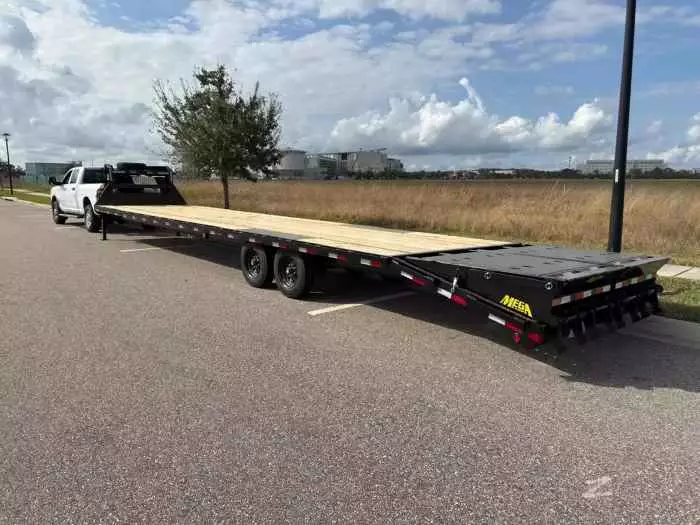
Most consumer gooseneck setups, like a 3/4-ton truck pulling a 25-foot livestock trailer, fall well under the CDL threshold for personal use. A 1-ton dually pulling a 35-foot car hauler often sits right around the limit. A heavy-duty truck pulling a 40-foot equipment trailer with a loaded dozer almost always crosses into CDL territory if used commercially.
How to Calculate Your Actual GCWR
Add three numbers: your truck's GVWR (on the door sticker), your trailer's GVWR (on the VIN plate), and any payload you are adding. If the sum stays under 26,001 pounds, no federal CDL is needed. If the trailer alone is over 10,000 pounds and the combination exceeds 26,001 pounds, Class A applies for commercial use.
Endorsements and Other Considerations
Even without a CDL, you may need endorsements for hazardous materials, double or triple trailers, or air brakes if your gooseneck rig includes them. State medical card requirements often apply when towing commercially. Insurance also costs more for higher weight combinations.
When in Doubt, Get a Non-CDL Class A
Several states offer a non-commercial Class A license that covers heavy personal towing without the full commercial requirements. The test is a written exam and sometimes a road test. It costs less and renews on the same schedule as a regular license. If you tow heavy goosenecks often for personal use, it is worth getting.
CDL Requirements for Gooseneck Towing at a Glance
| Combined Weight | Trailer GVWR | Use Type | License Needed |
| Under 26,001 lbs | Any | Personal | Standard Class C |
| Under 26,001 lbs | Any | Commercial | Standard Class C (state varies) |
| 26,001 lbs or more | Under 10,001 lbs | Personal | Standard Class C (most states) |
| 26,001 lbs or more | Under 10,001 lbs | Commercial | CDL Class B |
| 26,001 lbs or more | 10,001 lbs or more | Personal | State-dependent, often exempt |
| 26,001 lbs or more | 10,001 lbs or more | Commercial | CDL Class A |
Typical Combined Weight of Common Gooseneck Setups
NeighborsTrailer.com
FAQ
Do I need a CDL to tow my personal RV or horse trailer?
Almost always no. Personal recreational use is exempt from the federal CDL requirement in most states.
What if I tow a friend's heavy trailer once?
A one-off favor without compensation is still personal use in most states. Doing it regularly for pay turns it commercial.
Are the CDL rules the same in every state?
The federal floor is the same, but states can require more. California, Connecticut, and several others have non-commercial Class A or B requirements for heavy personal towing.
How long does it take to get a CDL?
Plan on three to seven weeks including the medical exam, written test, behind-the-wheel training, and skills test.
Know the Rules Before You Hitch Up
For nearly all personal gooseneck towing, a standard Class C license is enough. Commercial hauling, especially over 26,001 pounds combined, is where a CDL becomes mandatory. Add up your real GCWR, check your state's rules, and get the right license before the haul, not at the weigh station. Neighbors Trailer makes it easy to find gooseneck rentals that fit your license and your job.
Related Articles
- Trailer Towing Laws by State: 2026 Guide
- 10 Essential Texas Trailer Towing Laws
- How to Prepare Your Truck to Tow a Car Trailer Safely
- The Ultimate Trailer Towing Safety Guide
Content updated May 2026