

A Complete Guide to Transporting Horses on a Horse Trailer
 Neighbors Trailer
Jan 9, 2024 851 7 min read horse trail
Owning, leasing, or boarding horses almost always means moving them somewhere: to a show, a vet, a clinic, a new pasture, or a trail-riding destination. For most equestrians, that means either owning a horse trailer or renting one when the calendar gets busy. This equestrian guide walks through how to choose the right horse trailer, what to look for in a rental, and how to make every haul as safe and low-stress as possible for the animals in the back.
Whether you have one quiet schoolmaster who loads on a slack lead or a three-horse string heading to a hunter-jumper show, the principles are the same: pick a trailer that matches the horses, condition them to the ramp or step-up, manage ventilation and footing, and drive like the floor is glass. Neighbors Trailer makes the first part easier by giving you access to a deep marketplace of horse trailer rentals owned by other equestrians, not big-box rental yards.
Bumper-Pull vs Gooseneck Horse Trailers
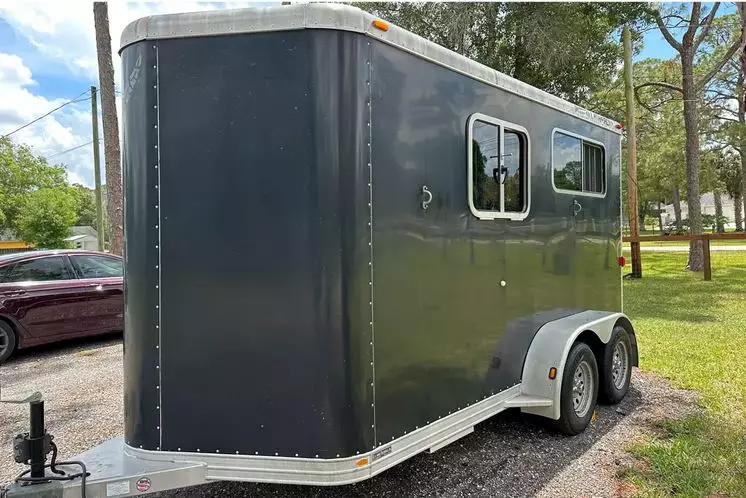
The two most common horse trailer categories are bumper-pull and gooseneck. Bumper-pulls hitch to a 2-inch or 2-5/16-inch ball on the rear of the tow vehicle and typically carry one or two horses. They are lighter, easier for newer haulers to maneuver, and pair with a wide range of half-ton and three-quarter-ton trucks and SUVs that already have a class III or IV hitch.
Gooseneck trailers ride on a ball mounted in the bed of a pickup, distributing weight over the rear axle of the truck for a more stable ride. Goosenecks scale up to three, four, or six horse capacity and often include a small living quarters area for tack, feed, and overnight stays at shows. The trade-off is that goosenecks require a one-ton or three-quarter-ton pickup with a bed-mounted hitch already installed, which limits them to riders who haul often enough to justify the truck.
Matching Trailer Size to the Horse
Stock height (7 feet) and stock width (6 feet) trailers are fine for ponies, quarter horses, and many warmbloods under 16 hands. Tall warmbloods, thoroughbreds, and draft crosses are far more comfortable in a 7-foot-6-inch or 8-foot trailer with extra width per stall. A cramped horse is a stressed horse, and a stressed horse is more likely to scramble, lean, or refuse to load on the next trip. Our horse trailer payload calculator helps you match a trailer’s size and axle rating to the number and weight of horses you haul.
| Trailer Style | Typical Capacity | Interior Height | Best For |
| 2-Horse Bumper-Pull Slant | 2 horses | 7 ft | Quarter horses, ponies, day trips |
| 2-Horse Bumper-Pull Straight Load | 2 horses | 7 ft 6 in | Warmbloods, taller breeds |
| 3-Horse Slant Gooseneck | 3 horses | 7 ft 6 in | Shows, multi-horse hauls |
| 4-Horse Gooseneck w/ Dressing Room | 4 horses | 8 ft | Long hauls, weekend shows |
| Stock Combo Trailer | 2 to 4 horses | 7 to 7 ft 6 in | Trail riders, hauling unbroken stock |
What Equestrians Actually Use Trailers For
Horse owners use trailers for a surprisingly wide mix of activities. The chart below shows the most common haul reasons reported by recreational and competitive owners, based on industry survey data compiled by the American Horse Council. Understanding the dominant use case helps you choose between a sport-focused rental, a stock trailer, or a trailer with overnight living quarters.
NeighborsTrailer.com
Pre-Trip Checks Every Equestrian Should Run
Before you load a single horse, walk the trailer end to end and confirm the basics. Tires should have at least 50 percent tread, even pressure across both sides, and no sidewall cracking. Open and close all dividers, escape doors, and rear doors to confirm latches engage cleanly. Inspect the floor by lifting any rubber mats and looking for soft spots, especially in older trailers where wood floors can rot from urine and condensation. A horse that breaks through a rotten floor at highway speed is a worst-case scenario you can prevent with a five-minute check.
Verify the trailer brakes work before you load. Plug the trailer in, lift the breakaway battery off the trailer, and roll forward slowly to feel the brakes drag. If the breakaway does not engage the brakes, do not load horses until the battery is replaced or the cable is repaired. For deeper hitch and brake setup help, see our horse trailer rental towing guide.
Loading the Horse
Most loading problems are training problems, not trailer problems. Take 10 minutes before the haul to practice walking the horse calmly toward the trailer, stopping at the ramp or step-up, and asking them to lower the head. A horse with a lowered head is calmer and more focused than one with a high, alert head. If your horse refuses, do not yank or chase; reset and try again with a confident handler and a calm pace. For step-by-step coaching, our guide on horse trailer rental loading tips walks through specific techniques.
Ventilation and Footing
Inside the trailer, horses rely on you for two things: airflow and traction. Open all vents and roof fans, even in cool weather. A still, warm trailer can become a respiratory problem on a two-hour haul. For footing, use rubber-backed bedding or shavings over rubber mats. Bare metal floors are slick when wet and can cause a horse to scramble.
Driving With Horses Aboard
Horses balance constantly while the trailer is moving. Sharp brake applications, abrupt lane changes, and aggressive acceleration all force the horse to throw weight forward, sideways, or backward. Drive 5 to 10 mph slower than you would empty, leave four to six seconds of following distance, and use engine braking on long downhill grades rather than riding the brake pedal. Our stopping-distance calculator shows how much longer a loaded rig takes to stop so you can set that following gap with confidence. Check on horses at every fuel stop and offer water on hauls longer than four hours.
Booking a Horse Trailer Rental Through Neighbors Trailer
Filter the marketplace by capacity, interior height, and ramp vs step-up. Read the owner's notes carefully: experienced equestrian owners will mention how the trailer rides, whether it has been used for nervous loaders, and any quirks like a sticky divider latch. Message the owner with your horses' approximate heights and weights to confirm fit. Renters must be at least 21, and the marketplace handles owner verification and insurance documentation behind the scenes. Owners receive payouts through Stripe within two to three business days of the trailer's return.
Frequently Asked Questions
How much does a horse trailer rental cost per day?
Daily rates on Neighbors Trailer typically range from $90 to $200 per day. Bumper-pull two-horse trailers sit on the lower end, while gooseneck four-horse trailers with living quarters command higher rates, especially during show season.
Do I need special insurance to rent a horse trailer?
Booking through Neighbors Trailer includes coverage during the rental period. Confirm any additional documentation required by your destination event or facility, since some show grounds require proof of liability coverage on the trailer itself.
Can I rent a horse trailer for a single day?
Yes. Most owners accept one-day rentals, though weekend show rentals often run two to three days. Check the listing for any minimum rental length before you book.
What if my horse has never been in a trailer before?
Plan a low-pressure loading session at the owner's property a day or two before your trip so your horse can investigate the rental in a calm setting. Bring familiar hay, the same lead and halter, and a calm handler.
The Bottom Line
A horse trailer is a piece of safety equipment for both the horse and the people inside the tow vehicle. Match the trailer to the horse, run a real pre-trip inspection, drive smoothly, and book through a marketplace where you can see who you are renting from and what other equestrians have said about the rig. Browse horse trailer rentals on Neighbors Trailer to find a trailer near you for your next haul.
Related Articles
- Horse Trailer Rental Loading Tips
- Horse Trailer Rental Towing Guide
- Horse Trailer Maintenance Tips
- Equine Events Horse Trailer Rental
Content updated May 2026