

How to Prevent Shipping Fever While You Tow a Horse Trailer
 Neighbors Trailer
Nov 28, 2023 357 6 min read Horse trailer renta
Shipping fever, the common name for transport-related pleuropneumonia, is one of the most preventable causes of post-haul illness in horses. The condition develops when long stretches with the head tied up combine with stress, dust, and limited rest, allowing bacteria already present in the airway to multiply in the lower lungs. Owners who plan their hauls around the head-down rest interval, monitor temperature daily, and take a few simple route choices keep shipping fever from showing up at all.
What Is Shipping Fever?
Shipping fever is a respiratory infection that takes hold when the horse cannot lower its head far enough to clear normal airway secretions. Within 6 to 12 hours of being tied with the nose up, mucus pools, and bacteria like Streptococcus equi var. zooepidemicus and Pasteurella spp. proliferate in the lower lungs. Symptoms typically appear 1 to 3 days after the haul and can include fever above 102 degrees, nasal discharge, cough, lethargy, off-feed behavior, and labored breathing. Caught early, most cases resolve with antibiotics and rest. Caught late, the infection can progress to severe pleuropneumonia requiring weeks of intensive care.
Shipping Fever Risk by Haul Duration
The single biggest risk factor is uninterrupted travel time with the head elevated. The table below summarizes typical risk levels and the recommended pause schedule for each tier.
| Haul Duration | Risk Level | Recommended Pause | Head-Down Time |
| Under 4 hours | Low | None required | Stops at fuel only |
| 4 to 8 hours | Low to medium | One stop, 30 minutes | 15 to 20 minutes |
| 8 to 12 hours | Medium | Stop every 4 hours | 30 minutes per stop |
| 12 to 18 hours | High | Stop every 4 hours, plus 8-hour overnight | 30+ minutes per stop |
| 18 to 24 hours | Very high | Required overnight stable rest | Untie for 6+ hours |
| 24+ hours | Severe | Multi-day haul plan with layover | Untie 8+ hours overnight |
How to Prevent Shipping Fever
Lower the Head, Often
The drainage angle of the equine respiratory tract requires the nose to drop below shoulder height for normal mucus clearance. If the horse cannot reach the trailer floor, the lead rope is too short. Untie at every stop and let the horse graze for at least 15 minutes. On hauls longer than 8 hours, stop every 4 hours.
Maximize Ventilation
Open every available roof vent, side window, and rear door screen. Stagnant air traps dust and ammonia from urine. Powered fans help in stop-and-go traffic where airflow drops to zero. The rumber flooring guide covers how flooring choice also affects air quality during long hauls.
Keep Hay Dust Down
Soak or steam hay before the trip and during overnight stops. Dry, dusty hay is one of the strongest correlated environmental factors in shipping fever cases. A soak of 10 minutes is enough to bind the worst respirable particles.
Hydrate Aggressively
Offer water at every stop. Bring water from home if your horse is finicky. Add electrolyte paste 24 hours before the haul and again at the midpoint of long trips. A dehydrated horse cannot mobilize secretions as effectively.
Pre-Haul Health Check
Take the horse's resting temperature for three consecutive days before departure. A baseline gives you something to compare against if symptoms appear post-trip. Skip the haul entirely if there is any cough, nasal discharge, or off-feed behavior in the 48 hours before loading.
Carry the Right Accessories
Bring a rectal thermometer, a stethoscope, electrolyte paste, and contact information for emergency veterinary clinics along the route. Owners who add these to their standard horse trailer accessory kit rarely face surprises on the road.
Visualizing the Risk Curve
Research from equine veterinary studies shows shipping fever incidence climbs sharply once continuous haul time exceeds 12 hours, with a steep jump at the 18-hour mark.
NeighborsTrailer.com
What to Do If Symptoms Appear
Take the horse's temperature twice a day for the first 5 days after a long haul. If you see a fever above 101.5 F, nasal discharge that is yellow or green, persistent cough, or unusual lethargy, call your veterinarian immediately. Early antibiotics and supportive care prevent the condition from progressing to pleuropneumonia. Isolate the affected horse from other horses and stable mates while awaiting the vet visit.
Trailer Choice and Loading Practices
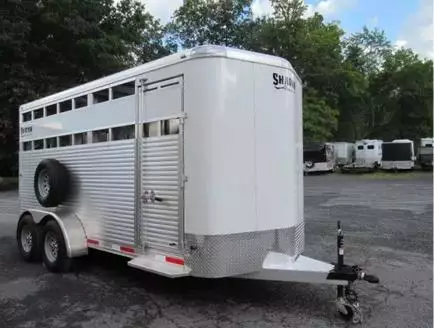
The trailer itself influences risk. Stock-style trailers with open sides have the best airflow and the lowest documented shipping fever rates. Slant-load trailers are next; straight-load trailers with limited windows are the highest-risk configuration. Whatever the trailer, follow the standard horse-haul towing approach: load the heavier horse on the driver side, use partitions only when necessary, and keep cargo low and secured to prevent shifting.
Frequently Asked Questions
How long after a haul does shipping fever typically show up?
Symptoms most often appear 24 to 72 hours after arrival. Monitor the horse closely during this window, taking temperature twice daily.
Is one long drive worse than the same time split across days?
Yes. Splitting a 24-hour haul into two 12-hour days with an overnight stable rest between roughly halves the shipping fever incidence rate.
Should I give antibiotics preventively before a long haul?
No. Prophylactic antibiotic use is not standard veterinary practice and can mask early symptoms. Talk to your vet if your horse has a history of post-haul respiratory infection.
Does the type of horse trailer affect risk?
Yes. Open-side stock trailers ventilate best. Enclosed trailers should have all roof vents and windows open during transport.
Can I let my horse rest at a fairground or rest stop instead of a stable?
Untying for grazing is helpful at any rest stop. For trips over 18 hours, however, true overnight stable rest, where the horse can lie down and lower its head completely, is far more effective at preventing shipping fever than parking lot rest.
Closing Thoughts
Shipping fever is largely a problem of preparation and pace, not luck. Plan haul stops every 4 hours, build overnight stable rest into hauls longer than 12 hours, soak the hay, maximize ventilation, and monitor temperature for the first week post-trip. Owners who respect the head-down rule and the route plan keep their horses healthy and ready to perform after even the longest competition trips.
Related Articles
- Transport Horse Trailer Rental
- Horse Trailer Towing Guide
- Horse Trailer Rumber Flooring Guide
- Essential Horse Trailer Accessories
Content updated May 2026