PCS Trailer Rental: How to Rent a Trailer for Your PPM (DITY) Move
 Neighbors Trailer
Nov 18, 2026 14 11 min read PCS trailer rental, PPM trailer rental, DITY move trailer, military mov
Few moves are as predictable, or as stressful, as a military PCS. Orders arrive, the clock starts, and you have to get a household across the country on a deadline. If you are doing a Personally Procured Move, the kind the services used to call a DITY, how you move your belongings has a direct effect on what you keep in your pocket at the end. Renting the right trailer is one of the simplest ways to move more of your own goods and hold on to more of your incentive.
This guide walks through how a PPM payment actually works, why a cheaper trailer means more money for you, which trailers qualify, and how to rent one near your base. None of it is official guidance, so treat your transportation office as the final word on your specific move.
What a PPM Is and How the Payment Works
A Personally Procured Move, or PPM, is a move you arrange and carry out yourself instead of having the government schedule a mover to pack and haul your household goods. You handle the logistics, and in exchange the government pays you an incentive.
Here is the part that trips people up: the PPM payment is an incentive based on the weight you move, up to 100% of what it would have cost the government to move you with a contracted mover. It is not a dollar-for-dollar reimbursement of your expenses. You do not submit a stack of receipts and get every dollar back. You get paid on weight, and your costs come out of that payment.
A trailer rental counts as an authorized operating expense. Operating expenses are not paid back separately on top of your incentive. Instead, they lower the taxable portion of that incentive. In plain terms, spending less to move the same weight leaves you with more of the payment, and documenting an eligible expense like a trailer can reduce the part of it that is treated as taxable. For anything beyond that general idea, talk to your transportation office and, for tax questions, a tax professional. The official rules live on the Personally Procured Moves page at ppa.mil.
Why a Cheaper Trailer Means You Keep More
Because you are paid on weight rather than reimbursed on cost, every dollar you do not spend moving your goods is a dollar you keep. The incentive is roughly fixed by what you move and where. Your take-home is that number minus what the move costs you.
That is exactly why the trailer you choose matters. A trailer rented from a local owner on a peer-to-peer marketplace is often cheaper than the same trailer from a national chain, and it is frequently available closer to your home or your base. Lower rental cost, same weight moved, more of the incentive left over. It is a small decision with a direct payoff, and it is one of the few parts of a PCS you fully control.
It helps to think of the incentive as a fixed budget you are trying to protect rather than a reimbursement you are trying to max out. Spend less to move the same household, and the difference stays with you. During peak PCS season in late spring and summer, national rental counters near big installations book out and raise rates, while a nearby owner with a trailer sitting in the driveway may rent it for less and let you pick it up on your own schedule. That combination of lower cost and local availability is the whole reason a marketplace rental tends to work in your favor on a move.
Which Trailers Are Eligible, and Why Car Haulers Are Not
Not every trailer rental counts toward a PPM. The rule of thumb is that the trailer has to be moving your household goods. Here is how the common types line up, though you should confirm against your own orders with the transportation office.
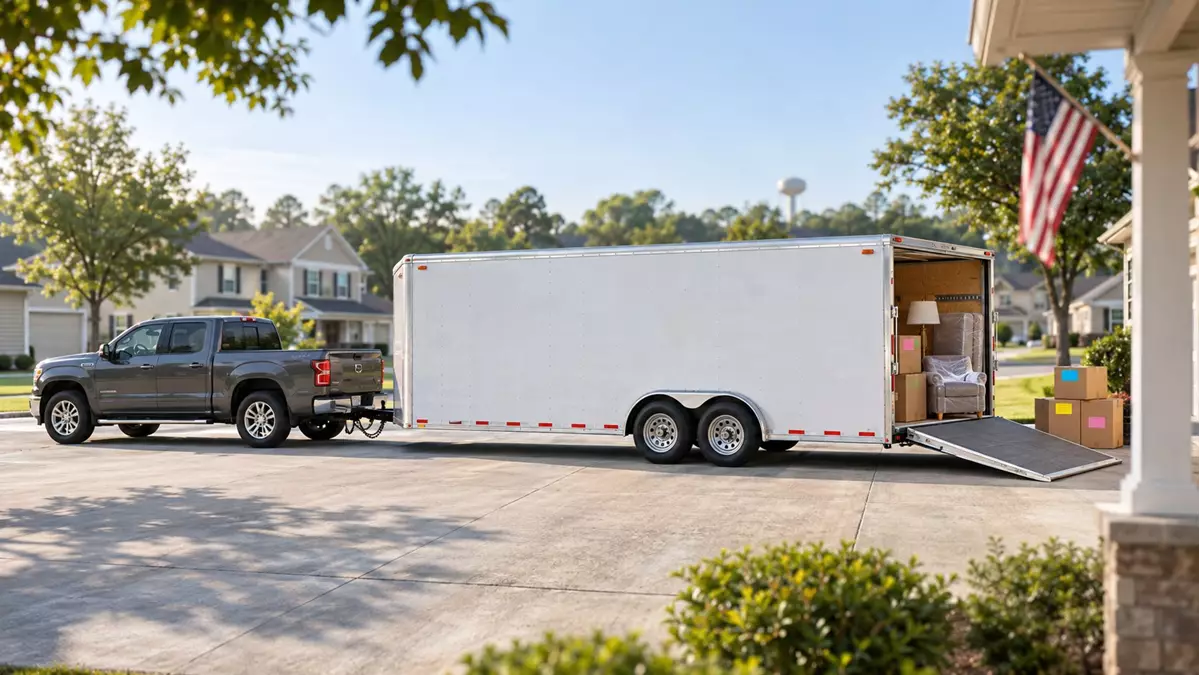
An enclosed cargo trailer is the go-to for furniture and boxes, and it adds weather protection for a long haul. It is eligible. A utility trailer works well for appliances and bulky items that do not need to be enclosed, and it is eligible too. A dump trailer can be useful for a pre-move cleanout, but only household-goods use counts toward a PPM, so check before you assume the rental qualifies.
A car hauler is the important exception. Moving a vehicle is not an eligible PPM expense, so a trailer rented to transport a car does not count, even though it is still a trailer. If your move involves shipping a vehicle, keep that cost separate in your head from your household-goods move.
Step by Step: Renting a Trailer for Your PPM
The move follows a clear sequence, and the trailer fits neatly into the middle of it. The one rule to burn into memory: get your PCS orders in hand before you rent or buy anything, because your orders and your weight tickets are what make the whole thing count.

Start with your orders, then visit the transportation office to confirm your weight allowance and get an estimate of your incentive. Many service members can request an advance on the incentive to cover upfront costs like the rental; ask the office whether that is an option for you. Next comes the empty weigh-in: take your tow vehicle with the trailer hitched to a certified scale, get a certified empty weight ticket, and make sure the ticket notes that it is the vehicle with the trailer. Load up and make your move. At the destination, return to a certified scale fully loaded for your full weight ticket. The difference between full and empty is the weight you are paid on. Finally, submit your claim with your orders, both weight tickets, and your receipts.
A couple of practical notes on weighing, since the tickets carry so much weight in the payment. Certified scales are easy to find at most truck stops, and the attendant can print a stamped ticket for a small fee that is itself an eligible expense. Keep the trailer hitched for both the empty and the full weigh so the two tickets measure the same configuration; weighing the trailer empty while detached and then loaded while attached can throw the math off. And weigh empty before you load anything, not after you have already tossed a few boxes in, or you will understate the weight you are paid on.
Your Paperwork Checklist
A PPM lives or dies on documentation. Missing a weight ticket can cost you a large share of your payment, so keep everything from day one. Hold on to your PCS orders, your certified empty and full weight tickets, the trailer rental contract and receipt, and receipts for the smaller eligible items: boxes, tape, furniture pads, hand and appliance dollies, packing materials, and any weight-ticket fees. Keep them organized as you go rather than hunting for them the week your claim is due.
It also helps to know what does not count, so you are not surprised later. Auto tow dollies and auto transports used to move a vehicle are not eligible, and neither are any insurance or protection fees, sales tax, or your meals and lodging on the road. Those are real costs, but they are not part of the household-goods move the incentive is built on.
Before You Book: Tow Vehicle, Hitch, and the Rules
A few practical checks keep booking day smooth. Match the trailer to the job with rough sizing in mind: a 5x8 or 6x10 utility trailer suits a few pieces of furniture or some appliances, a 6x12 enclosed trailer fits roughly a studio or one-bedroom, and a 7x14 or larger trailer is the move for a bigger household. These are starting points, not hard rules, so size up if you are between.
Check your tow vehicle's capacity against the loaded trailer weight before you commit, and make sure your hitch ball size and your light plug match what the listing calls for. A mismatch found in the driveway on moving day is a bad time to learn it. If the trailer has its own brakes, confirm your vehicle has a working brake controller, and if it does not, factor that into which trailer you pick.
Loading a trailer well is its own skill, and it matters more on a cross-country PCS than on a short local haul. Aim for a bit more weight toward the front of the trailer than the back so the tongue carries a modest downward load, which keeps the trailer tracking straight instead of swaying at highway speed. Put the heaviest items low and over the axle, strap everything down so nothing shifts when you brake, and do a quick walk-around to check your lights and tire condition before you pull out. An enclosed trailer buys you weather protection for a multi-day trip, which is worth considering if your route crosses rain or snow.
Two Neighbors Trailer requirements are worth stating plainly, because a PCS crowd skews young: renters must be 21 or older and must pass ID verification. Many junior enlisted are under 21, so if that is you, line up an eligible driver in your household or unit to hold the booking. Owners set their own daily, weekly, and monthly rates, you book and pay online around the clock, and a refundable security deposit is charged at the time of booking.
Find a Trailer Near Your Base
The best time to book is as soon as you have firm dates, since PCS season tightens availability near large installations. Neighbors Trailer has local owners around many of the busiest bases. Start with the one closest to your move:
- Fort Hood trailer rentals
- Joint Base San Antonio trailer rentals
- Fort Bragg trailer rentals
- Camp Pendleton trailer rentals
- Naval Station Norfolk trailer rentals
- Fort Carson trailer rentals
- JBLM / North Fort Lewis trailer rentals
Not moving near one of those? You can browse the full marketplace by type: search enclosed trailer rentals for furniture and boxes under cover, or utility trailer rentals for appliances and open loads. For a complete walk-through of eligible gear and base coverage, our PCS trailer rental page pulls it together in one place.
Frequently Asked Questions
Does the military pay for my trailer rental?
No. The PPM payment is an incentive based on the weight you move, not a reimbursement of your expenses. A trailer rental is an eligible operating expense, which can lower the taxable part of your payment rather than being paid back on top of it. Confirm the specifics with your transportation office.
Do I really need weight tickets?
Yes. Certified empty and full weight tickets are what your payment is calculated from. Weigh your tow vehicle with the trailer hitched, note "vehicle with trailer" on the ticket, and keep both tickets for your claim.
Can I rent a trailer to move my car during a PCS?
You can rent one, but moving a vehicle is not an eligible PPM expense, so a car hauler used for that purpose will not count toward your incentive. Keep a vehicle move separate from your household-goods move.
What if I am under 21?
Neighbors Trailer renters must be 21 or older and pass ID verification. If you are under 21, have an eligible driver in your household or unit book the trailer.
How early should I book a trailer for a PCS?
As soon as you have firm dates. Demand near large installations spikes during the late-spring and summer PCS season, so booking early gives you the best choice of trailer type and size and a better chance of a nearby pickup. Waiting until the last week often means fewer options and higher rates.