When to Book a Deckover Flatbed Trailer Rental for Your Load
 Neighbors Trailer
Aug 9, 2023 392 10 min read flatbed trailer re
What Is a Deckover Flatbed Trailer and When Should You Rent One?
A deckover flatbed trailer places the entire deck surface above the wheel wells instead of between them. This design gives you a flat, unobstructed loading area that stretches from rail to rail, making it one of the most versatile trailer styles for hauling oversized or irregularly shaped cargo. If your load is too wide, too heavy, or too awkward for a standard flatbed, a deckover is almost always the better choice.
Renting a deckover flatbed through Neighbors Trailer gives you access to the right equipment exactly when you need it, without the cost of buying a specialty trailer that might sit idle most of the year. This guide covers how deckover flatbeds work, the loads they handle best, how they compare to standard flatbeds, and what to look for before you book.
How the Deckover Design Differs from a Standard Flatbed
On a standard flatbed trailer, the deck sits between the wheel wells. Fender wells protrude above the deck surface on both sides, narrowing the usable width by roughly 12 to 16 inches on each side. While this layout keeps the deck low to the ground for easy loading, it limits what you can fit between the fenders.
A deckover flatbed raises the entire platform above the tires. The result is a completely flat surface with no fender intrusions. You gain the full width of the trailer for cargo placement, and you can load from the sides as well as the rear. The trade-off is a higher deck height, which means a steeper loading angle if you are using ramps and a slightly higher center of gravity when towing.
Best Use Cases for a Deckover Flatbed Rental
Deckover flatbeds shine in situations where cargo width or loading flexibility matters more than deck height. Here are the scenarios where renting one makes the most sense.
Heavy Equipment and Machinery
Skid steers, mini excavators, and compact loaders often exceed the usable width between standard flatbed fenders. A deckover gives these machines a full-width deck to sit on, with enough room to chain or strap them down properly. Many deckover models are rated for 10,000 to 14,000 pounds, which covers most compact construction equipment.
Wide Building Materials
Sheets of plywood, drywall, or steel panels can overhang dangerously on a narrow standard flatbed. A deckover keeps the entire load within the trailer's footprint, reducing the risk of snagging obstacles or violating wide-load regulations. Stacking materials flat across the full deck width also makes securing them with ratchet straps much simpler.
Side-Loading Situations
Forklifts, cranes, and loading docks work best when they can approach from the side. Because deckover trailers have no fender wells blocking the edges, you can load cargo from either side of the trailer. This is a significant advantage on busy job sites where maneuvering a trailer into a rear-loading position is not practical.
Landscaping and Agricultural Loads
Pallets of sod, balled trees, bulk mulch bags, and round hay bales are all easier to place on a full-width deck. The flat surface also makes it simpler to secure uneven loads without worrying about items catching on fender lips.
Event and Festival Setup
Stages, vendor booths, generators, and large display items often need to be loaded quickly from multiple angles. A deckover flatbed doubles as a mobile staging platform at outdoor events, with the flat deck serving as both transport surface and temporary work area.
| Feature | Standard Flatbed | Deckover Flatbed |
| Usable deck width | Narrower due to fender wells | Full width, rail to rail |
| Deck height from ground | Lower (18-24 inches typical) | Higher (30-36 inches typical) |
| Side loading | Blocked by fender wells | Fully accessible from both sides |
| Best for | Cars, ATVs, narrow loads | Wide equipment, building materials, pallets |
| Ramp angle | Shallower, easier drive-on | Steeper, may need longer ramps |
| Typical weight capacity | 7,000-10,000 lbs | 10,000-14,000 lbs |
NeighborsTrailer.com
What to Check Before Booking a Deckover Flatbed Rental
Not every deckover is the same. A few quick checks before you book will save you from showing up with the wrong trailer for the job.
Weight Capacity and GVWR
Confirm that the trailer's gross vehicle weight rating exceeds the combined weight of your cargo plus the trailer itself. Overloading a deckover puts excessive stress on the axles, tires, and frame, and it creates a serious safety hazard on the road. Most deckover listings on Neighbors Trailer include the GVWR and payload capacity in the description.
Deck Dimensions
Measure your cargo before you search. Deckover flatbeds typically range from 16 to 24 feet in length and 82 to 102 inches in width. Knowing your load dimensions narrows the options quickly and ensures everything fits without overhang.
Ramp Style and Length
Because the deck sits higher, the ramp angle is steeper than on a standard flatbed. Look for trailers with longer ramps or hydraulic dovetail ramps if you are loading low-clearance equipment. Some deckovers offer stand-up ramps that fold flat against the rear of the deck when not in use.
Tie-Down Points
Count the D-rings, stake pockets, and rub rail tie-down points before booking. Heavy equipment needs at least four anchor points, and wide loads may require more. Knowing the tie-down layout ahead of time lets you bring the right straps and chains. For a complete pre-trip rundown, review our flatbed towing mistakes to avoid.
Tow Vehicle Compatibility
Deckover flatbeds are heavier than standard flatbeds of the same length, so your tow vehicle needs a higher towing capacity. Verify that your truck's hitch rating, engine output, and brake system can handle the loaded trailer weight. If you are considering a heavier rig, our guide on gooseneck flatbed trailer rentals explains when stepping up to a gooseneck hitch makes sense.
How to Secure Oversized Loads on a Deckover Flatbed
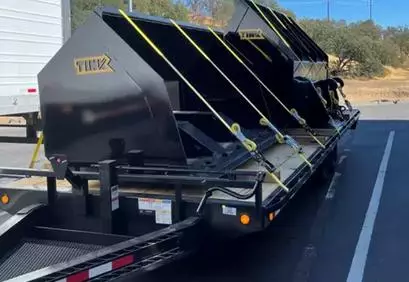
One of the biggest advantages of a deckover flatbed is its full-width loading surface, but that open design also means every piece of cargo needs to be tied down properly. Start by laying out your load so the heaviest items sit directly over the axles, then work outward toward the front and rear. Use ratchet straps rated for the weight you are hauling, and anchor them to the stake pockets or D-rings welded into the trailer frame. For tall or irregularly shaped items like riding mowers, ATVs, or building supplies, cross the straps in an X pattern to prevent side-to-side shifting during turns. Every load should have at least four independent tie-down points, and you should walk around the trailer to tug each strap before pulling onto the road. A loose strap at 25 mph can become a serious hazard at highway speed.
Towing a Deckover Flatbed: Weight and Hitch Considerations
Deckover flatbed trailers tend to weigh more than standard flatbeds because of their reinforced frame and higher deck position, so matching your tow vehicle to the trailer is critical. Check both the trailer's gross vehicle weight rating and your truck's tow rating before you book. Most deckover rentals on Neighbors Trailer list these specs right on the listing page, making it easy to compare. You will also need a properly rated ball mount and hitch receiver; a 2-5/16 inch ball is standard for heavier deckovers. Because the deck sits above the wheels rather than between them, the center of gravity is slightly higher, so drive a bit more conservatively through curves and on windy days. Reducing your highway speed by 5 to 10 mph gives you a wider safety margin and keeps the trailer stable behind your vehicle.
Renting vs Buying a Deckover Flatbed
Deckover flatbed trailers typically cost between 5,000 and 15,000 dollars to purchase new, depending on size and weight rating. For contractors and businesses that haul wide loads daily, owning one pays for itself over time. For everyone else, renting is the smarter financial move.
Renting through Neighbors Trailer means you pay only for the days you actually use the trailer. There are no maintenance costs, no storage requirements, and no depreciation to worry about. You can also rent different sizes for different jobs rather than buying one trailer that compromises on every task. For a full breakdown of what to consider, read our guide on choosing the right flatbed trailer rental.
How NT Protect Keeps You Covered
Hauling heavy equipment and oversized materials carries inherent risk, which is why every rental booked through Neighbors Trailer includes NT Protect. This mandatory coverage is automatically applied at the time of booking for just a few dollars per day. NT Protect covers accidental damage to the trailer during the rental period, giving you peace of mind when loading and transporting your most demanding cargo.
Frequently Asked Questions
What is the main advantage of a deckover flatbed over a standard flatbed?
The main advantage is full-width deck space. Because the deck sits above the wheels rather than between them, there are no fender wells cutting into the usable loading area. This makes deckovers ideal for wide loads, side loading, and oversized equipment.
Can I tow a deckover flatbed with a half-ton pickup?
Most deckover flatbeds are too heavy for a half-ton truck when loaded. You generally need a three-quarter-ton or one-ton pickup with a towing capacity of at least 10,000 pounds. Always compare the loaded trailer weight against your truck's tow rating before booking.
How do I secure equipment on a deckover flatbed?
Use a combination of chains and ratchet straps attached to the trailer's D-rings and stake pockets. Heavy equipment should be chained at four points minimum, with the chains angled at roughly 45 degrees. Always follow DOT securement standards for your cargo type and weight class.
Are deckover flatbeds harder to load than standard flatbeds?
The higher deck means a steeper ramp angle, which can be challenging for low-clearance vehicles or equipment. However, the ability to load from the sides often more than compensates, especially on job sites with forklift access. Longer ramps or hydraulic dovetail options reduce the ramp angle significantly.
How much does it cost to rent a deckover flatbed trailer?
Rental rates vary by location, trailer size, and duration. On Neighbors Trailer, deckover flatbed rentals are listed by private owners in your area, so prices tend to be more competitive than national rental chains. Check current listings on the platform for the most accurate pricing in your region.
Conclusion
A deckover flatbed trailer is the right tool when your cargo is too wide for standard fenders, too heavy for a utility trailer, or needs to be loaded from the side. By checking weight capacity, deck dimensions, ramp style, and tow vehicle compatibility before you book, you can match the right deckover to the job every time. Rent a deckover flatbed through Neighbors Trailer to get access to owner-listed trailers in your area, competitive pricing, and NT Protect coverage on every booking. Browse deckover flatbed rentals near you today.
Related Articles
- How to Choose the Right Flatbed Trailer Rental
- Everything to Know About a Gooseneck Flatbed Trailer Rental
- Tilt Deck Flatbed Trailer Rental Advantages
- Essential Tips When Using a Flatbed Trailer Rental
Content updated April 2026