Learn How to Use Ratchet Straps on a Flatbed Trailer Rental
 Neighbors Trailer
Jul 10, 2023 536 8 min read flatbed trailer rental
Ratchet straps are the standard tool for securing cargo on a flatbed trailer rental. Used correctly, they keep your load firmly in place across every mile. Used incorrectly, they can fail mid-trip, resulting in damaged cargo, road hazards, and liability. This guide walks you through everything you need to know: what ratchet straps are, how to choose the right ones, how to thread and tighten them, and how to secure any load safely for transport.
Whether you are hauling a lawn mower, construction equipment, or a vehicle, the same fundamentals apply. Every rental on Neighbors Trailer includes NT Protect coverage, the mandatory protection automatically charged to the renter at booking for a few dollars per day, but taking the time to secure your cargo properly is still your responsibility and your best protection on the road.
What Is a Ratchet Strap?
A ratchet strap, also called a tie-down strap, consists of two components: a length of high-strength polyester webbing and a ratchet mechanism used to tension the strap. The polyester webbing is woven to resist abrasion, UV exposure, and stretching. The ratchet mechanism uses a series of teeth and a release lever to allow you to tighten the strap incrementally until the desired tension is achieved.
Each strap has a working load limit (WLL) and a break strength rating. The WLL is the maximum load the strap is designed to hold under normal conditions. Always use straps rated for the weight of your cargo, with some margin. Using underpowered straps is one of the most common cargo securing mistakes.
Choosing the Right Ratchet Strap for Your Load
Ratchet straps come in several widths, each suited to different cargo weights. The table below summarizes common strap sizes and their working load limits to help you choose the right one for your flatbed trailer rental.
| Strap Width | Working Load Limit (WLL) | Best For |
|---|---|---|
| 1-inch | Up to 1,000 lbs | Small items, tools, lightweight cargo |
| 2-inch | Up to 3,300 lbs | ATVs, motorcycles, mid-size equipment |
| 3-inch | Up to 4,400 lbs | Heavy machinery, large equipment |
| 4-inch | Up to 5,400 lbs | Vehicles, heavy construction loads |
NeighborsTrailer.com
How to Thread a Ratchet Strap
Threading is the first step in setting up your ratchet strap, and doing it correctly ensures smooth tensioning later. Follow these steps before every use.
Step 1: Lay the Strap Over Your Cargo
Drape the webbing loosely over the cargo. Remove any twists from the strap before you start threading. Twisted webbing reduces the strap's effective strength and prevents it from lying flat against the load.
Step 2: Open the Ratchet
Pull the release lever to open the ratchet mechanism completely. This exposes the mandrel slot, which is the narrow opening through which you will thread the webbing.
Step 3: Thread the Webbing
Insert the loose end of the strap through the mandrel slot from beneath, then pull it upward until several inches of webbing protrude out the top. Do not thread too little webbing. A good rule of thumb is to thread enough that you have at least three inches beyond the ratchet after tensioning.
Step 4: Begin Tensioning
Crank the ratchet lever up and down in a smooth pumping motion. This draws the webbing through the mandrel and tightens the strap incrementally. Continue until there is no slack left, but stop before the next step of final tensioning.
How to Secure and Tighten Cargo with Ratchet Straps
Once threaded, attaching the strap to the trailer and cargo is straightforward, but a few details matter for safety.
Attach the hook ends of the strap to the tie-down anchor points on the flatbed trailer. Most flatbed trailers have recessed anchor rails or E-track along the sides of the bed. Use the anchor points nearest to the edges of your cargo for the most direct line of force. Run straps over and across the load, not just around the sides. For most loads, use at least two straps spaced evenly across the cargo. Heavier loads or longer cargo may require four or more straps.
When tightening, crank the ratchet lever until the strap feels firm with no slack anywhere along its length. After final tensioning, give the strap a firm tug from several points along the webbing to confirm even tension. A properly secured load should not shift when you push against it by hand.
For guidance on maximizing your flatbed trailer use and hauling technique, the heavy hauling tips guide covers weight distribution and load positioning that works hand-in-hand with strap placement.
How to Loosen, Lock, and Release the Strap
Loosening
If the strap is over-tightened, press and hold the release lever while opening the ratchet. This releases tension and allows you to feed webbing back through the mandrel to reduce tightness. The ideal tension lets you slide one finger under the strap but nothing more.
Locking
Once the strap is at the correct tension, close the ratchet by pressing it flat until the latch clicks. A locked ratchet prevents vibration from gradually loosening the strap during transit. Never assume the strap will stay tight without locking it properly.
Releasing
At your destination, pull the release lever all the way open while holding the ratchet flat against the trailer. This fully releases tension so you can slide the webbing out of the mandrel and unhook the strap ends. Store straps with the ratchet in the locked position to prevent mechanism damage during transport.
Pro Tips for Safe Ratchet Strap Use
Inspect every strap before each use. Frayed webbing, bent hooks, or a stiff ratchet mechanism are all signs to retire the strap. Even straps that look fine from the outside may have compromised their rated strength from previous overloads. Replace straps that have held loads at or near their break strength rating.
Bundle excess webbing and secure it with a rubber band or clip to prevent it from flapping against your load or the road at highway speeds. Check your load and strap tension after the first 10 to 15 miles of driving, since initial settling of cargo can reduce strap tension significantly. Re-check after any rough road sections or sharp turns.
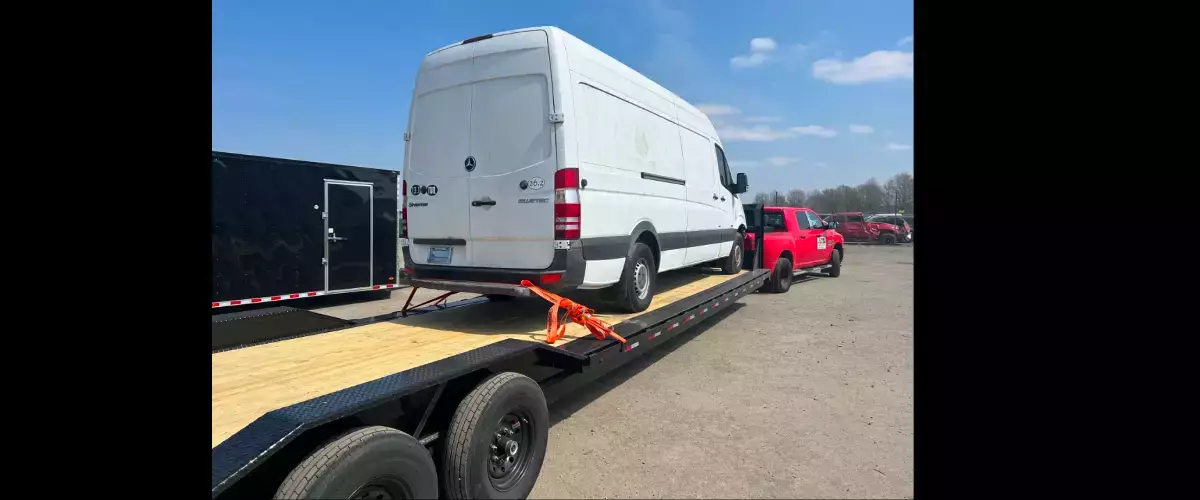
When transporting vehicles on a flatbed, combine ratchet straps over the tires with wheel chocks or wheel nets for added security. Ratchet straps alone can slip off smooth tire surfaces under hard braking. For more on finding the right flatbed for your haul, the used trailer buying guide includes a practical checklist of trailer features to evaluate before renting or buying.
Frequently Asked Questions
How many ratchet straps do I need for a flatbed trailer?
Federal regulations require cargo to be secured with enough tie-downs to prevent movement in all directions. For most standard loads, use a minimum of two straps for loads up to 10 feet long. Add one additional strap for every additional 10 feet of cargo length. Heavier or irregularly shaped loads may require more.
Can I reuse ratchet straps after they have held a heavy load?
Yes, as long as the strap was used within its rated working load limit and shows no signs of damage. Inspect the webbing for cuts, fraying, or discoloration, and check the hooks and ratchet mechanism for bending or unusual wear before reusing.
What is the difference between working load limit and break strength?
Break strength is the maximum force a strap can withstand before failing. Working load limit is typically one-third of break strength. Always match straps to the working load limit of your cargo, never to the break strength.
How do I prevent ratchet straps from scratching my cargo?
Place rubber edge protectors or furniture blankets between the strap and any sharp edges or finished surfaces. This prevents the webbing from cutting into the load and protects paint, chrome, or delicate finishes.
Can ratchet straps be used in wet conditions?
Yes, polyester webbing handles moisture well and retains most of its strength when wet. However, some ratchet mechanisms can become stiff or slower to operate when wet. Dry and lubricate the ratchet mechanism after exposure to rain or extended wet conditions.
Key Takeaways
Using ratchet straps correctly on a flatbed trailer rental is straightforward once you understand the steps: choose the right strap size for your load weight, thread the webbing through the mandrel properly, attach to trailer anchor points, tension evenly, lock the ratchet, and check after the first few miles. A well-secured load protects your cargo, other drivers, and keeps your rental experience straightforward from pickup to drop-off.
Related Articles
- Trailer Maintenance Tips on Storing Your Trailer Safely in the Winter
- Testing the Breakaway Switch on an Enclosed Trailer Rental
- Learn How to Install a Winch on Your Flatbed Trailer Rental
- Choosing Spring or Torsion Axle for a Utility Trailer Rental
Content updated March 2026