The Ultimate Aluminum Trailer Buying Guide
 Neighbors Trailer
Sep 18, 2023 459 8 min read aluminum trailer buying guid
A utility trailer is one of the most versatile equipment purchases you can make. Whether you haul landscaping supplies, construction materials, furniture, or recreational equipment, a quality utility trailer handles it all. This buying guide walks you through the most important decisions: material choice (aluminum vs steel), size, axle configuration, and the features that affect your long-term satisfaction and cost of ownership.
If you are not ready to buy yet, Neighbors Trailer lets you rent utility trailers from owners near you. Our utility-trailer buy-vs-rent comparison lays out which route fits your usage. Every rental includes NT Protect, mandatory coverage automatically charged to the renter at booking for a few dollars per day. Renting several different configurations before buying is one of the smartest ways to make a well-informed purchase decision.
Aluminum vs. Steel Utility Trailers: Which Should You Buy?
The single biggest decision when buying a utility trailer is the frame material. Both aluminum and steel are widely available, but they have meaningfully different characteristics that affect cost, performance, and longevity.
| Characteristic | Aluminum Trailer | Steel Trailer |
|---|---|---|
| Purchase Price | Higher upfront cost | Lower upfront cost |
| Weight | 30 to 40% lighter | Heavier, reduces payload capacity |
| Corrosion Resistance | Excellent, forms protective oxide layer | Requires paint and maintenance to prevent rust |
| Repairability | Requires specialist welding | Easy to weld or repair locally |
| Long-Term Cost | Lower maintenance costs over time | Higher maintenance if exposed to moisture |
| Resale Value | Higher, retains value well | Lower once rust appears |
| Best For | Coastal areas, high use, long-term investment | Budget buyers, occasional use, dry climates |
Why Aluminum Has the Edge for Most Buyers
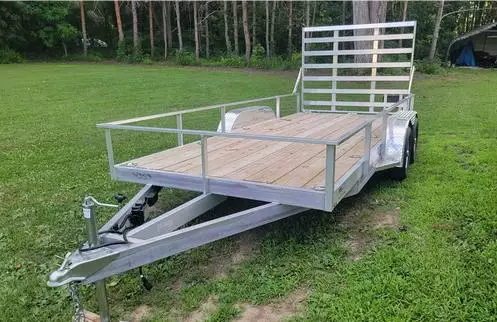
The weight advantage of aluminum directly increases your useful payload. A lighter trailer means you can haul more cargo before reaching your tow vehicle's rated capacity. For a half-ton truck with a 2,000 lb towing margin, a 400 lb aluminum trailer versus a 600 lb steel version means 200 extra pounds of cargo capacity on every trip.
Aluminum's corrosion resistance matters in any climate, not just coastal regions. Road salt used in northern states accelerates rust on steel trailers significantly. An aluminum frame forms its own protective oxide layer that prevents corrosion without painting or treating. Over a 10- to 15-year ownership period, the maintenance cost advantage for aluminum is substantial. Before committing to any purchase, the used trailer buying guide covers pre-purchase inspection steps that apply to both new and used utility trailers.
NeighborsTrailer.com
Key Features to Evaluate When Buying a Utility Trailer
Size and Deck Dimensions
Utility trailers are typically available in lengths from 4 to 20 feet and widths from 4 to 8 feet. Choose a size based on your most common load, not your largest occasional load. A trailer that is consistently oversized costs more to tow and store. A useful guideline is to select a trailer slightly larger than your typical load. A 6.5 x 12 foot trailer handles most homeowner and light commercial use well. Contractors who regularly haul equipment may benefit from a 7 x 16 or larger configuration.
Single-Axle vs. Dual-Axle
Single-axle trailers are lighter, easier to maneuver, and less expensive to buy and maintain. They suit loads under 3,500 lbs and shorter haul distances. Dual-axle trailers offer a more stable ride, handle heavier loads (up to 7,000 lbs or more), and provide redundancy if one tire fails. For frequent heavy loads or long-distance towing, the dual-axle is worth the additional cost.
Tie-Down Anchor Points
The number, location, and type of anchor points determine how securely you can fasten loads. Look for D-rings or E-track mounted at regular intervals along the sides of the trailer bed. A minimum of four anchor points is standard; more is better for irregular loads. Confirm the anchor points are bolted through the frame, not just welded to the floor surface, for maximum holding strength.
Ramp and Gate Options
If you plan to haul wheeled equipment such as lawn mowers, ATVs, or small vehicles, a rear gate that converts to a loading ramp is essential. Barn-door rear gates split in the middle and swing open, which is better for general cargo. A fold-down ramp gate is better for rolling loads. Some trailers include side ramps as well, which are useful for very heavy equipment that is difficult to push up a steep single ramp. For more on towing wheeled equipment safely, the car trailer rental guide covers load positioning and tie-down technique that applies to utility trailers as well.
Trailer Brakes
Trailers above a certain gross weight rating are required by law in most states to have brakes. For utility trailers intended for loads over 3,000 lbs, electric trailer brakes are standard. These connect to a brake controller in the tow vehicle and allow proportional braking force to be applied to the trailer wheels. Even if not legally required for your use, trailer brakes dramatically improve stopping distances with heavy loads.
How to Earn Rental Income from Your Utility Trailer
When your trailer is not in active use, listing it on Neighbors Trailer turns idle equipment into recurring income. Trailer owners set their own availability and daily rates. Renters search for trailers near them and book through the app. Neighbors Trailer charges owners a 20% platform fee on completed bookings and renters a 10% service fee. Owners receive payment via Stripe within two to three business days after each rental is completed.
The demand for utility trailer rentals is consistent year-round. Homeowners moving furniture or hauling yard debris, contractors needing extra capacity, and businesses transporting equipment all represent regular rental demand. A well-maintained utility trailer listed at competitive rates can generate enough income to cover its annual registration, tire replacement, and routine maintenance costs, and then some.
Frequently Asked Questions
Is aluminum worth the extra cost over steel for a utility trailer?
For most buyers who plan to use the trailer regularly for more than five years, yes. The lower maintenance costs, better corrosion resistance, and higher resale value of aluminum typically outweigh the higher purchase price over the long term. For occasional use in dry climates, a well-maintained steel trailer can be a cost-effective choice.
What size utility trailer fits most homeowner needs?
A 6.5 x 12 foot single-axle trailer handles the majority of homeowner applications including moving furniture, hauling mulch and landscaping materials, and transporting a riding mower or small ATV. It is compact enough to store in a standard driveway and easy to tow with most half-ton trucks or larger SUVs.
Do I need a brake controller to tow a utility trailer?
If the trailer is equipped with electric brakes, yes, you need a brake controller installed in the tow vehicle. Many newer trucks and SUVs include an integrated brake controller. If your vehicle does not have one, an aftermarket controller can be installed for a few hundred dollars. Check your trailer's gross vehicle weight rating and your state's regulations to determine whether brakes are required.
Can I tow a utility trailer with an SUV or crossover?
Yes, with the right combination of vehicle towing capacity and trailer weight. Most mid-size SUVs can tow between 3,500 and 5,000 lbs. Confirm your vehicle's rated towing capacity, tongue weight limit, and whether a trailer hitch is installed or needs to be added. Never tow above your vehicle's rated capacity.
What maintenance does a utility trailer require?
Routine trailer maintenance includes lubricating wheel bearings annually, inspecting and replacing trailer tires at least every five to six years, testing lights before every trip, and checking the coupler, safety chains, and tie-down points for wear or damage. For steel trailers, inspect the frame for rust annually and treat any bare metal promptly.
Key Takeaways
Buying a utility trailer is a significant investment that pays off over years of use. Choose aluminum if you plan to use the trailer regularly and want minimal long-term maintenance. Choose steel if budget is the primary constraint and conditions are dry. Size up slightly from your typical load, consider dual-axle for heavy or long-distance hauling, and prioritize quality anchor points and gate options. When the trailer is not in use, listing it on Neighbors Trailer is a practical way to generate income and recover your investment.
Related Articles
- Trailer Maintenance Tips on Storing Your Trailer Safely in the Winter
- Testing the Breakaway Switch on an Enclosed Trailer Rental
- Learn How to Install a Winch on Your Flatbed Trailer Rental
- Choosing Spring or Torsion Axle for a Utility Trailer Rental
Content updated March 2026