

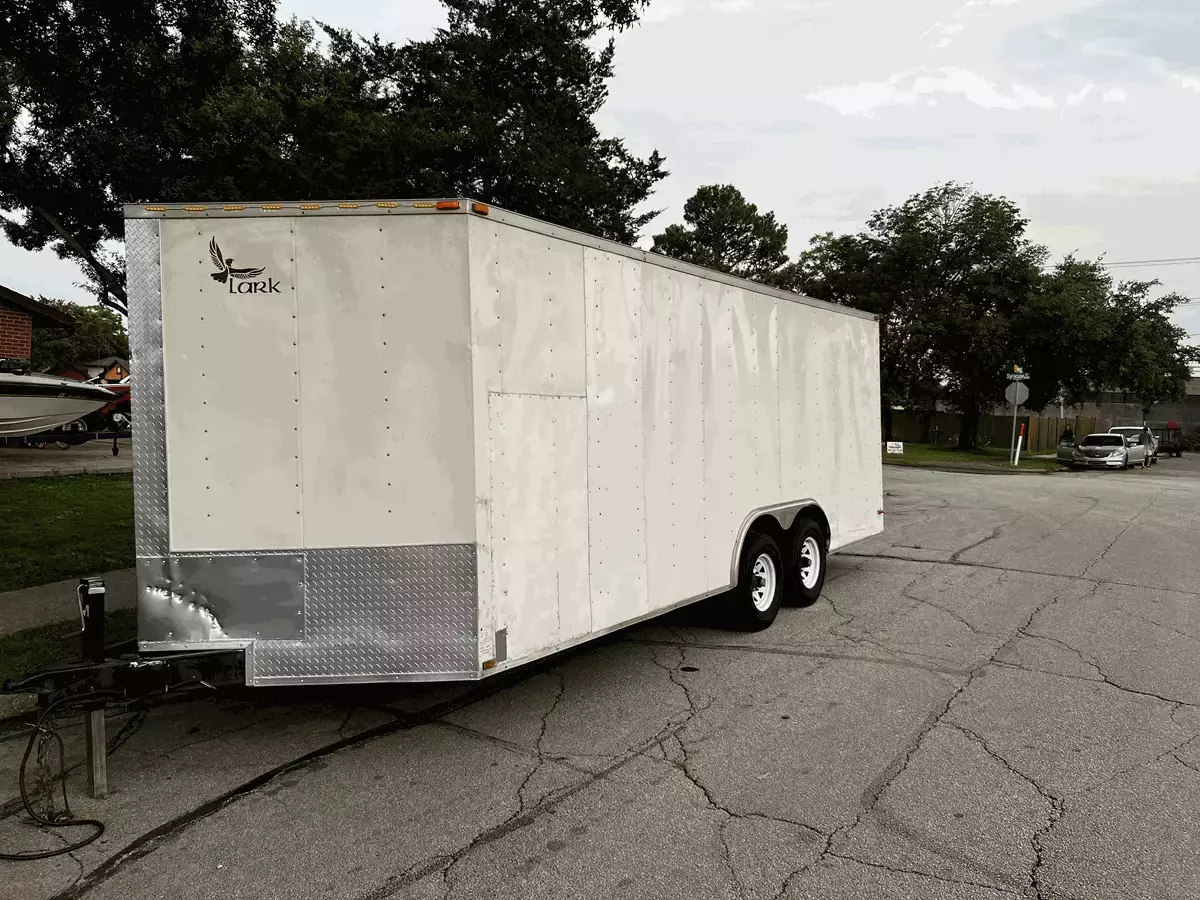
Testing the Breakaway Switch on an Enclosed Trailer
 Neighbors Trailer
Jun 30, 2023 1615 9 min read breakaway switch
The breakaway switch is one of the most important—and most frequently overlooked—safety features on an enclosed trailer with electric brakes. Its job is simple but critical: if the trailer ever separates from the tow vehicle, the breakaway switch automatically applies the trailer's brakes using the trailer's own battery, slowing or stopping the runaway trailer before it causes a catastrophic accident.
Most renters never think about the breakaway switch until something goes wrong. This guide will show you exactly how the system works, how to test it in under five minutes, what a passing test looks and feels like, and what to do if the switch fails. Testing should happen at every rental pickup—it takes almost no time and could save lives.
How the Breakaway Switch System Works
The breakaway switch system has three components that must all function correctly:
- Breakaway switch: A spring-loaded switch mounted near the trailer tongue. It is connected to the tow vehicle via a lanyard (cable or chain). In normal operation, the lanyard holds the switch in the "open" (off) position.
- Breakaway battery: A small 12-volt battery mounted on the trailer (often in a box near the tongue or A-frame). This battery powers the trailer brakes independently of the tow vehicle if separation occurs.
- Electric trailer brakes: The same brake magnets used during normal towing. When the breakaway switch triggers, it completes a circuit from the breakaway battery to the brake magnets, applying full brake force.
When the trailer separates from the tow vehicle, the lanyard pulls taut and yanks the switch pin free, closing the circuit and sending power from the breakaway battery to the brakes. The trailer brakes engage at full force and remain engaged until the switch is reset or the battery drains.
Breakaway System Components: Function and Failure Points
| Component | Normal State | Activated State | Common Failure Mode | How to Detect Failure |
| Breakaway Switch | Pin inserted; circuit open | Pin pulled; circuit closed | Corroded contacts; pin stuck; cracked housing | Pull pin—brakes don't engage |
| Breakaway Battery | Fully charged (12V+) | Powering brake magnets | Dead/discharged battery; corroded terminals | Voltmeter reads below 11V; brakes don't hold during test |
| Lanyard | Connected; sufficient tension | Pulled taut on separation | Too long (won't pull switch); disconnected; frayed | Slack visible; lanyard not connected to tow vehicle |
| Wiring Harness | Intact; no corrosion | Carrying current to brakes | Chafed insulation; corroded connectors; broken ground | Brakes don't engage even when switch is triggered |
How to Test the Breakaway Switch: Step-by-Step
This test should be performed at every pickup before you leave. It takes less than five minutes and verifies that all three components—the switch, the battery, and the brake circuit—are functional.
Before the Test: What You'll Need
- A helper (strongly recommended) or a way to safely observe the trailer wheels
- A flat, open area (a parking lot works well)
- The trailer connected to the tow vehicle via 7-pin connector (for normal brake function) but NOT fully loaded (lighter trailer makes wheel lockup easier to detect)
Step 1: Inspect the Lanyard
Before doing anything else, check the lanyard that connects the breakaway switch to the tow vehicle. It should be securely attached to a solid point on the tow vehicle frame or hitch—not just the trailer wiring harness. The lanyard should be short enough that it would pull the switch pin immediately upon separation, but long enough that it doesn't accidentally trigger during tight turns. A good lanyard length is 12–18 inches of free play.
Step 2: Check the Breakaway Battery
Locate the breakaway battery box (usually a small black or gray box mounted near the trailer tongue). If it has a built-in indicator light, verify it shows green or charged. If you have a voltmeter, place the probes on the battery terminals—a healthy battery should read 12.0–12.7V. A reading below 11V means the battery is too discharged to reliably power the brakes in an emergency.
Step 3: Perform the Pull Test
With your helper watching the trailer wheels from a safe position to the side (never behind the trailer), slowly pull out the breakaway switch pin by hand. The pin is typically a small plastic or metal rod that slides out of the switch housing. Within 1–2 seconds of pulling the pin, the trailer brakes should engage fully—the wheels should lock up or resist rolling entirely.
Alternatively, have your helper manually try to roll the trailer by pushing on the tongue while you hold the pin pulled. If the brakes are working, the trailer will resist movement strongly.
Step 4: Confirm Brake Engagement
With the pin pulled, the trailer brakes should hold the trailer stationary even on a slight grade. If the brakes engage, you'll hear the brake magnets click and the wheels will resist any attempt to roll the trailer. This is a pass.
Step 5: Reset the Switch
Reinsert the pin fully into the switch housing until it seats securely. The circuit is now open again and the brakes release. Confirm the trailer rolls freely and that the pin is fully seated before driving.
What a Failing Test Looks Like
| Symptom | Likely Cause | Action to Take |
| No brake engagement when pin is pulled | Dead battery, failed switch contacts, broken wiring | Do not tow; notify owner; document with photos |
| Brakes engage weakly or release within seconds | Low battery charge | Inform owner; owner should recharge or replace battery before rental |
| Brakes engage but pin won't re-insert fully | Bent pin; switch housing damage; corrosion | Do not tow; switch must seat properly for lanyard to function |
| Brakes don't release after reinserting pin | Switch stuck in closed position | Do not tow; stuck switch will drag brakes and cause overheating |
| Lanyard is missing or disconnected | Missing equipment | Do not tow; system cannot function without a properly connected lanyard |
Why This Matters Beyond Legal Compliance
In most U.S. states, any trailer with electric brakes is legally required to have a functioning breakaway system. This isn't just a technicality. A trailer that separates from its tow vehicle at highway speed becomes an unguided projectile. Even on a downhill grade at low speed, a runaway trailer can travel hundreds of feet before coming to a stop on its own—potentially into cross traffic, pedestrians, or buildings.
When you rent through Neighborstrailer.com, you're responsible for the trailer during the rental period. If a breakaway system is non-functional at pickup, document it immediately with photos and communicate with the owner before accepting the trailer. This protects both you and the owner.
NT Protect—available at a few dollars per day with a $500 deductible—covers accidental damage during the rental period. But it can't cover liability from a runaway trailer with a non-functioning safety system. Make the five-minute test a non-negotiable part of every pickup.
How Often Should the Breakaway Battery Be Charged?
The breakaway battery is a standby device—it should be maintained at full charge at all times, since it needs to be ready at a moment's notice. On trailers that are rented frequently, the owner should verify the battery charge level monthly at minimum. The battery self-discharges slowly even when not in use. A completely dead battery may still show slight voltage but fail under load. As a renter, the charge check in Step 2 is your primary protection.
Frequently Asked Questions
Is the breakaway switch the same as the brake controller?
No. The brake controller is installed in the tow vehicle and activates the trailer brakes during normal stopping. The breakaway switch is installed on the trailer itself and activates the trailer brakes using the trailer's own battery only if the trailer fully separates from the tow vehicle. Both systems are independent and both must work correctly.
What happens if I forget to connect the breakaway lanyard?
If the lanyard is not connected to the tow vehicle and the trailer separates, the switch pin will not be pulled and the brakes will not activate. The trailer will roll free without any braking. Always connect the lanyard as the final step before moving the vehicle—after the safety chains are connected.
Can I rent an enclosed trailer without a breakaway system?
Legally, you may be able to—requirements vary by trailer weight and state law. But for any trailer with electric brakes, the breakaway system is a safety feature that directly affects your liability in the event of a separation. Choose trailers that have functioning breakaway systems whenever possible.
How do I know if the breakaway battery needs to be replaced?
A breakaway battery that reads below 11V under load, or that fails to hold the brakes engaged for at least 15–20 minutes during a test, should be replaced. Most breakaway batteries are standard sealed lead-acid batteries that can be replaced at any auto parts store for under $30.
What should I do if the breakaway activates accidentally during the rental?
If the switch pin is dislodged by road vibration or a mistaken pull, the trailer brakes will engage while you're moving. You'll feel sudden resistance and the tow vehicle may pull in the braking direction. Pull over safely, reinsert the pin fully, and inspect the lanyard to make sure it has appropriate slack and isn't rubbing against anything that could trigger it again.
Conclusion
Testing the breakaway switch on an enclosed trailer rental is a five-minute process that every renter should make a standard part of the pickup routine. Check the lanyard connection, verify the battery charge, pull the pin and confirm brake engagement, then reset and confirm the pin seats fully. If any part of the test fails, document it and work with the trailer owner to resolve it before the rental begins. A functioning breakaway system is not optional—it's the last line of defense between a mechanical failure and a serious accident.
Find fully-equipped enclosed trailers for rent near you at Neighborstrailer.com—where owner profiles, trailer specs, and renter reviews help you make a confident rental decision every time.
Related Articles
- How to Use a Brake Controller on an Enclosed Trailer Rental
- Towing Capacity Explained: GVWR, GCWR & Payload
- Ultimate Trailer Towing Safety Guide
- Can Your Vehicle Safely Tow a Trailer?
Content Update: This guide was substantially updated in March 2026 with expanded towing safety guidance, improved equipment recommendations, and additional resources to help trailer owners tow safely and confidently.