

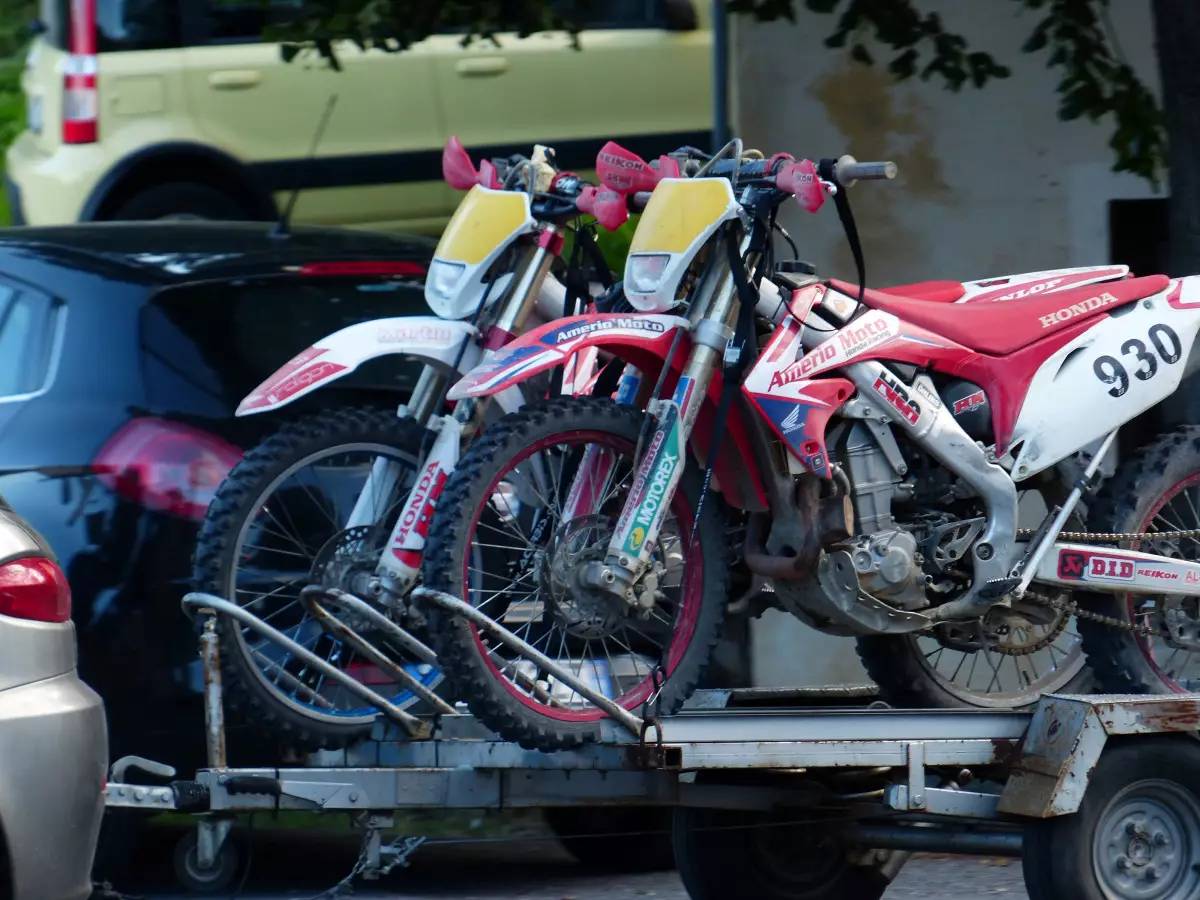
How to Properly Load a Motorcycle on Your Trailer Rental
 Neighbors Trailer
Apr 18, 2023 1206 9 min read motorcycle trailer rent
Transporting a motorcycle on a trailer might seem straightforward, but getting it wrong can lead to costly damage, road hazards, or even a dropped bike. Whether you are moving a dirt bike to a weekend trail ride, delivering a vintage cruiser to a show, or relocating across state lines, proper loading technique is the single most important factor in a safe trip. This trailer towing guide walks you through every step, from choosing the right trailer to securing your motorcycle so it arrives exactly the way it left.
Why Proper Motorcycle Loading Matters
A motorcycle that shifts during transit can suffer bent handlebars, cracked fairings, scratched paint, or worse. At highway speeds, an unsecured bike can even affect trailer stability and create a dangerous situation for everyone on the road. Taking an extra ten minutes to load correctly saves hundreds, sometimes thousands, of dollars in repairs. Every rental on Neighbors Trailer includes NT Protect, mandatory coverage that is automatically charged to the renter at booking for just a few dollars per day, giving you additional peace of mind while your bike is in transit.
Choosing the Right Trailer for Your Motorcycle
Before you load a single bike, you need the right trailer. The two main options are open trailers and enclosed trailers, and each has clear advantages depending on the situation.
Open Trailers
Open flatbed or utility trailers are the most popular choice for short to medium hauls. They are lighter, easier to maneuver, and typically less expensive to rent. A standard 5x8 or 6x10 utility trailer can handle one or two motorcycles comfortably. Look for a trailer with a built-in ramp or bring a portable loading ramp rated for your bike's weight. If you need help preparing your vehicle for towing, make sure your hitch, wiring, and tow vehicle are all rated for the combined weight of the trailer and your motorcycle.
Enclosed Trailers
Enclosed trailers offer maximum protection from weather, road debris, and theft. They are the best option for long-distance moves, valuable bikes, or multi-day trips where the motorcycle will sit overnight. The trade-off is higher rental cost and a heavier tow weight. Make sure your tow vehicle can handle the additional load before booking.
Essential Gear You Will Need
Having the right equipment on hand before you start makes the entire process smoother and safer. Here is what you should gather:
| Item | Purpose | Recommended Spec |
| Ratchet straps (x4) | Primary tie-down for front and rear | 1-inch or 1.5-inch, 1,500 lb breaking strength |
| Wheel chock | Locks the front wheel in place | Adjustable width, bolt-down or clamp style |
| Loading ramp | Safe bike-to-trailer transition | Rated for bike weight, anti-slip surface |
| Soft loops or handlebar straps | Protects chrome and paint at tie-down points | Nylon or rubber, rated for 1,000+ lbs |
| Trailer hitch lock | Prevents trailer theft at stops | Universal coupler lock |
NeighborsTrailer.com
NeighborsTrailer.com
Step-by-Step Guide to Loading Your Motorcycle on a Trailer
Follow these steps in order for the safest, most secure load every time. If you have never used ratchet straps on a trailer before, practice the mechanism a few times before you start.
Step 1: Position the Trailer on Level Ground
Park the trailer on a flat, stable surface and engage the tow vehicle's parking brake. Chock the trailer tires if you have wheel chocks available. A trailer that rolls or shifts while you are pushing a 400-pound motorcycle up a ramp is a recipe for disaster.
Step 2: Install the Wheel Chock
Bolt or clamp the wheel chock to the trailer bed near the front. Position it so the motorcycle's front tire will be centered left-to-right on the trailer. A centered load distributes weight evenly and keeps the trailer balanced during towing. Our weight distribution planner helps you position the bike for even balance and safe tongue weight.
Step 3: Set Up the Loading Ramp
Extend the ramp from the trailer's tailgate or rear edge to the ground. Confirm both sides of the ramp are securely seated, with no wobble or gap. If the ramp has a locking mechanism, engage it. Walk the ramp yourself first to check for slippery spots, especially in wet conditions.
Step 4: Walk the Motorcycle Up the Ramp
With the engine off and the bike in first gear (for manual transmissions) or park, walk alongside the motorcycle and push it up the ramp at a steady pace. Keep your body positioned slightly uphill from the bike so gravity works in your favor. A helper standing at the top of the ramp to guide the front wheel into the chock makes this step much easier.
Step 5: Seat the Front Wheel in the Chock
Roll the front tire forward until it clicks or wedges firmly into the wheel chock. The chock should grip the tire tightly enough that the bike stays upright on its own, or close to it. If you are working without a chock, have a second person hold the bike upright from one side while you begin strapping.
Step 6: Secure the Front with Ratchet Straps
Attach one ratchet strap to each side of the front of the motorcycle. The ideal attachment point is the lower triple clamp or the fork tubes, using soft loops to avoid scratching. Run each strap down at roughly a 45-degree angle to the trailer's tie-down points or D-rings. Tighten both straps equally so the bike compresses its front suspension evenly. The forks should compress about one to two inches.
Step 7: Secure the Rear
Run two more ratchet straps from the rear of the frame, swingarm, or rear passenger pegs down to tie-down points at the rear of the trailer. Tighten until the bike feels solid and does not sway side to side. Avoid strapping to any part that could bend or break under tension, like exhaust pipes or fenders.
Step 8: Raise the Kickstand and Double-Check Everything
Make sure the kickstand is fully retracted. A deployed kickstand can catch on the trailer bed during transit and bend or snap. Give the motorcycle a firm push from each side. It should barely move. Walk around the trailer and visually inspect every strap, buckle, and connection point.
Step 9: Tuck Away Excess Strap Length
Loose strap ends that flap in the wind can fray, tangle, or even strike your motorcycle's finish. Loop the excess strap and tuck it through the ratchet mechanism, or use a rubber band to bundle it against the tied section.
Loading Without a Wheel Chock
If you do not have a wheel chock, you can still secure a motorcycle safely. The key is to use an additional strap or a front-wheel cradle made from a 2x4 bolted to the trailer bed. Push the front tire against the cradle, then use four ratchet straps, two on each end, to create a stable hold. Without a chock, you should plan on having a helper hold the bike upright while you fasten the first two straps. It takes a bit longer, but the result can be just as secure.
Common Mistakes to Avoid
Even experienced riders make these errors when loading a motorcycle for transport. Keeping them in mind will save you time and protect your bike:
Overtightening Straps
More tension is not always better. Overtightening can damage fork seals, compress suspension components beyond their design limit, or warp frame tabs. Tighten until the bike is stable and the suspension compresses slightly, then stop.
Using Bungee Cords Instead of Ratchet Straps
Bungee cords stretch. At highway speed, a bungee cord can lose tension from vibration and allow the bike to shift. Always use ratchet straps rated for the weight of your motorcycle.
Ignoring Tire Pressure
Low tire pressure in the motorcycle's tires can allow the bike to wobble in the chock. Check tire pressure before loading and inflate to the manufacturer's recommended PSI.
Forgetting to Check Mid-Trip
Straps can loosen from road vibration. Stop after the first 15 to 20 miles to re-check every strap and tighten as needed. On longer trips, check at every fuel stop.
Frequently Asked Questions
Can I transport two motorcycles on one trailer?
Yes, a 6x10 or larger utility trailer can typically hold two motorcycles side by side. You will need two wheel chocks and a full set of straps for each bike. Make sure the combined weight does not exceed the trailer's payload rating.
What size trailer do I need for a motorcycle?
A 5x8 utility trailer works well for a single motorcycle. For two bikes or a larger touring motorcycle, step up to a 6x10 or 6x12 trailer. Always verify that the trailer's Gross Vehicle Weight Rating exceeds the weight of your bike plus all gear. Our ATV, UTV and motorcycle trailer calculator sizes a trailer to your bike’s weight and dimensions.
Do I need a special license to tow a motorcycle trailer?
In most states, a standard driver's license is sufficient to tow a single-axle utility trailer with a motorcycle. However, weight limits vary by state. If your combined trailer-plus-cargo weight exceeds your state's threshold, you may need a special endorsement. Check your local DMV for specifics.
How fast can I drive while towing a motorcycle on a trailer?
Most experts recommend staying at or below 55 mph when towing a motorcycle on an open trailer. Enclosed trailers handle crosswinds better and can safely travel at highway speeds, but always follow posted towing speed limits. Reducing speed by even 5 mph dramatically lowers the risk of trailer sway.
Where can I rent a trailer for my motorcycle?
Neighbors Trailer is America's first peer-to-peer trailer rental marketplace. You can browse thousands of trailers available for hauling vehicles from private owners in your area, often at lower rates than big-box rental companies. Every booking includes NT Protect coverage automatically, so your rental is protected from the moment you pick up the trailer.
Find the Perfect Motorcycle Trailer on Neighbors Trailer
Renting a motorcycle trailer does not have to be complicated or expensive. Neighbors Trailer connects you with trailer owners in your neighborhood who have exactly what you need, whether it is a simple open utility trailer for a weekend ride or a fully enclosed unit for a cross-country move. Search by location, compare prices, read reviews, and book in minutes. With NT Protect included on every rental, you can focus on the ride ahead instead of worrying about what-ifs.
Related Articles
- How to Choose the Right Trailer to Haul Your Offroad Vehicles
- Learn How to Use Ratchet Straps on a Flatbed Trailer Rental
- Trailer Safety 101: Heavy Hauling Tips
- How to Prepare Your Vehicle for Towing a Trailer
Content updated April 2026