

Trailer Rental Etiquette: The Unwritten Rules
 Neighbors Trailer
Jul 6, 2026 213 13 min read
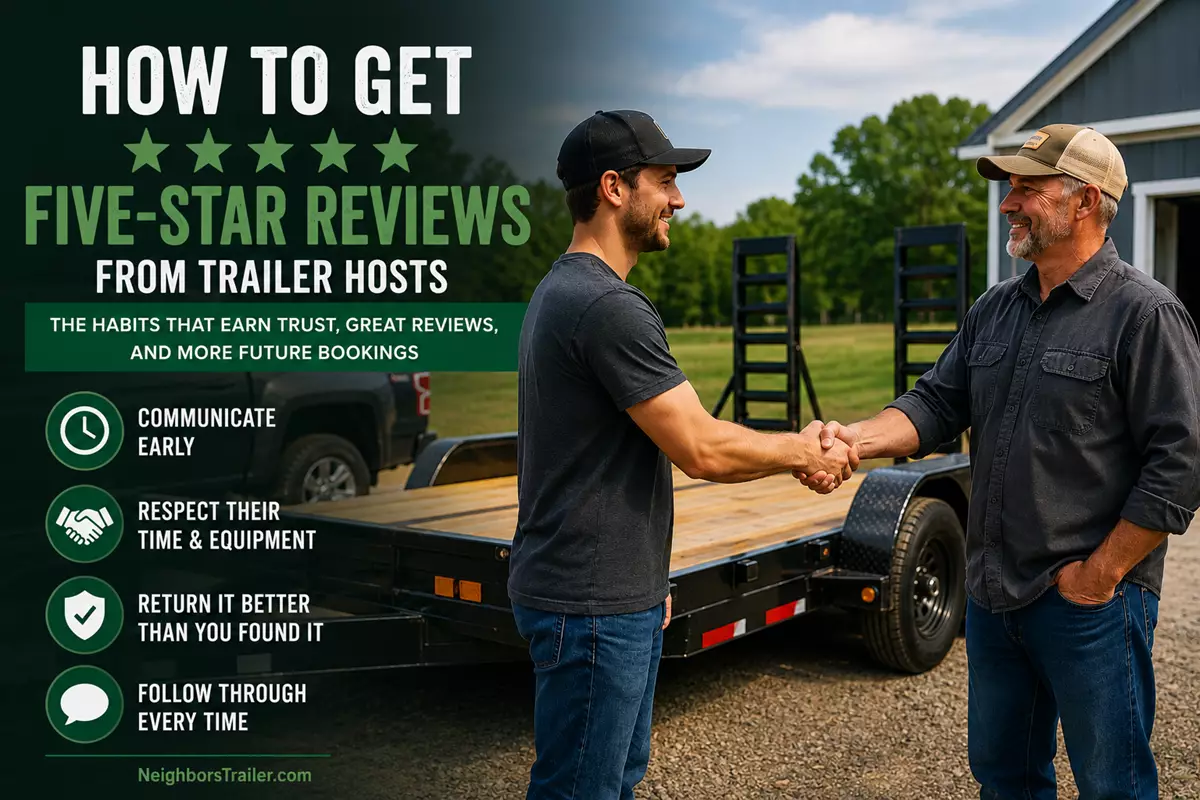
The renters who get five-star reviews on peer-to-peer trailer platforms are not necessarily the most experienced towers or the ones with the newest trucks. They are the renters who understand that a trailer rental is a relationship, not a transaction. On the other side of every booking is a host who owns the equipment, who keeps it maintained on their own time, and who will decide, at the end of the trip, whether to leave a review that helps or hurts your future bookings. Understanding what hosts notice, what they appreciate, and what quietly frustrates them is the difference between a rental that ends in a warm handoff and one that ends in a lukewarm review that follows you around the platform for years. This guide walks through the small habits that consistently earn five-star reviews and the ones that consistently tank them.
Why Renter Reviews Matter More Than You Think
Every trailer platform includes a bidirectional review system. After each trip, the host leaves a review of you, and you leave a review of them. Your accumulated reviews follow you across every future booking on the platform. Hosts checking your profile before accepting a booking see your review history. A profile full of five-star reviews gets accepted quickly, sometimes at a slight discount because hosts prefer known-good renters. A profile with even one or two three-star reviews starts to see slower responses, occasional declines, and less flexibility on issues that come up mid-trip.
The system rewards consistent professionalism and punishes carelessness in a way that compounds over time. A single early misstep can be recovered from, but a pattern of small frustrations shows up quickly in review scores, and the platform's algorithms notice too. Beyond your personal profile, the review ecosystem also shapes the whole platform: hosts who consistently get treated well continue listing their trailers; hosts who feel disrespected eventually leave. The renters who understand this treat every rental as a chance to leave the platform slightly better than they found it.
Before Pickup: Setting the Relationship Right
The impression a host forms of you starts before you ever meet in person. The messages you send during booking, the questions you ask, and the tone you use all contribute to how the host walks into pickup.
Book with Complete Information
When you book, tell the host what you are hauling and how far you are going. Not because they will judge you, but because it helps them recommend the right approach and mentally prepare for the handoff. Vague bookings ("I need a trailer for the weekend") give the host no context. Specific bookings ("Picking up a 3,500-pound tractor from a farm about 90 miles away, returning Sunday afternoon") let the host confirm the trailer is the right size, offer relevant advice, and know what to expect at the return.
Confirm Your Timeline in Writing
A day or two before pickup, send a short message confirming the pickup time. This does two things: it reminds the host you are still coming (they appreciate the certainty), and it opens a channel for any last-minute adjustments. If your plans have shifted, this is the moment to say so, not the morning of.
Ask Questions in Advance
If you have questions about the trailer, the process, or the return, ask them in the platform's messaging system before pickup day, not while standing in the host's driveway with them waiting on you. Written questions give the host time to answer thoughtfully. In-person questions on pickup day rush the handoff and can feel like they should have been resolved earlier.
At Pickup: The Professional First Impression
Pickup is the moment the host forms their strongest impression of you. Everything that follows is influenced by whether the first ten minutes went well.
Arrive When You Said You Would
If you told the host 10 AM, aim for 9:55. If something delays you, message immediately (not when you are already twenty minutes late). Hosts appreciate on-time renters more than almost anything else because they are giving up their own time to be at the pickup. A renter who wastes host time on the very first interaction signals what the rest of the trip will look like.
Do the Walkthrough With the Host
Ask the host to walk through the trailer with you. Not because you are worried about a scam, but because it creates a shared baseline of the trailer's condition and gives you time to ask any last questions in person. Our guide to the hookup walkthrough covers the specific inspection points that matter. Hosts who see a renter doing a thoughtful walkthrough relax. They trust you with the equipment. That trust shapes every interaction that follows.
Ask Questions Respectfully
You will have questions during the walkthrough. Ask them as questions, not as skepticism. "How do I set the brake controller for this trailer?" reads differently than "Is this brake controller even working?" Both get to the same information, but one signals trust and the other signals suspicion. Hosts know the difference.
Confirm the Return Details
Before you drive off, confirm three things out loud: the return time, the return location, and any specific expectations about condition (fuel, cleanliness, tire pressure). Getting these clear at pickup prevents the confusion and small disagreements that create bad reviews at return.
During the Rental: Treat the Trailer Like Your Own
The middle of the trip is where most of the actual work happens, but it is also where most of the small habits that earn five-star reviews get established.
Treat the Trailer With Care
Assume every scrape, dent, or new mark will be visible and traceable at return. Drive as if the trailer is a piece of expensive equipment on loan from a friend, because that is exactly what it is. This affects small decisions: parking where the trailer will not get bumped by other vehicles, not backing into obstacles you could have driven around, not leaving the trailer in a spot where it could be scratched by branches or side-swiped in a lot.
Load Correctly the First Time
Improper loading damages trailers in subtle ways that show up as claims after the trip. Distribute weight properly (about 60 percent forward of the axle), secure everything with rated straps, and never overload the trailer relative to its GVWR. Our ultimate towing safety guide covers the loading rules that protect both cargo and equipment.
Communicate Proactively If Something Comes Up
The single biggest driver of bad reviews is delayed communication when something goes wrong. If you get a flat tire, message the host immediately, not four hours later after you have already made three decisions on your own. If you are going to return late, message before you are late, not after. Hosts consistently forgive problems that get communicated early. They rarely forgive problems that get sprung on them at return.
Watch Your Cargo, Not Just the Trailer
Cargo shifts. Straps loosen after the first few miles of driving. Doors that were fine at loading can rattle open on the highway. Every 100 miles or so, pull over and walk around the trailer. This three-minute stop catches almost every avoidable mid-trip problem and prevents the kind of incidents that lead to damage claims. Hosts who see thoughtful mid-trip habits on returning trailers notice.
Handling Problems the Right Way
Problems happen on rentals. What separates good renters from great ones is how they handle those problems, not whether they occur at all.
If Something Breaks
Do not try to hide it or fix it yourself. Photograph what happened, message the host with a straightforward explanation, and ask how they want to handle it. Hosts respect renters who report issues promptly and honestly. They lose all respect for renters who return a broken trailer without mentioning it and hope the host will not notice.
If You Damage Something
Damage that gets reported at return, with photos and an honest explanation, gets handled through the platform's normal damage process. Damage that gets hidden and discovered later becomes a dispute, a bad review, and often a larger financial hit through the platform's protection program. Honesty is genuinely the shorter path.
If You Will Be Late Returning
Message the host as soon as you know, not when you are already overdue. Most hosts can accommodate a modest extension if given advance notice. Almost no host is happy about a late return that arrives without warning, because it often disrupts a booking they have scheduled for later that day.
If Weather or Route Changes Your Plans
Storms, road closures, and unexpected traffic all happen. If they change your return timeline meaningfully, message the host. If they force you to change routes in a way that affects the trip, mention it briefly. Hosts want to feel like partners in the trip, not people waiting in the dark for a trailer that may or may not show up.
At Return: Sticking the Landing
The return is where reviews are actually decided. Everything up to this moment can be undone by a sloppy return, and everything about the trip can be redeemed by a thoughtful one.
Return On Time
The single most important thing at return is being on time. If you agreed to return by 5 PM Sunday, be there at 4:50. On-time returns are the biggest predictor of five-star reviews across the entire platform. Late returns, especially without communication, are the biggest predictor of one-star reviews.
Return Clean
Sweep out the interior. Wipe down anything obviously dirty. Remove all cargo, straps, and personal items. If the trailer got muddy on the trip, a quick rinse with a hose before return is a small effort that hosts genuinely notice. Returning a trailer clean signals respect for the equipment and for the host's time.
Return in Original Condition
Before you drive to the return, do a mental checklist: are the tires at the pressure they were at pickup? Is the interior in the condition it was at pickup? Are the doors, ramps, and hardware all working the way they were? If anything has changed, address it before return: air up tires, sweep the deck, note any incidents to report at the return handoff.
Do the Return Walkthrough
Just like at pickup, do a walkthrough with the host at return. This closes the loop on the trip. It also gives you the chance to point out anything that happened during the trip while the host is standing there, rather than having them discover it later without context. Return walkthroughs almost always end better than return drop-offs where the renter is in a rush to leave.
The Small Things That Get Noticed
Beyond the big things, several small habits consistently show up in five-star reviews. None require significant effort; all reflect a certain attitude that hosts respond to.
Topping off a tire that was slightly low at pickup. Sweeping out mud or debris from a rain-soaked worksite. Bringing the trailer back with the same amount of daylight left as when you picked it up (so the host is not walking around it in the dark). Sending a brief thank-you message after the handoff. Leaving a thoughtful review that helps future renters know what to expect. None of these is required by the platform. All of them get noticed.
Common Mistakes That Tank Reviews
The pattern of what does not work is as consistent as what does. Knowing the specific behaviors that create bad reviews makes them easy to avoid.
| Behavior | How Hosts Read It | The Simple Fix |
|---|---|---|
| Arriving 30+ minutes late without messaging | Renter does not respect host's time | Message the moment you know you are running late, even by five minutes |
| Returning the trailer dirty or with cargo debris | Renter does not respect the equipment | Sweep the interior and wipe visible surfaces before return |
| Not reporting damage that occurred during the trip | Renter is trying to avoid accountability | Photograph and report immediately with an honest explanation |
| Ghosting the host mid-trip when a problem arises | Renter cannot be trusted in future rentals | Message the host as soon as any issue occurs; ask how they want to handle it |
| Returning late without advance communication | Renter disregards the host's schedule and next bookings | Send a message the moment you know return will be late |
| Skipping the walkthrough at pickup or return | Renter is either careless or trying to avoid documentation | Do the walkthrough at both ends; use it as protection for yourself too |
| Leaving a critical review of the host without messaging them first | Renter escalates without giving the host a chance to make it right | If something went wrong, message before you review; most hosts fix issues gladly |
The Review Exchange
Reviews go both directions, and the reviews you leave affect the platform as much as the reviews you receive. A few habits make your reviews genuinely useful to other renters and to hosts.
Be specific rather than generic. "Great trailer, easy pickup, would rent again" is fine but forgettable. "Ramp door works smoothly, tires were properly inflated, host was easy to reach when I needed to extend a day" is memorable and helpful. Specificity signals care and helps future renters make informed decisions.
Be honest but fair. If something genuinely went wrong, mention it in a way that helps other renters know what to expect, but do not exaggerate or write the review as an angry vent. If a host was accommodating about a mid-trip issue, say so. The reviews you write become part of your visible profile too, and hosts screening you as a future renter look at how you review others as much as at how others review you.
Leave a review promptly. Reviews left within a day or two of return are the ones that stick. Reviews left weeks later often feel disconnected from the actual trip and reduce the reciprocity that keeps the review system honest.
The Bottom Line
The five-star renter is not the one who did nothing wrong. They are the one who treated the whole rental as a small partnership: communicated clearly, arrived when they said they would, cared for the equipment, reported problems honestly, and returned the trailer in the condition they received it. None of these habits is difficult. All of them compound over time into a profile that gets accepted quickly, treated well, and offered flexibility when things do not go according to plan. The renters who build that profile save themselves stress and often save money too, because hosts genuinely prefer known-good customers.
Ready to put it into practice on your next rental? Browse trailers on Neighbors Trailer, book one that fits your project, and treat the trip like the small partnership it is. The hosts you rent from remember the good renters as clearly as they remember the bad ones, and the compounding benefit shows up in every booking that follows.