

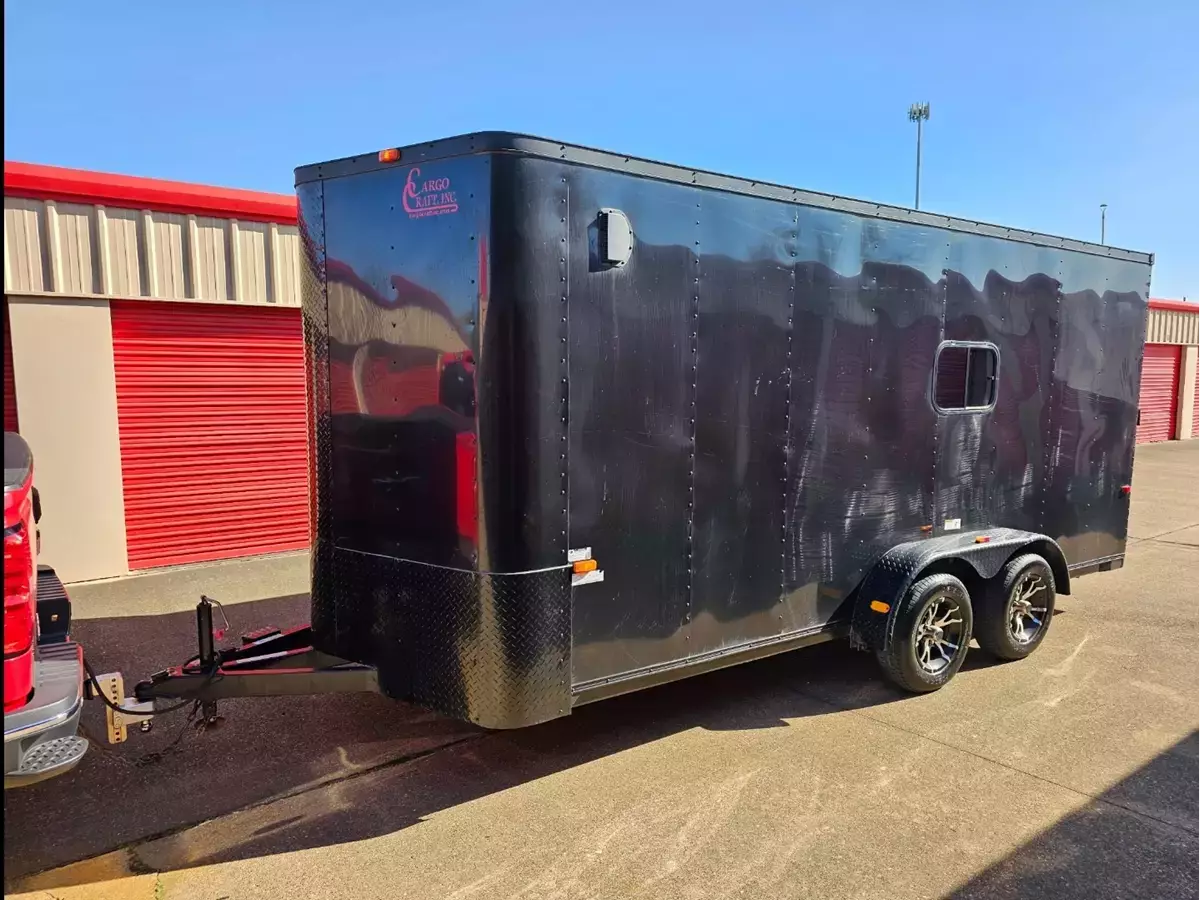
How to Use a Brake Controller on an Enclosed Trailer Rental
 Neighbors Trailer
Jun 29, 2023 1114 8 min read trailer brake controller
If the enclosed trailer rental you've booked has electric brakes, you'll need a brake controller installed in your tow vehicle to use them. Many renters discover this for the first time at pickup and either skip the trailer brakes entirely or head to an auto parts store for a last-minute purchase. Neither outcome is ideal. Understanding what a brake controller does, how to set it up, and how to adjust it for your specific load is something every renter should know before they hit the road.
This guide covers the types of brake controllers available, how to connect and configure one for an enclosed trailer rental, and how to tune the settings for a safe, legal tow.
What Is a Trailer Brake Controller and Why Does It Matter?
A brake controller is a device installed in the tow vehicle that sends an electrical signal to the trailer's electric brakes when the driver applies the vehicle's brakes. Without a brake controller, the trailer's electric brakes do not engage at all—the tow vehicle must bring both itself and the trailer to a stop using only its own brakes. On a loaded enclosed trailer, this dramatically increases stopping distance and creates serious safety and legal issues.
Most U.S. states require a brake controller for any trailer with a loaded weight above 3,000 lbs (some states set the threshold at 1,500 lbs—check your state's requirements). Many enclosed cargo trailers available on Neighborstrailer.com fall into this range when loaded. The owner's listing will typically note whether the trailer has electric brakes and what brake controller is required.
Types of Brake Controllers
| Type | How It Works | Best For | Typical Cost | Installation |
| Time-Delayed (Proportional Imitation) | Sends a preset braking signal after a time delay; user adjusts gain and sensitivity | Occasional towers, lighter trailers, budget-conscious renters | $30–$80 | Simple—connects to brake output wire; no pendulum leveling required |
| Proportional (Inertia-Based) | Uses an internal accelerometer to sense deceleration; applies trailer brakes proportionally in real time | Frequent towers, heavier trailers, best braking feel | $100–$250 | Requires level mounting; accelerometer must be calibrated to vehicle |
| Plug-In / Portable | Attaches to OBDII port and brake pedal sensor; no wiring required | Renters without permanent brake controller wiring | $150–$400 | No tools required; plug into OBDII and clip to brake pedal |
| OEM Integrated | Built into the tow vehicle's trailer tow package; controlled via the infotainment system | Late-model trucks and SUVs with factory tow packages | Included with vehicle | No installation needed; access settings in vehicle menu |
Connecting the Brake Controller to the Enclosed Trailer
Step 1: Verify the Trailer Has Electric Brakes
Not every enclosed trailer has electric brakes. Smaller trailers (under 3,000 lbs GVWR) often do not. Check the trailer listing or ask the owner before pickup. If the trailer has a 7-pin connector, it almost certainly has electric brakes—the dedicated brake output wire is pin 3 on a standard 7-pin flat connector.
Step 2: Connect the 7-Pin Connector
Plug the trailer's 7-pin connector into your vehicle's 7-pin receiver. The brake controller communicates through this connection. If your vehicle only has a 4-pin connector, you'll need a 7-pin adapter—and a brake controller won't function without the 7-pin connection carrying the brake circuit.
Step 3: Power on the Brake Controller
Most hardwired controllers are always-on when the vehicle is running. Plug-in controllers power on when connected to the OBDII port. Some factory-integrated systems activate automatically when a trailer is detected on the 7-pin connector.
Step 4: Set the Gain (Brake Output Level)
Gain is the intensity of the braking signal sent to the trailer brakes. It is expressed as a number on the controller's display—typically 1–10. A gain of 1 sends a light signal (appropriate for a light trailer or gentle stops); a gain of 10 sends maximum signal (appropriate for a heavy, fast-moving load). Start with a gain of 4–5 as a baseline and adjust from there.
Step 5: Perform a Manual Override Test
Most brake controllers have a manual slide button that activates the trailer brakes without touching the vehicle's brake pedal. At slow speed (5–10 mph) in an empty parking lot, press this button and feel for the trailer brakes engaging. You should feel the trailer "pushing back" against the vehicle slightly—this confirms the brakes are working. If you feel nothing, recheck the 7-pin connection and the trailer brake magnet wiring.
Tuning Brake Controller Gain for Your Load
Gain must be adjusted based on trailer weight. Setting gain too low means the trailer brakes don't contribute enough and your vehicle brakes do all the work. Setting gain too high causes trailer wheel lockup—the trailer wheels skid while the vehicle wheels roll, which can cause jackknifing or trailer sway.
| Loaded Trailer Weight | Recommended Starting Gain | Adjustment Signal |
| Under 2,000 lbs | 2–3 | If trailer brakes feel grabby (lurch on stops), reduce gain by 1 |
| 2,000–4,000 lbs | 4–5 | Test: at 25 mph, apply moderate brakes—stop should feel smooth and linear |
| 4,000–6,000 lbs | 5–7 | If rear of tow vehicle rises during braking, increase gain; if trailer pushes forward, it may be too high |
| 6,000–10,000 lbs | 7–9 | Proportional controller strongly preferred at this range; monitor for wheel lockup |
| Over 10,000 lbs | 9–10 (full) | OEM or high-end proportional controller recommended; may need brake adjustment on trailer axles |
After setting the initial gain, perform a few moderate stops at 25–30 mph in a safe area. The braking should feel smooth and progressive. If the vehicle pitches forward with the trailer "pushing," the gain is too low. If you hear the trailer tires skidding or the trailer pulls to one side on braking, the gain is too high or the trailer brake adjustment is uneven.
Using NT Protect on Enclosed Trailer Rentals
Properly set trailer brakes reduce accident risk—but they don't eliminate it. NT Protect, available for a few dollars per day with a $500 deductible, covers accidental damage to the trailer during your rental period. This is especially valuable with enclosed trailers, which often carry finished goods and expensive contents. If something goes wrong during transit—a backing accident, a road hazard, unexpected contact—NT Protect prevents a repair bill from wiping out the value of the job you rented the trailer for.
Troubleshooting Common Brake Controller Problems
No response when I press the manual override
Check that the 7-pin connector is fully seated. Inspect the pin 3 (brake) contact for corrosion or bending. Verify the trailer has electric brakes (not surge/hydraulic brakes, which don't respond to a brake controller). Test with a 12V test light on the brake wire output from the controller.
Trailer brakes engage but feel weak even at high gain
The trailer brake magnets may be worn or the brake shoes may be out of adjustment. Inform the trailer owner—this is a maintenance issue, not a controller issue. On Neighbors Trailer, owners are responsible for keeping their trailers mechanically sound. Document this before departure.
Proportional controller doesn't engage on grades
A proportional (inertia-based) controller must be mounted level with the road surface. If it's angled, the accelerometer reads road grade as deceleration and doesn't respond correctly. Re-check the mounting angle and recalibrate per the manufacturer's instructions.
Frequently Asked Questions
Can I tow an enclosed trailer with electric brakes without a brake controller?
Not legally in most states—and not safely regardless. Without a brake controller, the trailer's electric brakes don't engage at all. You're relying solely on your tow vehicle's brakes to stop both vehicles. For a loaded enclosed trailer, this significantly increases stopping distance and accident risk.
Does my vehicle have a built-in brake controller?
Many 2015-and-newer trucks and SUVs with factory tow packages include an integrated brake controller. Check your vehicle's infotainment menu under "Towing" or "Trailer" settings. If it's there, you'll see a gain adjustment slider. If not, you'll need to add a controller.
How do I know if the enclosed trailer I'm renting has electric brakes?
Ask the owner directly or check the trailer listing. Trailers with electric brakes will have a 7-pin connector (not a 4-pin), and you may be able to see the brake magnets inside the wheel hubs. Any trailer over 3,500 lbs GVWR should have brakes—it's required by law in most states.
What is the breakaway switch and is it related to the brake controller?
Yes—they work together. The breakaway switch activates the trailer brakes using the trailer's own battery if the trailer ever separates from the tow vehicle. The brake controller handles normal braking during the trip. Both are important safety systems on electric-brake trailers.
Conclusion
Using a brake controller on an enclosed trailer rental is straightforward once you understand the types available, how to connect them, and how to tune the gain for your load. The critical steps are: verify the trailer has electric brakes, ensure you have a 7-pin connection, set an appropriate gain starting point, and test the brakes manually before departing. A properly configured brake controller makes every stop smoother, safer, and more controlled—and reduces wear on both your tow vehicle and the trailer.
Looking for enclosed trailers available near you? Visit Neighborstrailer.com to browse peer-to-peer enclosed trailer listings with full specs and owner ratings.
Related Articles
- Testing the Breakaway Switch on an Enclosed Trailer Rental
- Single Axle vs. Dual Axle Trailers: What to Know Before You Rent
- Ultimate Trailer Towing Safety Guide
- The Complete Beginner’s Guide to Renting a Trailer
Content Update: This guide was substantially updated in March 2026 with expanded towing safety guidance, improved equipment recommendations, and additional resources to help trailer owners tow safely and confidently.