

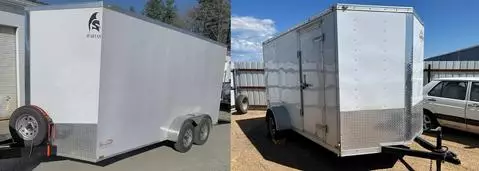
Comparing a Single-Axle vs. Dual-Axle Enclosed Trailer Rental
 Neighbors Trailer
Aug 10, 2023 437 9 min read enclosed trailer re
Single-Axle vs Dual-Axle Enclosed Trailers: Which Rental Is Right for You?
Choosing between a single-axle and a dual-axle enclosed trailer is one of the first decisions you will face when booking a rental. Both designs protect your cargo from weather and road debris, but they differ in weight capacity, towing stability, maneuverability, and cost. Picking the wrong one can mean an overloaded trailer, a difficult towing experience, or money spent on more trailer than you actually need.
This guide from Neighbors Trailer breaks down the key differences between single-axle and dual-axle enclosed trailers so you can match the right configuration to your load, your tow vehicle, and your budget.
How Axle Count Affects Trailer Performance
The number of axles under an enclosed trailer directly impacts how much weight it can carry, how stable it feels on the highway, and how easy it is to back into tight spots. A single-axle trailer has one set of wheels, while a dual-axle (also called tandem-axle) trailer has two sets spaced a few feet apart. That extra set of wheels changes everything from payload capacity to tire wear patterns.
Single-Axle Enclosed Trailers: Pros and Cons
A single-axle enclosed trailer is the lighter, more compact option. It works well for moderate loads and situations where maneuverability matters more than maximum payload.
Advantages of Single-Axle Trailers
The biggest advantage is maneuverability. With only one axle acting as the pivot point, a single-axle trailer turns tighter and responds more quickly to steering inputs when backing. This makes it ideal for residential driveways, crowded parking lots, and narrow job site access roads.
Single-axle trailers also weigh less than their dual-axle counterparts, which means better fuel economy for your tow vehicle and a lower overall gross vehicle weight. They cost less to rent, require fewer tires to maintain, and are easier to hand-position with a trailer dolly when unhitched. For lighter cargo like furniture, boxes, appliances, or band equipment, a single-axle enclosed trailer handles the job efficiently and affordably.
Disadvantages of Single-Axle Trailers
The main drawback is limited weight capacity. Most single-axle enclosed trailers top out at 2,000 to 3,500 pounds of payload. If your load approaches that ceiling, you are pushing the axle, tires, and suspension close to their limits, which increases the risk of a blowout or bearing failure.
A single-axle trailer also has less contact with the road, which reduces towing stability at highway speeds. Crosswinds and passing trucks can cause more noticeable sway. And if you suffer a flat tire, you cannot limp to the next exit because the remaining tire on that axle will not support the trailer alone.
Dual-Axle Enclosed Trailers: Pros and Cons
A dual-axle enclosed trailer is the heavier-duty option built for larger, heavier loads and longer distances.
Advantages of Dual-Axle Trailers
Payload capacity is the headline benefit. Dual-axle enclosed trailers typically handle 5,000 to 10,000 pounds or more, depending on the frame and suspension. The second axle distributes the load across four tires instead of two, reducing stress on each tire and bearing, and giving you a far greater margin of safety under heavy loads.
Towing stability improves significantly with two axles. The wider tire footprint resists sway, reduces bounce, and keeps the trailer tracking straighter behind your tow vehicle, especially at highway speeds. If one tire goes flat, the remaining tire on that axle can still support enough weight to get you safely off the road. For heavier cargo or longer trips, a dual-axle configuration is the safer choice. For more on choosing the right axle type, check our detailed comparison.
Disadvantages of Dual-Axle Trailers
The extra axle adds weight, which means your tow vehicle needs a higher towing capacity and will burn more fuel. Dual-axle trailers are also harder to maneuver in reverse because the two axle points resist sharp turns. In tight spaces, you may need to make multiple attempts to position the trailer correctly.
Rental and maintenance costs are higher as well. You are paying for a bigger trailer with more tires, more bearings, and more braking components. If the job only requires a light load, renting a dual-axle trailer means spending extra money on capacity you will not use.
| Factor | Single-Axle | Dual-Axle |
| Typical payload capacity | 2,000-3,500 lbs | 5,000-10,000 lbs |
| Towing stability | Moderate, more sway-prone | High, resists sway and bounce |
| Maneuverability | Excellent in tight spaces | Harder to back and turn |
| Fuel economy impact | Lower drag, better mileage | Higher drag, more fuel used |
| Flat tire safety | Cannot continue on one tire | Can limp to safety on three tires |
| Rental cost | Lower daily rate | Higher daily rate |
NeighborsTrailer.com
How to Decide Which Axle Configuration You Need
The decision usually comes down to three questions: how much does your cargo weigh, how far are you driving, and how tight are the spaces you need to navigate?
If your total cargo weight is under 2,500 pounds and your trip is relatively short, a single-axle enclosed trailer is the practical, cost-effective choice. Residential moves, small equipment deliveries, and weekend hauling jobs all fall comfortably within single-axle territory.
If your cargo exceeds 3,000 pounds, if you are driving more than a few hours on the highway, or if stability matters more than tight-space agility, a dual-axle enclosed trailer is worth the extra cost. Construction materials, motorcycles, side-by-sides, and commercial inventory shipments all benefit from the higher payload and steadier ride of two axles.
When in doubt, estimate your cargo weight on the heavy side and choose the trailer with headroom to spare. An underloaded dual-axle trailer tows beautifully, while an overloaded single-axle trailer creates safety problems. For more guidance on securing heavy loads, read our complete guide to tie-downs for enclosed trailers.
Resale Value and Long-Term Cost Differences
If you are thinking about buying rather than renting, axle count plays a meaningful role in resale value. Dual-axle enclosed trailers hold their value better because they appeal to a broader pool of buyers who need higher payload capacity. However, they also cost more upfront and have higher ongoing maintenance expenses because you are servicing twice as many bearings, brakes, and tires. For most people who only need a trailer a few times a year, renting through Neighbors Trailer eliminates those ownership costs entirely. You pay only for the days you tow, and NT Protect, which is automatically included in every booking for just a few dollars per day, covers you against unexpected damage while the trailer is in your care.
Safety Considerations for Each Axle Type
From a safety standpoint, dual-axle trailers offer a significant advantage: if one tire blows out at highway speed, the remaining tire on that side can support the trailer long enough for you to pull over safely. A single-axle trailer with a blowout will drop immediately onto the fender or rim, which can cause loss of control. That said, single-axle trailers are lighter and shorter, which makes them easier to maneuver in tight parking lots and residential driveways. Whichever configuration you choose, always perform a full walk-around inspection before every trip, checking tire pressure, lug nut torque, and lighting connections. A five-minute pre-trip check can prevent hours of roadside trouble.
Matching Your Tow Vehicle to the Trailer
Your tow vehicle's capacity sets the upper limit on which trailer you can safely pull. Check the towing capacity listed in your owner's manual or on the driver-side door jamb sticker. Subtract the trailer's empty weight from your tow vehicle's capacity, and the remainder is the maximum cargo you can load.
Most midsize SUVs and half-ton trucks can handle a loaded single-axle enclosed trailer without issue. Dual-axle enclosed trailers, especially when fully loaded, typically require a half-ton truck at minimum and often a three-quarter-ton or one-ton truck for loads approaching 8,000 pounds or more. A brake controller is strongly recommended for any dual-axle setup and required by law in many states. For more on safe towing essentials, see our guide to essential safe towing tips.
How NT Protect Keeps You Covered
Whether you choose a single-axle or dual-axle rental, every booking through Neighbors Trailer includes NT Protect. This mandatory coverage is automatically applied at the time of booking for just a few dollars per day. NT Protect covers accidental damage to the trailer during the rental period, so you can focus on loading and towing rather than worrying about unexpected repair bills.
Frequently Asked Questions
Can I tow a dual-axle enclosed trailer with an SUV?
It depends on the SUV's towing capacity. Some full-size SUVs can tow 7,000 to 9,000 pounds, which is enough for a moderately loaded dual-axle trailer. Compact and midsize SUVs are generally limited to single-axle trailers. Always check your vehicle's tow rating before booking.
Is a single-axle trailer safe for highway driving?
Yes, as long as you stay within the weight limit and maintain proper tire pressure. Single-axle trailers are more susceptible to crosswind sway, so keep your speed moderate and avoid sudden lane changes. A weight distribution hitch can also improve stability.
Do dual-axle trailers require special brakes?
Most dual-axle enclosed trailers come equipped with electric brakes on both axles. You will need a brake controller installed in your tow vehicle to activate them. Many newer trucks have a built-in controller, but older vehicles may require an aftermarket unit.
Which is better for moving furniture across state lines?
For a full household move, a dual-axle enclosed trailer is the better choice because the weight of furniture, appliances, and boxes adds up quickly. For a partial move or a single room of furniture, a single-axle trailer usually provides enough capacity at a lower cost.
What happens if a tire blows out on a single-axle trailer?
You will need to stop immediately and change the tire. Unlike a dual-axle trailer, a single-axle cannot continue rolling on the remaining tire. Carrying a spare tire and the tools to change it is essential any time you tow a single-axle trailer.
Conclusion
Single-axle enclosed trailers are lighter, easier to maneuver, and more affordable for lighter loads and short trips. Dual-axle enclosed trailers offer higher payload capacity, better highway stability, and added safety if a tire fails. By matching the axle configuration to your cargo weight, trip distance, and tow vehicle capacity, you can book the right trailer with confidence. Rent an enclosed trailer through Neighbors Trailer to access owner-listed options in your area, and every booking includes NT Protect for peace of mind. Find an enclosed trailer rental near you today.
Related Articles
- Beginners Guide to Choosing the Best Enclosed Trailer Rental
- Choosing Spring or Torsion Axle for a Utility Trailer Rental
- How to Use a Brake Controller on an Enclosed Trailer Rental
- Complete Guide to Tiedowns for an Enclosed Trailer Rental
Content updated April 2026