A Beginner's Guide to Choosing the Best Enclosed Trailer Rental
 Neighbors Trailer
Jun 6, 2023 876 8 min read enclosed trailer rent
Renting an enclosed trailer is one of the most reliable ways to move cargo while protecting it from weather, road grime, and theft. If you have never booked one before, the choices can feel overwhelming, so this beginner's guide walks through everything that matters: sizing, weight ratings, tow vehicle compatibility, hitch type, must-ask questions, and how to lock in the right rental on Neighbors Trailer in just a few minutes.
Neighbors Trailer is a peer-to-peer marketplace that connects renters with local owners who list utility, cargo, dump, flatbed, and specialty trailers. Every booking on the platform automatically includes NT Protect coverage for a few dollars per day, so renters get damage protection built into every rental without thinking about it. That makes the platform a safer first stop for first-time renters than a stranger's classifieds listing.
What an Enclosed Trailer Actually Is (and When to Choose One)
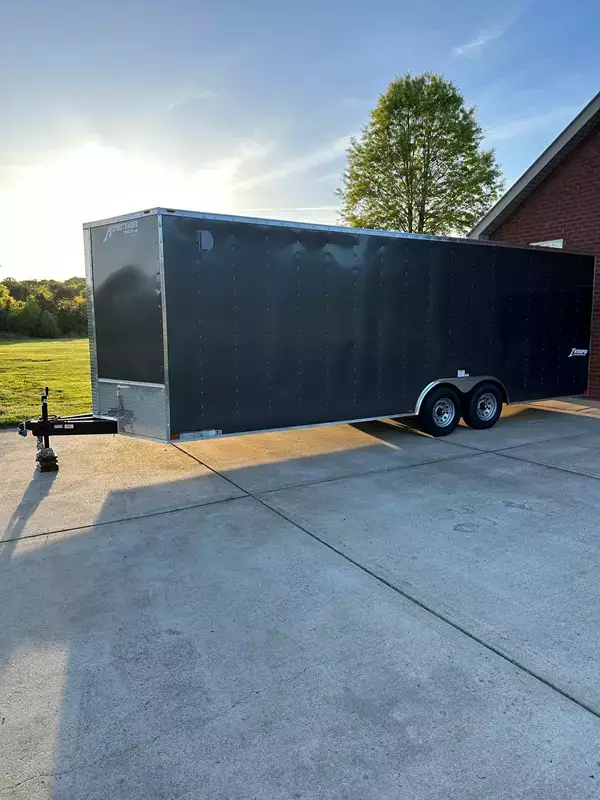
An enclosed trailer, sometimes called a cargo trailer or box trailer, has solid walls, a roof, and a rear door (ramp or barn-style). That covered design is the whole reason to pick one over an open utility trailer. You get weather protection for furniture and electronics, lockable security for tools and equipment, and a clean look on the highway because nothing is exposed to flying debris.
The most common reasons people book an enclosed trailer rental include moving across town, hauling landscaping or contractor equipment, picking up motorcycles or ATVs, transporting trade-show booths or musical gear, and storing finished goods between job sites. If your cargo would be ruined by rain or stolen at a rest stop, an enclosed trailer is the right call.
Step 1: Match Trailer Size to Your Cargo
The single biggest mistake first-time renters make is guessing at size. Measure your largest item, add a few inches for tie-down clearance, and use the longest dimension to set your floor. A queen mattress, a riding mower, and a Harley all have very different footprints, so don't trust gut instinct.
Common enclosed trailer sizes on the Neighbors Trailer marketplace, with realistic use cases:
| Trailer Size | Typical Interior Capacity | Common Uses | Tow Vehicle Class |
| 5x8 single axle | Up to ~1,800 lbs cargo | Studio move, motorcycle, small landscaping load | SUV / mid-size truck |
| 6x12 single axle | Up to ~2,500 lbs cargo | 1-bedroom move, ATV pair, contractor tools | SUV / half-ton truck |
| 7x14 tandem axle | Up to ~5,000 lbs cargo | 2-bedroom move, riding mowers, trade-show gear | Half-ton truck |
| 8.5x16 tandem axle | Up to ~7,000 lbs cargo | 3-bedroom move, Harley pair, full job-site setup | Half-ton or 3/4-ton truck |
| 8.5x20+ tandem axle | Up to ~10,000 lbs cargo | Full household, vehicle hauling, large equipment | 3/4-ton or 1-ton truck |
When you are between two sizes, go up. The cost difference is small, the extra room saves a second trip, and the larger trailer's heavier axles handle bumpy roads better.
Step 2: Confirm Your Tow Vehicle Can Handle It
Every truck and SUV ships with a Gross Vehicle Weight Rating (GVWR) and a separate towing capacity printed in the owner's manual or on the door jamb. Add the dry weight of the trailer to the weight of your cargo to get the Gross Trailer Weight (GTW). Your GTW must be comfortably under your tow vehicle's published towing capacity, with margin left over for passengers, fuel, and the tongue weight that lands on your hitch.
Towing close to the limit is hard on engines, transmissions, and brakes, especially in mountains or summer heat. Aim for 80 percent of the rated capacity as a safe ceiling. If you are not sure your truck can handle the trailer you want, message the owner through the Neighbors Trailer app and ask for the loaded weight; most owners weigh their trailers and know the numbers.
Brake controllers matter too. Most enclosed trailers above ~3,000 lbs have electric brakes, which means your tow vehicle needs a brake controller installed. Some newer trucks come with one from the factory; older vehicles need an aftermarket unit. Verify before pickup so you are not stuck in the parking lot.
Step 3: Inspect the Trailer at Pickup
Walk around the trailer with the owner before driving away. Spend five minutes on this and you will avoid almost every common rental headache.
The 10-Point Pickup Checklist
- Tires. Check tread depth and look for sidewall cracks or dry rot. Bring a gauge and confirm pressure matches the rating molded into the sidewall.
- Wheel bearings. Listen for grinding when you spin a wheel; warm hubs after a short test pull are a red flag.
- Lights. Run brakes, turn signals, and running lights with the owner watching.
- Coupler and safety chains. Latch, lock, and crisscross chains every time.
- Breakaway switch. Make sure the battery is charged and the cable is intact.
- Floor and walls. Look for soft spots, water stains, or rust at the seams.
- Door seals. Confirm the rear door closes flush so rain stays out.
- D-rings and E-track. Pick the tie-down points you will actually use and tug on them.
- Spare tire. Confirm one is mounted, inflated, and matches the trailer's bolt pattern.
- Documentation. Snap photos of the VIN plate, current registration, and any pre-existing damage.
Step 4: Plan the Drive Before You Hook Up
Towing an enclosed trailer changes how your vehicle behaves. Stopping distance roughly doubles, lane changes need more notice, and crosswinds push the box around. Take a quiet side street for your first mile, practice a slow turn, and try a stop from 25 mph before you get on the highway. Most renters adapt within ten minutes, but only if they give themselves the chance.
Why Enclosed Trailer Choices Cluster the Way They Do
The chart below shows the rough share of enclosed trailer bookings on the Neighbors Trailer platform by size class, based on internal booking patterns. It's a quick way to see what most first-time renters actually pick.
NeighborsTrailer.com
Step 5: Booking Through Neighbors Trailer
Booking on Neighbors Trailer is straightforward. Search by city, filter to enclosed trailers, pick a size, choose your dates, and confirm. Owners typically respond within a few hours, and pickup is local, so there are no long drives to a national rental counter. NT Protect coverage is automatically applied to your booking at checkout for a few dollars per day, so damage protection is built in without an upsell. The standard NT Protect deductible is $500 if a claim is ever needed.
Want to compare the platform to a national chain or weigh leasing instead of renting? Neighbors Trailer publishes guides on both topics that are worth a read before you book.
Frequently Asked Questions
How much does it cost to rent an enclosed trailer?
Rates vary by region and size, but most enclosed trailer rentals on the Neighbors Trailer marketplace fall between $75 and $200 per day. Weekly rates are usually discounted. The exact price is shown on each listing.
Do I need a special license to tow an enclosed trailer?
For typical sizes (under 26,000 lbs combined vehicle and trailer weight) a standard driver's license is enough in every U.S. state. Commercial CDL rules apply only at much heavier weights.
Can I tow an enclosed trailer with an SUV?
Yes, as long as the SUV's published towing capacity exceeds the loaded weight of the trailer. Mid-size and full-size SUVs typically handle 5x8 and 6x12 enclosed trailers without issue. Larger sizes usually require a half-ton or three-quarter-ton truck.
What happens if the trailer gets damaged?
NT Protect coverage is automatically included on every Neighbors Trailer booking. If damage occurs, you file a claim through the app and pay the standard deductible; the platform handles the rest with the owner.
How far in advance should I book?
For weekday rentals, 24 to 48 hours is usually fine. For weekend moves, holiday weekends, or popular markets, book at least a week ahead because the best-rated owners get reserved quickly.
Ready to Find the Right Enclosed Trailer?
Picking the right enclosed trailer rental comes down to three things: matching the size to the cargo, confirming your tow vehicle can handle the loaded weight, and inspecting the trailer carefully at pickup. Get those right and the rest of the rental experience is easy. Neighbors Trailer puts hundreds of vetted local owners and listings in front of you, with NT Protect coverage automatically included on every booking, so first-time renters can move with confidence.
Related Articles
- How to Use a Brake Controller on an Enclosed Trailer Rental
- Testing the Breakaway Switch on an Enclosed Trailer Rental
- How to Prevent Dry Rot in Tires on an Enclosed Trailer Rental
- Essential Safe Towing Tips With a Cargo Trailer Rental
Content updated April 2026