Renting a Trailer to Haul Firewood: How Much a Cord Weighs, What Fits, and How to Load It
 Neighbors Trailer
Oct 28, 2026 10 10 min read
When the first cold snap hits, firewood goes from an afterthought to a priority, and buying it by the truckload or the cord is far cheaper than grabbing bundles at the gas station. The catch is getting it home. A cord of wood is heavier than almost anything else a weekend hauler loads, and it is loose, so it shifts and spills if you do not plan for it. The right trailer turns a firewood run into a single easy trip instead of three overloaded ones.
Owning a trailer just for a few firewood runs a year rarely pencils out, which is why a lot of people rent one for the season or the weekend they need it. This guide covers what a cord actually weighs, how much fits on different trailers, why weight and not space is your real limit, and how to load loose firewood so it arrives with you instead of on the shoulder of the highway.
First, Understand What a Cord Actually Weighs
A full cord is a stack of wood measuring 128 cubic feet, usually four feet high, four feet deep, and eight feet long when tightly stacked. That volume is fixed, but the weight is not, and this is where people get caught. Two things drive it: the species of wood and how dry it is. Dense hardwoods like oak weigh far more than softwoods like pine, and freshly cut "green" wood is loaded with water that can add well over a thousand pounds per cord compared to seasoned wood that has dried for a year.
The chart below gives representative weights so you can see the spread. These are typical reference figures, not exact numbers, since moisture and how tightly the wood is stacked both move the total, but they make the point: a full cord of green hardwood can push past 5,000 pounds, which is more than many single-axle utility trailers are rated to carry.

It also pays to know what you are buying. A "full cord" is that 128-cubic-foot stack, but many sellers advertise a "face cord" or "rick," which is only one row deep, often a third of a full cord or less. The weight you haul and the price you should pay both scale with it, so confirm which one you are getting before you match it to a trailer. A full cord and a face cord are very different loads behind your truck.
The takeaway is simple. Never size a firewood load by how much space is left on the deck. A trailer can look half full and already be over its weight rating, because firewood is dense enough to hit the payload limit long before it fills the box.
How Much Firewood Fits on What Trailer
Because weight is the real constraint, "how much fits" is as much about the trailer's rating as its size. Here is how the common rental options stack up for firewood.
Utility Trailer
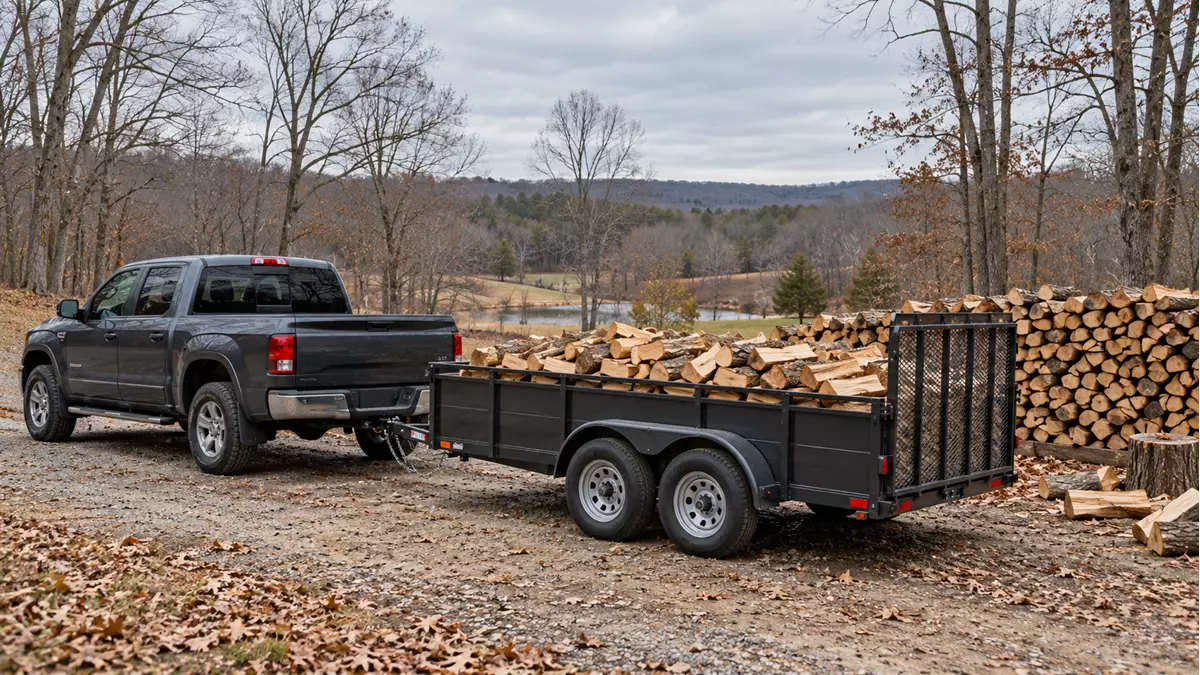
An open utility trailer is the everyday firewood hauler. A 5x8 or 6x10 with solid sides handles a half cord of seasoned wood comfortably on most single-axle models, and a tandem-axle 6x12 can take a full cord of lighter, seasoned wood if it is rated for the weight. The open deck loads fast, and side rails keep the splits from rolling off. The limit is almost always the axle rating, not the floor space.
Dump Trailer
For anyone moving firewood regularly, a dump trailer is the favorite, and for one reason: you tip the load off instead of unloading it by hand. Pulling a cord of wood off a flat deck piece by piece is a long, back-breaking job. A dump trailer raises the bed and the wood slides out where you want it. Dump trailers are also built heavier, so they carry dense loads that would overload a light utility trailer. If your firewood is going straight into a pile or a rack, a dump trailer is worth the premium.
Not sure which size matches your load? Our what trailer do I need tool helps you match the wood to a trailer in a couple of minutes, and the guide to what you can and cannot transport in a utility trailer covers firewood alongside the rest.
Why Weight, Not Space, Is Your Real Limit
This is the part that sends people home with a bent axle or a scary drive. Every trailer has a rated capacity, its GVWR minus its own weight, and firewood reaches that number fast. A single-axle utility trailer is often rated to carry somewhere between 1,500 and 3,000 pounds, which means a full cord of green oak can be nearly double what the trailer should hold.
Two rules keep you safe. First, match the load to the trailer's payload rating, not its deck size, and when in doubt, haul less. Two smaller loads are far better than one overloaded one that fishtails or blows a tire. Second, confirm your truck can actually tow the loaded weight, because a cord of wood plus the trailer can easily exceed what a half-ton is rated to pull. Our towing capacity calculator is a quick way to check before you load a ton and a half of oak behind you.
Loading Loose Firewood Without Losing It on the Road
Firewood is not a single strappable object, it is hundreds of loose pieces, so it behaves differently from furniture or a machine. The goal is to keep it contained, keep the weight balanced, and keep it from bouncing out at highway speed.
Load the heaviest wood low and centered over the axle, not piled at the back, where it drags the tail and lightens the tongue. Getting that balance wrong is a common cause of trailer sway, and with a dense, shifting load like firewood the effect is amplified. Keep the stack below the top of the side rails so pieces cannot roll over the edge, and resist the urge to heap it higher just to fit more, which both overloads the trailer and sheds wood onto the road. A cargo net or a tarp over the top, tied down at the corners, keeps the smaller splits and bark from flying out, and it keeps rain off if the weather turns. For the full sequence, our step-by-step guide to loading a utility trailer safely walks through the order that keeps a load stable.
One more habit worth keeping: recheck the load after the first few miles. Loose firewood settles and shifts as you drive, so a net that was snug in the driveway can go slack on the road. A quick stop to re-tension it is cheap insurance against losing wood or having the load move on you.
Seasoned vs. Green: It Changes the Whole Haul
The dry-versus-fresh question is not just about how well the wood burns, it changes how you haul it. Green wood is heavier, sometimes dramatically, so the same volume that was a safe load as seasoned wood can be an overload as green. Green wood is also wetter and messier, shedding sap and bark, so a tarp and a trailer you do not mind hosing out both help. If you are buying green wood to season yourself, plan the load around the heavier green weight, not what it will weigh after a year of drying.
Seasoned wood is lighter and cleaner, which means you can carry more of it per trip and deal with less mess on arrival. If you have the choice and the trip distance is long, seasoned wood is the easier haul in every way except price. One practical tip when you are buying: lift a few pieces before you load a whole cord. Seasoned splits feel noticeably lighter, sound hollow when knocked together, and often show cracks at the ends, while green wood is heavy and dense. That quick check tells you both what it will weigh on the trailer and how it will burn once you get it home.
How Much Firewood Do You Need for the Winter?
Knowing roughly how many cords you will burn helps you plan the hauls and avoid running out in February. It varies a lot with your climate, how well your home is insulated, and whether wood is your main heat or just for the occasional fire. As a rough guide, a household using a wood stove as a primary heat source through a cold-climate winter often burns somewhere in the range of three to five cords, while someone who lights a fireplace on weekends might use well under a cord. Treat those as broad ranges rather than a formula, and lean on what past winters actually cost you.
The planning payoff is real. Buying and hauling your whole winter supply in one or two trips early in the season is cheaper and easier than scrambling for a half cord at a time in January, when prices climb and good dry wood gets scarce. It is also why the size and rating of the trailer you rent matters. A few well-loaded trips on a properly rated trailer beat a dozen small, overloaded runs in a pickup bed, and renting for a weekend or a season lets you move the whole supply while the weather still cooperates.
Picking It Up vs. Having It Delivered
Firewood sellers almost always charge a premium for delivery, and that premium climbs with distance. Renting a trailer and picking the wood up yourself is often cheaper than paying for delivery, especially if you are buying several cords or sourcing from someone outside of town who does not deliver at all. You also get to see the wood before you load it, which beats discovering on delivery that your "seasoned" cord is still green.
The math is straightforward: compare the seller's delivery fee against a day's trailer rental plus fuel. For a single close-by cord, delivery might win. For bulk loads, wood bought from a cheaper rural source, or anyone who makes several runs a season, renting a trailer usually comes out ahead and keeps you in control of the schedule.
Your Firewood Hauling Checklist
Run through these five before you load the first split. Each one heads off a common firewood-run mistake.
- Weigh the load against the trailer's rating. Match the cord to the trailer's payload, not its deck size, and remember green hardwood can top 5,000 pounds.
- Check your truck's towing capacity. A loaded firewood trailer can exceed what a half-ton is rated to pull.
- Pick the right trailer for unloading. A dump trailer if the wood goes into a pile, a solid-sided utility trailer for smaller loads you will unload by hand.
- Load low, centered, and below the rails. Heaviest wood over the axle, nothing heaped above the sides.
- Cover and secure the top. A tarp or cargo net tied at the corners keeps splits and bark off the road.
Rent the Right Trailer for Firewood Season
Firewood is cheap by the cord and expensive by the mistake, whether that mistake is an overloaded trailer, a truck that cannot handle the weight, or a load of splits scattered down the highway. Sizing the trailer to the real weight of the wood, choosing a dump trailer when you want to tip it off, and loading it low and covered is what turns a heavy, messy job into one clean trip. Neighbors Trailer connects you with trailers from owners near you, so you can rent the right firewood hauler for the weekend or the season and hand it back when the woodpile is full. Find a trailer near you and get ahead of the cold.