

What You Can & Cannot Transport in a Utility Trailer
 Neighbors Trailer
Sep 14, 2023 1418 6 min read utility trailer renta
Utility trailers are the Swiss Army knife of the rental world: affordable, easy to tow, and built to carry almost anything that fits between their rails. Knowing what they can handle, and what they cannot, is the difference between a smooth trip and a costly mistake. This guide breaks down everything you need to know about hauling cargo in a utility trailer rental.
What a Utility Trailer Is Good At
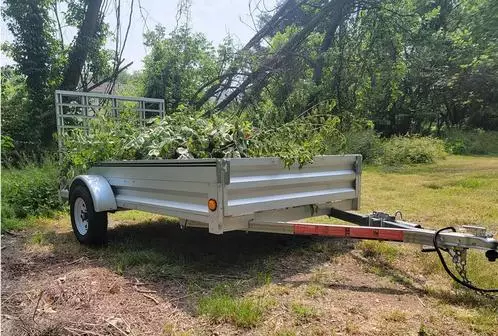
A utility trailer is an open-deck trailer with low sides or rails, a flat floor, and tie-down points spaced along the perimeter. The open design makes loading fast. The low deck height keeps the center of gravity manageable. Most rental utility trailers range from 4x6 up to 7x16 feet, covering roughly 80 percent of the hauling jobs that weekend renters bring home.
Common Cargo That Fits a Utility Trailer
Utility trailers shine when the cargo is heavy, dirty, or bulky, but not especially tall or weather-sensitive. Typical loads include landscaping equipment, mowers, ATVs and UTVs, small boats on dollies, motorcycles, furniture, appliances, construction debris, firewood, and yard waste. A 6x12 utility trailer can comfortably move a one-bedroom apartment's worth of furniture if packed carefully.
Typical Weight Capacities by Utility Trailer Size
Utility trailers come in a wide range of deck sizes and axle configurations. The chart below shows typical payload capacities renters can expect by trailer size.
NeighborsTrailer.com
What a Utility Trailer Cannot Carry
Utility trailers have limits. Do not plan to use one for cargo that needs weather protection, heavy livestock, or anything that exceeds the rated axle capacity. Vehicles with low ground clearance are risky on rail-sided utility trailers because the loading angle is often too steep. Fragile furniture, antiques, and electronics survive the trip much better in an enclosed trailer where dust, rain, and road debris cannot reach them.
Cargo Fit and Capacity Reference
| Trailer Size | Typical Payload | Good For | Not Ideal For |
| 4x6 | Up to 1,500 lbs | Mower, small ATV, yard waste | Apartment moves |
| 5x8 | Up to 1,900 lbs | Motorcycles, small appliances | Full-size car |
| 5x10 | Up to 2,400 lbs | UTV, dirt bikes, small boats | Long lumber over 10 ft |
| 6x12 | Up to 2,990 lbs | Small apartment move, ATVs | Full home load |
| 7x14 | Up to 4,800 lbs | Commercial landscaping | Low clearance cars |
| 7x16 | Up to 6,500 lbs | Compact tractors, side-by-sides | Oversized cargo |
How to Load a Utility Trailer Safely
Good loading is about balance, not just fit. Place the heaviest items in front of the axle to maintain the right tongue weight, which should be 10 to 15 percent of total trailer weight. Use ratchet straps at every available anchor point and run straps in a crisscross pattern over the load when possible. Avoid stacking cargo above the rail height unless it is securely tied. For motorcycles, ATVs, or mowers, use a wheel chock at the front of the deck to stop fore-aft movement before strapping down. Our utility trailer rental loading guide goes deeper into wheel chock placement and strap angles.
Utility vs. Cargo vs. Enclosed Trailers
Utility trailers beat cargo trailers when the cargo is wet, dirty, or oversized because the open deck accepts loads that simply will not fit inside enclosed walls. Cargo and enclosed trailers win when cargo needs weather protection or theft deterrence. The trade-off is obvious: utility trailers are lighter and cheaper to tow, while enclosed trailers protect what is inside but add wind resistance and fuel cost. For a side-by-side look at the two, see our comparison of utility vs. cargo trailers.
Tips for Getting the Most Out of Your Rental
Reserve early, especially on weekends when utility trailer demand spikes. Confirm tire pressure, light operation, and ramp locks during pickup. Take date-stamped photos of the trailer's condition before you leave the pickup spot. Match your tow vehicle's hitch receiver to the trailer's coupler size and always use the supplied safety chains in a cross pattern under the coupler. Drive at or below 65 mph for the best mix of stability and fuel economy, and plan for wider turns than you normally make.
Frequently Asked Questions
Can I transport a car on a utility trailer?
Generally no. Utility trailers lack the load angle, wheel wells, and tie-down points that a dedicated car trailer has. A low-sided 7x16 utility trailer can move a small UTV or golf cart, but for a full-size vehicle, always use a car trailer.
Do I need a special license to tow a utility trailer?
For typical rental sizes, a standard US driver's license is enough. State rules vary above 10,000 lbs combined GVWR, so check your state DMV if you plan to tow a very large utility trailer or double-axle model.
What is the fastest way to load a utility trailer?
Stage the cargo near the trailer before you drop the ramp. Load heaviest items first in the front third of the deck, then build outward. Strap heavy items to the floor anchors first, then work up through lighter items.
Can I tow a utility trailer in the rain?
Yes, but the cargo gets wet. If the cargo cannot tolerate water, cover it with a tarp strapped over every edge. Keep speeds lower on wet roads because a loaded utility trailer is slower to stop in the rain.
Is a single-axle or double-axle utility trailer better?
Single-axle trailers are lighter and easier to maneuver at low speeds. Double-axle trailers are more stable at highway speed and carry more weight. For loads under 3,000 lbs, single is fine. Above that, double is safer.
Final Thoughts
A utility trailer rental is one of the most versatile tools you can hitch to a truck. Match the trailer size to your cargo, load it with balance in mind, and strap everything down. Use an enclosed trailer when the cargo needs weather protection, a car trailer when you are moving a vehicle, and a utility trailer for almost everything else. With smart planning, a utility trailer rental handles the job at a fraction of the cost of a moving truck or specialty rig.
Related Articles
- Benefits of Owning a Multipurpose Utility Trailer
- Utility Trailer Rental Loading Guide
- Tips to Maximize the Potential of Your Utility Trailer Rental
- Utility vs. Cargo Trailer for Landscaping
Content updated April 2026