

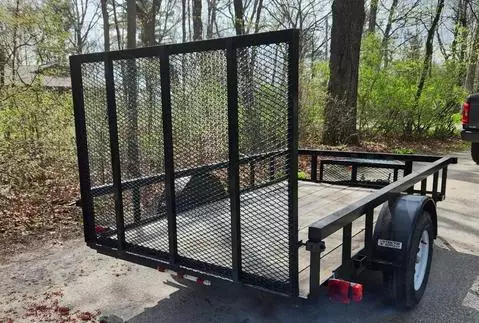
How to Prevent a Utility Trailer From Bouncing: Causes, Fixes, and Safety Tips
 Neighbors Trailer
Aug 15, 2023 639 9 min read utility trailer rental
How to Prevent a Utility Trailer From Bouncing: Causes, Fixes, and Safety Tips
A bouncing utility trailer is more than an annoyance—it is a safety hazard that can damage cargo, wear out suspension components, and make your tow vehicle difficult to control. The good news is that trailer bounce is almost always preventable. This guide walks you through why trailers bounce, the real-world dangers of ignoring the problem, and seven proven techniques to keep your ride smooth from driveway to destination.
Content updated April 2026.
What Is Trailer Bounce?
Trailer bounce happens when a towed trailer begins oscillating up and down in a rhythmic pattern while you drive. Unlike trailer sway—which is a side-to-side motion—bounce is a vertical movement caused by the suspension failing to absorb road irregularities. At low speeds, you might notice a gentle rocking. At highway speeds, that rocking can escalate into violent jolts that shake the entire tow vehicle. Understanding the root causes is the first step toward eliminating the problem.
Common Causes of Trailer Bounce
Stiff or Worn Suspension
Every utility trailer relies on its suspension—usually leaf springs or torsion axles—to absorb bumps and keep the tires in contact with the road. When leaf springs age, the metal loses its flex and becomes brittle. A suspension that is too stiff for the load (or one that has worn out) transfers every road imperfection directly into the trailer frame, triggering bounce. If you are unsure which suspension type your trailer uses, our comparison of spring vs. torsion axle setups explains the differences.
Improper Load Distribution
Where you place cargo on the trailer matters as much as how much you load. Placing weight too far forward overloads the tongue, pressing down on the tow vehicle’s rear axle. Placing weight too far back lifts the tongue, reducing traction on the tow vehicle and allowing the trailer to bounce freely. The ideal balance puts roughly 60 percent of the cargo weight in the front half of the trailer bed, centering the load over or slightly ahead of the axle. For more tips on securing cargo properly, see our guide to utility trailer cargo loading.
Incorrect Tire Pressure
Tires act as a secondary suspension system. Over-inflated tires become rigid and bounce off every crack in the pavement. Under-inflated tires flex too much, generating heat and creating unpredictable handling. Always check your trailer tire pressure with a gauge before every trip and inflate to the PSI listed on the tire sidewall—not the trailer’s GVWR sticker, which may show a different number. For help choosing the right tires, read our article on how to choose the right trailer tires.
Tow Vehicle and Trailer Not Level
When the hitch point is too high or too low, the trailer rides at an angle instead of parallel to the road. An angled trailer puts uneven stress on the suspension, amplifying bounce. A weight-distribution hitch or an adjustable hitch can level the setup and spread the tongue weight evenly across both axles of the tow vehicle.
Overloaded Trailer
Loading beyond the trailer’s Gross Vehicle Weight Rating (GVWR) compresses the suspension past its designed range. Once the springs are fully compressed (bottomed out), they cannot absorb any more energy, and the trailer starts bouncing uncontrollably. Always weigh your loaded trailer at a truck scale or use a tongue-weight scale to confirm you are within limits.
Damaged Axles or Bearings
Bent axles and failing wheel bearings create uneven wheel rotation that feeds vibration into the frame. If you notice bounce that worsens at specific speeds or hear grinding noises, inspect your axles and bearings immediately. Our wheel bearing maintenance guide covers the inspection and repacking process.
Trailer Bounce Causes and Fixes at a Glance
Use the table below as a quick-reference checklist before every towing trip. Each row identifies a common bounce trigger, the warning signs to look for, and the recommended fix.
| Cause | Warning Signs | Recommended Fix |
| Worn leaf springs | Sagging frame, metal-on-metal clunking | Replace leaf spring pack |
| Over-inflated tires | Harsh ride, center tread wear | Deflate to sidewall-rated PSI |
| Under-inflated tires | Spongy feel, edge tread wear, heat buildup | Inflate to sidewall-rated PSI |
| Rear-heavy load | Tow vehicle front lifts, light steering | Shift 60% of weight ahead of axle |
| Overloaded trailer | Bottomed-out springs, sluggish braking | Remove weight or upgrade trailer |
| Unleveled hitch | Trailer nose up or down visually | Install adjustable or WD hitch |
| Bent axle | Uneven tire wear, pulling to one side | Professional axle replacement |
| Worn wheel bearings | Grinding noise, wheel wobble | Repack or replace bearings |
How Speed Affects Trailer Bounce Severity
Speed amplifies every suspension issue. The chart below shows how bounce intensity increases as highway speed rises, based on typical utility trailer suspension behavior under a moderate load. Slowing down is one of the simplest and most effective ways to reduce bounce immediately.
The Real Dangers of Towing a Bouncing Trailer
Ignoring trailer bounce can lead to consequences far worse than an uncomfortable ride. Repeated bouncing shifts cargo inside the trailer, creating sudden weight imbalances that trigger fishtailing or jackknifing. A rear-heavy shift can lift the tow vehicle’s drive wheels off the pavement, causing a loss of traction and steering control. Continuous vertical impacts also accelerate wear on the coupler, safety chains, and hitch ball, increasing the chance of a complete separation on the highway. In extreme cases, bouncing can crack the trailer frame or snap a weakened axle.
Seven Proven Ways to Eliminate Trailer Bounce
1. Check Tire Pressure Before Every Trip
Use a quality tire gauge to verify every trailer tire matches the PSI stamped on the tire sidewall. Do this when the tires are cold—before driving—for the most accurate reading. Checking tires takes two minutes and prevents one of the most common causes of bounce.
2. Distribute the Load Correctly
Place 60 percent of cargo weight in the front half of the trailer, centered between the side rails. Heavy items go on the bottom, lighter items on top. Secure everything with ratchet straps so nothing shifts during transit. Our complete guide to tie-downs walks you through proper strap placement.
3. Verify Tongue Weight
Aim for tongue weight between 10 and 15 percent of your total loaded trailer weight. You can measure this at a truck scale by weighing the trailer with and without the tongue resting on the scale, or by using a dedicated tongue-weight scale available at most auto parts stores.
4. Level the Tow Vehicle and Trailer
Stand back and look at the rig from the side. The trailer frame should be parallel to the ground. If it tilts forward or backward, adjust the hitch height. A weight-distribution hitch is the best solution for leveling rigs where the trailer tongue is heavy relative to the tow vehicle.
5. Inspect Suspension Components
Before loading, crawl under the trailer and examine each leaf spring for cracks, flattened arcs, or missing leaves. Check torsion axle rubber cords for dry rot. If anything looks worn, have it replaced before towing. Preventive maintenance is far cheaper than a roadside breakdown.
6. Reduce Speed on Rough Roads
Bounce worsens with speed because the suspension has less time to recover between impacts. Dropping your speed by 5 to 10 mph on rough stretches dramatically reduces oscillation and gives you more reaction time if the trailer starts to misbehave.
7. Upgrade to a Weight-Distribution Hitch
A weight-distribution (WD) hitch uses spring bars to transfer tongue weight from the tow vehicle’s rear axle to both its front axle and the trailer’s axle. This levels the entire rig and significantly improves ride quality. If you tow frequently or haul loads over 3,500 lbs, a WD hitch is one of the best investments you can make. Learn more about hitch options in our post on sway control hitches.
Protect Your Rental with NT Protect
Even with perfect preparation, road surprises happen. When you book a utility trailer through Neighbors Trailer, add NT Protect to your reservation. For just a few dollars per day, NT Protect is mandatory coverage that protects you from unexpected repair costs caused by accidental damage during your rental. It is the easiest way to tow with confidence.
Frequently Asked Questions
Why does my utility trailer bounce when it is empty?
An empty trailer has almost no weight pressing down on the suspension, so the springs or torsion bars have nothing to absorb. Every bump launches the trailer upward. If you must tow empty, drive slowly and consider adding ballast weight over the axle to dampen the bounce.
Can over-inflated tires really cause trailer bounce?
Yes. Over-inflated tires lose their ability to flex and absorb road impacts. They effectively turn into rigid discs that transmit every bump directly into the trailer frame. Always inflate to the tire manufacturer’s recommended PSI, not the maximum pressure printed on the sidewall.
What is the ideal tongue weight for a utility trailer?
Tongue weight should be 10 to 15 percent of the total loaded trailer weight. For example, a trailer loaded to 4,000 lbs should have 400 to 600 lbs of tongue weight. Too little causes sway and bounce; too much overloads the tow vehicle’s rear.
Will a weight-distribution hitch stop trailer bounce completely?
A weight-distribution hitch dramatically reduces bounce by leveling the rig and spreading the load, but it does not fix mechanical issues like worn springs or incorrect tire pressure. Think of it as one tool in a toolkit—combine it with proper loading and maintenance for the best results.
How do I know if my leaf springs need replacing?
Look for visible cracks, a flat or reversed arc (the spring curves downward instead of upward), rust-through on individual leaves, or a trailer that sags on one side. If you hear metal-on-metal clunking over bumps, the springs are likely bottoming out and need replacement.