

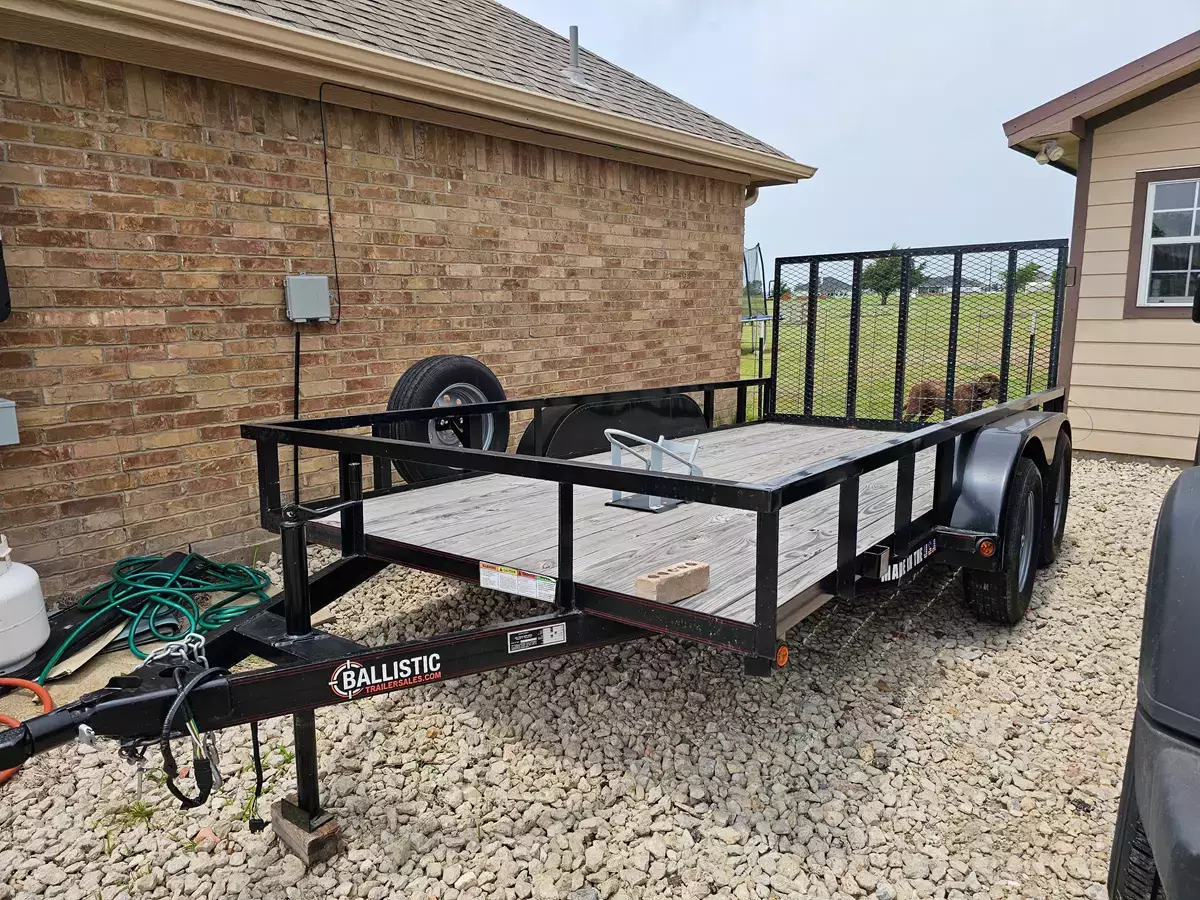
How to Improve Your Hauling Game with a Utility Trailer
 Neighbors Trailer
Sep 17, 2023 424 9 min read utility trailer rental
Why Upgrading Your Utility Trailer Rental Pays Off
A utility trailer fresh off the production line gets the job done, but it leaves a lot of hauling efficiency on the table. The right upgrades transform a basic trailer into a highly capable tool that handles a wider range of cargo, loads and unloads faster, and stays safer on the road. For owners who list on Neighbors Trailer, upgrades also make listings stand out and earn better reviews from renters who notice the difference.
This guide covers the most impactful upgrades for a utility trailer rental, along with load management techniques and maintenance habits that improve every haul regardless of what you are carrying.
Top 5 Utility Trailer Upgrades for Better Hauling
1. Install an Electric Winch
An electric winch is one of the highest-value upgrades you can add to a utility trailer used for loading vehicles, equipment, or heavy cargo. A winch eliminates the need to manually push or drive items onto the trailer, which reduces injury risk and lets one person load cargo that would otherwise require a second set of hands. For full details on winch selection, mounting positions, and wiring, see our guide on installing a winch on a flatbed trailer rental.
Most utility trailer winches are rated between 2,000 and 4,500 pounds of line pull, which covers ATVs, small vehicles, riding mowers, and most landscaping equipment. Mount the winch to the front rail of the trailer to keep the cable angle low and reduce strain on the motor. Always use a synthetic winch rope instead of steel cable to reduce recoil risk if the line breaks under load.
2. Upgrade Your Cargo Tie-Down System
Standard D-ring anchors mounted to the trailer frame are adequate for basic loads, but a full cargo tie-down system with ratchet straps, load bars, and E-track rails gives you far more flexibility. The key is matching the tie-down method to the cargo type rather than using the same strap configuration for every load.
Ratchet straps rated at 5,400 pounds break strength are the right choice for most utility trailer cargo. Use edge protectors under straps whenever securing items with sharp corners or finished surfaces. For irregularly shaped loads, webbing straps with cam buckles allow finer tension adjustments than ratchet straps and reduce the risk of over-tightening.
3. Install a Heavy-Duty Swivel Jack
A standard A-frame tongue jack works fine for light trailers, but a heavy-duty swivel jack with a wider foot pad makes solo hitching and unhitching much easier. Look for a jack with a minimum 2,000-pound lift capacity, a swivel foot that folds flat while towing, and a two-speed crank to reduce the time spent raising and lowering the tongue.
A heavy-duty jack also improves stability when loading cargo from the front of the trailer. With the tongue firmly supported, the trailer stays level and does not rock under load weight during the loading process.
4. Add an E-Track Rail System
Standard D-ring anchors are fixed in place, which creates problems when cargo does not align with the anchor positions. An E-track system provides a continuous rail with movable tie-down points that slide to any position along the rail. E-track rails mount directly to the trailer deck or side rails and accept a wide range of fittings, including strap rings, load bars, and motorcycle or bike holders.
Install E-track rails along both sides of the trailer deck running front to back, plus one crossmember rail near the center. This creates a grid of adjustable tie-down points that work for nearly any cargo configuration without relocating any hardware between loads.
5. Mount a Spare Trailer Tire
Trailer tires experience higher blowout rates than tow vehicle tires due to heavy loads, heat buildup, and extended periods of sitting between uses. A blowout on a loaded trailer without a spare means delays, towing fees, and potential cargo damage. A spare tire mounted to the trailer frame keeps you ready for any road situation without giving up deck space.
Match the spare to the exact tire size and load rating of your mounted tires. Keep it properly inflated and inspect it at every pre-trip check alongside the mounted tires.
Utility Trailer Upgrade Comparison
| Upgrade | Estimated Cost | Install Difficulty | Efficiency Gain | Best For |
| Electric Winch | $150 - $400 | Moderate | High | Loading vehicles and heavy equipment |
| Ratchet Strap Kit | $30 - $100 | Easy | Moderate | All cargo types |
| Heavy-Duty Swivel Jack | $50 - $150 | Easy | Moderate | Solo hitching and loading |
| E-Track Rail System | $80 - $200 | Moderate | High | Irregular or varied cargo loads |
| Spare Tire Mount | $40 - $100 | Easy | Safety | Emergency road preparedness |
Hauling Efficiency by Upgrade Type
The chart below shows estimated hauling efficiency improvements for each upgrade based on loading time savings, cargo security, and overall operational reliability.
Load Management Best Practices
Distribute Weight Correctly
Load placement directly affects towing stability. Place 60 percent of your total cargo weight forward of the axle centerline to maintain correct tongue weight. Tongue weight should fall between 10 and 15 percent of the total loaded trailer weight for most utility trailers. Too little tongue weight causes trailer sway; too much puts excessive strain on the hitch and the rear of the tow vehicle.
When loading multiple items, start with the heaviest pieces at the front of the deck near the coupler. Place lighter items behind the axle and keep the load as low to the deck as possible to lower the center of gravity and reduce swaying during highway driving.
Secure Different Cargo Types Properly
Not all cargo secures the same way. Use the approach that matches your load type:
Vehicles and equipment: Use a minimum of four tie-down straps, one at each corner, in addition to the winch cable if a winch is installed. Straps should pull inward toward the trailer center to prevent lateral shifting.
Lumber and pipe: Secure bundles at multiple points and use blocking or dunnage bags to prevent rolling. Use straps with a working load limit of at least 1,667 pounds (one-third of a 5,000-pound break strength strap).
Landscaping equipment: Combine wheel chocks with tie-down straps for mowers and powered equipment. Chocks prevent rolling if a strap loosens during transit.
Pre-Trip Safety Checks
Consistent pre-trip checks prevent most issues that lead to roadside emergencies or negative rental reviews. Before every haul, verify the following:
Tire pressure: Trailer tires lose pressure faster than vehicle tires and degrade quickly when underinflated under load. Check the sidewall for the maximum cold inflation pressure and inflate accordingly before every trip.
Lights: Test running lights, brake lights, and turn signals before every trip. Have a second person stand behind the trailer while you cycle through each function from the cab.
Hitch and chains: Confirm the coupler is fully seated on the ball and locked. Safety chains should cross in an X pattern under the coupler with enough slack to allow turning but not so much that they drag. For detailed truck and hitch setup guidance, see our article on preparing your truck to tow a trailer safely.
Brake controller: If your trailer is equipped with electric brakes, verify the brake controller is calibrated and responding properly before departure. Learn more about using a brake controller on a trailer rental.
Protect Your Trailer Investment with NT Protect
The upgrades covered in this guide add real value to your trailer, both for personal use and for rental income on Neighbors Trailer. Protecting that investment makes practical sense. NT Protect provides coverage for your trailer at a few dollars per day, so you can list your trailer and haul with confidence without worrying about damage costs cutting into your returns.
Frequently Asked Questions
What is the best single upgrade to add to a utility trailer for general hauling?
An E-track rail system offers the most flexibility for general hauling because it provides adjustable tie-down points across the entire deck. Combined with ratchet straps and load bars, it handles everything from lumber to landscaping equipment to recreational vehicles with a single hardware setup.
How do I know if my trailer has enough tie-down points?
Federal regulations require cargo to be secured to handle 1.5 times its weight in forward, rearward, and lateral directions. As a practical guideline, use one tie-down for every 10 feet of cargo length and a minimum of two tie-downs for any load regardless of size. E-track fittings combined with load bars and cargo nets handle loads that standard D-rings cannot secure effectively.
How often should I inspect my utility trailer before renting it out?
Inspect the trailer before every rental. Check tire pressure and condition, lights, hitch coupler, safety chains, wheel bearings, and all tie-down anchors. A thorough pre-rental inspection takes less than ten minutes and prevents most mechanical issues that cause roadside problems or bad reviews.
What is the best way to prevent trailer sway with a heavy load?
Load 60 percent of your cargo weight forward of the axle to keep tongue weight in the correct range. Avoid overloading the rear deck. If your tow vehicle supports it, use a weight distribution hitch for heavy loads. Drive at moderate speeds and avoid sudden steering inputs. If sway begins, apply steady brake pressure and avoid overcorrecting with the steering wheel.
Related Articles
- Learn How to Install a Winch on Your Flatbed Trailer Rental
- Towing Mistakes to Avoid When Using a Flatbed Trailer Rental
- Tips for Beginners on Towing a Large Flatbed Trailer Rental
- Towing Capacity Explained: GVWR, GCWR & Payload
Content Update: This guide was substantially updated in March 2026 with expanded towing safety guidance, improved equipment recommendations, and additional resources to help trailer owners tow safely and confidently.