Choosing a Brake Controller to Tow a Flatbed Trailer
 Neighbors Trailer
Oct 11, 2023 318 7 min read flatbed trailer renta
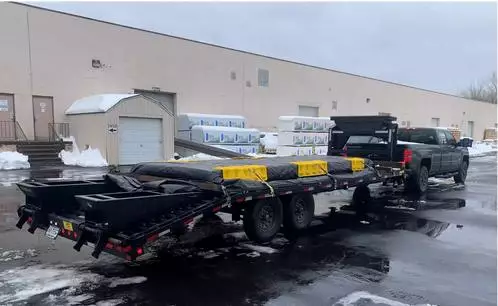
A flatbed trailer hauling lumber, machinery, or a project car can easily double the rolling weight your tow vehicle is responsible for. Once trailer weight crosses 3,000 pounds in most states, electric trailer brakes are no longer a nice extra, they are required. The brain of that system is the brake controller, and how it is set up and tuned makes the difference between a smooth, confident stop and a jackknife waiting to happen.
This guide breaks down what a brake controller does, how the major types differ, and how to dial yours in correctly for your flatbed trailer rental.
What a Brake Controller Actually Does
A brake controller sends a regulated DC voltage signal from the tow vehicle to the electric brake magnets at each trailer wheel. The harder you press the brake pedal in the truck, the higher the voltage delivered to the trailer brakes, and the harder the trailer slows itself. The result is the trailer helping bring the rig to a stop, instead of pushing the truck through the intersection.
Without a controller, the trailer brakes are inert. The truck does all the work and the rig stops in two or three times the distance. The chart below shows the typical reduction in stopping distance when an active controller is properly tuned.
NeighborsTrailer.com
Types of Brake Controllers
Brake controllers come in two broad families: time-delayed and proportional. The names sound technical, but the difference shows up the moment you press the truck pedal.
Time-delayed (timer-based) controllers
These ramp up trailer brake voltage on a fixed schedule once the brake pedal is pressed. They are simple, inexpensive, and work fine for light, infrequent towing. The downside is that they apply the same braking pattern whether you are slowing gently for a stoplight or panic stopping behind a stalled truck. That can mean lurching, locked trailer wheels, and excessive brake wear.
Proportional (inertia-based) controllers
Proportional units use a built-in accelerometer to sense how hard the truck is decelerating, then apply matching trailer brake force in real time. The result feels seamless: a soft stop applies soft trailer braking, a hard stop applies hard trailer braking, all without you doing anything different at the pedal. For frequent or heavy flatbed work, proportional is the right choice.
Brake Controller Comparison Table
If you are picking a controller for the first time, this overview helps narrow the field.
| Type | Best Use | Typical Price Range | Key Tradeoff |
| Time-delayed | Light loads, occasional towing | $45 to $90 | One-size-fits-all braking feel |
| Proportional | Heavy or frequent flatbed loads | $120 to $260 | Higher cost, much smoother stops |
| Wireless or app-controlled | Renters who switch tow vehicles | $220 to $400 | Convenience, premium price |
| Factory integrated (OEM) | Trucks with tow package from new | Included | Locked to that specific truck |
Many modern half-ton and three-quarter-ton trucks ship with an OEM proportional controller built into the dash. If your truck has a "trailer brake" gain dial near the steering column, that is the controller. Preparing your truck to tow safely includes confirming this exists or installing one before pickup.
How to Set Up and Tune a Brake Controller
Even a top-tier controller has to be tuned to the trailer and load. The setting is called gain or output, and you adjust it the first time the loaded trailer is hooked up.
- With the trailer plugged in and loaded, drive the rig onto a flat, dry, empty section of road or large parking lot
- Set the gain dial somewhere in the middle of its range to start, often around 5 on a 0 to 10 scale
- Roll forward at about 25 mph and apply only the manual lever on the brake controller, not the truck pedal
- If the trailer wheels lock and chirp, the gain is too high. Reduce by half a number and repeat
- If the trailer barely slows, gain is too low. Increase by half a number and repeat
- The sweet spot is when the manual lever firmly slows the rig without locking the trailer wheels
- Re-check after the load changes significantly, after a long break, or when you switch tow vehicles
Knowing the difference between surge and electric trailer brakes matters here, because surge brakes do not use a controller at all. They self-actuate at the hitch when the truck slows.
Common Brake Controller Problems and Quick Fixes
If something feels off in the cab, the controller is the first thing to check. These are the failures that account for the bulk of in-cab error messages.
- "No trailer connected" warning: usually a bad blue brake wire, a loose ground, or a bent pin in the 7-pin connector
- Trailer brakes coming on hard at low speed: gain set too high, or controller mounted at the wrong angle (proportional units must be mounted within the manufacturer's specified tilt range)
- Trailer brakes feeling weak: gain set too low, undersized brake magnets, or aging trailer brake shoes
- Surging or pulsing under braking: a corroded ground at the trailer, intermittent connector contact, or worn-out drum brakes
- Controller display flickers or resets: weak power feed at the truck end, often a corroded fuse holder or undersized power wire
If the controller still does not respond after these checks, the problem is downstream in the trailer harness. Inspecting and repairing trailer wiring usually solves it.
Frequently Asked Questions
Do all flatbed trailer rentals need a brake controller?
Most states require trailer brakes once the loaded trailer weight exceeds 3,000 pounds. If the trailer has electric brakes, you need a brake controller in the tow vehicle to use them. Surge brake trailers do not.
Can I rent a flatbed trailer if my truck does not have a brake controller?
Yes, but you should plan to install one before towing. Aftermarket controllers cost from $50 to $300 and many auto parts shops install them for under $100.
How do I know if a brake controller is proportional or time-delayed?
Time-delayed units usually have only a single output dial. Proportional units typically include a level-out or angle-set procedure in the instructions, because they sense vehicle deceleration directly.
Where should I mount a brake controller in my truck?
Within easy reach of the driver, low on the dash or beside the steering column, in line with the manufacturer's tilt range for proportional models. The display must be visible without looking away from the road for too long.
Is the manual lever on a brake controller for emergencies?
It is mostly for setup and trailer sway control. Pressing the manual lever applies trailer brakes by themselves, which can pull a swaying trailer back into line without locking up the truck.
The Bottom Line on Brake Controllers for Flatbed Trailer Rentals
A brake controller turns a heavy flatbed rental from a hazard into a manageable rig. Choose proportional if you tow often or carry serious weight, set the gain after every load change, and keep an eye on grounds and connectors as the most common failure points. With the controller doing its job, stops are shorter, brakes last longer, and the trailer stops following you down the road instead of pushing you through it.
Related Articles
- How to Use a Brake Controller on a Trailer Rental
- Surge Brakes vs Electric Brakes
- How to Choose the Right Flatbed Trailer Rental
- Essential Safety Tips for a Flatbed Trailer Rental
Content updated April 2026