

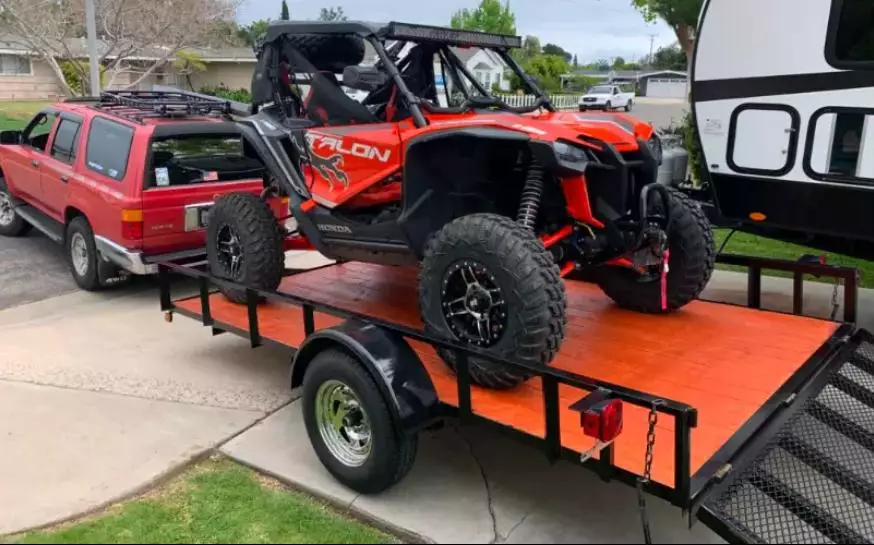
Learn How to Tie Down Your ATV on a Utility Trailer
 Neighbors Trailer
Jul 11, 2023 1017 7 min read ATV tie-dow
Transporting an ATV to the trailhead requires more than just loading it onto a trailer and hitting the road. An unsecured or improperly secured ATV is a genuine hazard: it can shift during cornering or braking, unbalance the trailer, and potentially end up on the road. This guide covers everything you need to know about renting a utility trailer for your ATV, choosing the right tie-down equipment, and securing your machine safely every time.
Every trailer rental booked through Neighbors Trailer includes NT Protect, the mandatory coverage automatically charged to the renter at booking for a few dollars per day. Knowing your rental includes protection gives you peace of mind, but proper cargo securing is still your responsibility and the key to a safe trip.
Why Securing Your ATV Properly Is Non-Negotiable
When you add a loaded trailer to your tow vehicle, the entire rig handles differently. The trailer adds length, weight, and a new center of gravity. If the load shifts while you are moving, the trailer can begin to sway. Trailer sway is particularly dangerous at highway speeds because it can cause the tow vehicle to fishtail or lose control entirely.
The standard rule for trailer loading is to position 60% of the cargo weight in the front half of the trailer and 40% in the rear. For ATVs, this means parking the machine toward the front of the trailer deck, with handlebars or the front wheels positioned well ahead of the trailer axle. Once positioned, the ATV must be secured so it cannot move in any direction: forward, backward, or side to side.
Choosing the Right Utility Trailer for ATV Transport
Before selecting a rental, confirm that the trailer can handle your ATV's weight and dimensions. The table below summarizes common ATV types and their typical weights to help you match the right trailer to your machine. Our ATV, UTV and motorcycle trailer calculator matches a trailer size and weight rating to your specific machine. If you are considering buying rather than renting, start with a used trailer buying guide to understand what to look for before committing.
| ATV Type | Typical Weight Range | Recommended Trailer Capacity |
|---|---|---|
| Youth/Sport ATV (250cc or less) | 250 to 400 lbs | 1,500 lb minimum |
| Mid-Size ATV (400-500cc) | 400 to 600 lbs | 2,000 lb minimum |
| Full-Size ATV (500-700cc) | 600 to 800 lbs | 2,500 lb minimum |
| Utility/Work ATV (700cc+) | 800 to 1,200 lbs | 3,000 lb minimum |
| Side-by-Side (UTV) | 1,200 to 2,000+ lbs | 3,500 lb or higher |
NeighborsTrailer.com
What You Need to Tie Down Your ATV
Ratchet straps are the standard and most reliable tool for securing an ATV to a trailer. You will need a minimum of four straps. Use 2-inch straps rated for at least 3,300 lbs working load limit for most ATVs, and 3-inch or 4-inch straps for heavier machines or UTVs. For a full breakdown of ratchet strap sizes and working load limits, see our step-by-step ratchet strap guide before your rental.
Avoid using ropes or bungee cords as primary tie-downs. These materials stretch, degrade over time, and cannot maintain consistent tension the way a ratchet mechanism does. They may also slip off anchor points during transit. Spend a few extra dollars on rated polyester ratchet straps for the safety of your machine, your vehicle, and other drivers.
Three Methods to Secure an ATV on a Utility Trailer
Method 1: Wheel Tie-Down
This is the quickest method. Run one strap through each wheel of the ATV and anchor each to the nearest D-ring or E-track anchor point on the trailer bed. This approach creates outward tension on all four wheels and holds the ATV very securely. The limitation is that the strap webbing contacts the rim, which can scuff the finish on alloy wheels. If you are concerned about rims, place a rag or foam pad between the strap and the rim.
Method 2: Straight Frame Tie-Down
For this method, thread straps through solid, non-moving structural points on the ATV frame and anchor directly to the nearest tie-down point on the trailer. Always anchor below the suspension line. Connecting above the suspension means the strap can loosen as the suspension cycles over bumps, reducing tension during transit.
Method 3: Criss-Cross Tie-Down (Recommended)
This is the strongest and most secure method. Run one strap from the front frame of the ATV diagonally backward to an anchor point at the rear of the trailer on the opposite side. Run a second strap from the rear frame diagonally forward to an anchor point at the front of the trailer on the opposite side. Repeat on both sides with four straps total. The diagonal tension locks the ATV against movement in every direction simultaneously, making this the preferred method for highway towing or rough road conditions.
Final Checks Before You Drive
After securing all straps, give the ATV a firm push from the front, rear, and both sides. It should not move at all. Check that no strap is running over a plastic body panel or a heat-sensitive surface. Bundle any excess webbing and clip it away from the trailer wheels. Engage the parking brake on the ATV if it has one.
After your first five to ten miles on the road, pull over and check all four straps. Cargo often settles slightly during the first few minutes of travel, reducing strap tension. Re-tighten as needed. Check again after any stretch of rough road.
Frequently Asked Questions
How many ratchet straps do I need for an ATV?
Use a minimum of four straps for any ATV, one at each corner of the machine. Heavier UTVs or machines with accessories like plows or winches may benefit from six straps for added security on longer trips.
Can I use my truck bed instead of a trailer to haul an ATV?
Only if your ATV fits entirely within the bed and the bed can handle the weight. Most full-size ATVs are too wide or too long for a standard 6.5-foot truck bed, and the weight can exceed the payload rating. A utility trailer is almost always the safer and more practical option.
What size utility trailer do I need for two ATVs?
A 16-foot to 20-foot trailer with a payload rating of at least 4,000 to 5,000 lbs is typical for hauling two mid-to-full-size ATVs. Our what trailer do I need calculator turns your ATV count and dimensions into a recommended trailer size. Confirm both machines will fit side by side or tandem based on their width measurements before booking.
Should the ATV face forward or backward on the trailer?
Face the ATV forward (nose toward the tow vehicle) in most cases. This positions the heavier engine end closer to the front of the trailer, which is where you want more of the weight for proper balance.
Is it safe to leave ATVs strapped on the trailer overnight?
If the trailer is parked on level ground in a secure area, it is generally safe. Check strap tension in the morning before driving, since temperature changes overnight can cause webbing to loosen slightly.
Key Takeaways
ATV utility trailer rentals are practical, affordable, and widely available through Neighbors Trailer. The key to a safe trip is matching the trailer capacity to your machine's weight, loading the ATV in the correct position, and using properly rated ratchet straps with the criss-cross tie-down method for maximum security. Check your straps before driving and after the first stretch of road, and your ATV will arrive at the trailhead exactly as you left your driveway.
Related Articles
- Trailer Maintenance Tips on Storing Your Trailer Safely in the Winter
- Testing the Breakaway Switch on an Enclosed Trailer Rental
- Learn How to Install a Winch on Your Flatbed Trailer Rental
- Choosing Spring or Torsion Axle for a Utility Trailer Rental
Content updated March 2026