Choosing the Right-Sized Utility Trailer Rental for Your ATV
 Neighbors Trailer
Nov 18, 2023 586 7 min read hauling an A
If you have ever tried to muscle an ATV onto a trailer that was just a little too short, you know the size question matters more than any other detail. The right utility trailer rental for an ATV is one that fits the machine with room to strap it down properly, supports the loaded weight, and tows easily behind the vehicle you actually have. This guide walks through the sizing math and the practical decisions that turn a stressful loading day into a routine one.
How Big Is Your ATV, Really?
Start with your machine's specs, not your gut. Most full-size ATVs measure between 80 and 90 inches long and 45 to 50 inches wide. Side-by-side UTVs are bigger, usually 110 to 130 inches long and 60 to 65 inches wide. Add a few inches at each end for tiedown room, plus space for a fuel can or cooler if you carry one.
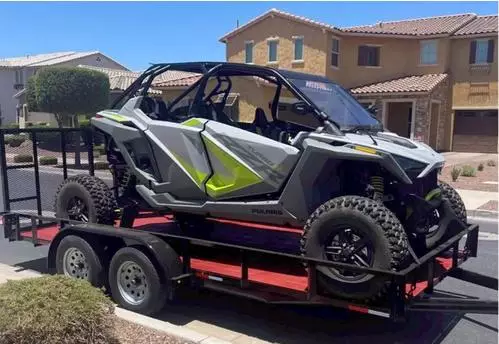
Once you know the footprint, you can calculate the deck length you need. A 10 foot deck gives most full-size ATVs a comfortable fit. Hauling two ATVs front-to-back? Plan on 14 to 16 feet. UTVs and side-by-sides need at least 12 feet of deck to load with breathing room.
Why Width Matters as Much as Length
Most utility trailers come in 60, 76, and 82 inch wide deck options. A 60 inch deck handles narrow ATVs but leaves no room to walk around once the machine is strapped down. A 76 inch or wider deck makes loading, strapping, and unloading much easier. If you ride a UTV, a 76 inch deck is the practical minimum.
Recommended Length by ATV Setup
The chart below shows what size deck most riders end up needing for the most common haul setups. Use it as a starting point and round up if you carry extra gear.
NeighborsTrailer.com
Weight Capacity and GVWR
Length is half the equation. The other half is weight. A typical full-size ATV weighs 600 to 800 pounds dry, plus the gas, plus your gear. UTVs run 1,200 to 2,500 pounds. Add tiedowns, ramps, fuel can, and a cooler, and a pair of UTVs can easily push 5,000 pounds of cargo. Our ATV, UTV and motorcycle trailer calculator turns those machine weights into the trailer payload rating you need.
The number to focus on is the trailer's gross vehicle weight rating (GVWR), listed on the data plate. Subtract the trailer's empty weight to get usable cargo capacity. A 7,000 pound GVWR utility trailer with an empty weight of 1,500 pounds gives you 5,500 pounds for cargo, comfortably enough for two UTVs plus gear.
Single Axle or Tandem Axle?
Single axle utility trailers are lighter, cheaper, and easier to maneuver in tight spaces. They are fine for one ATV plus light gear. Tandem axle trailers ride smoother on the highway, distribute weight better, and are usually rated for higher loads. If you regularly haul UTVs or two ATVs at once, tandem is the better fit.
Open or Enclosed?
An open utility trailer is the most common rental for ATV transport. It is lighter, less expensive to rent, and easy to load. The trade-off is exposure to weather and road grime. An enclosed trailer protects your machine and gear, and can double as a tool storage during the trip, but it costs more per day and is heavier to tow. Most weekend riders choose open and accept the trade-off.
Quick-Reference Sizing Table
Use this table as a shortcut when scanning listings. The recommendations assume you carry standard gear (helmet, fuel can, basic tools).
| Setup | Deck Length | Deck Width | Min GVWR |
| 1 full-size ATV | 10 ft | 60 in | 3,500 lbs |
| 2 full-size ATVs | 14 ft | 76 in | 5,000 lbs |
| 1 ATV + cargo | 12 ft | 76 in | 3,500 lbs |
| 1 UTV (side-by-side) | 12 ft | 82 in | 5,000 lbs |
| 2 UTVs | 16 ft | 82 in | 7,000 lbs |
Loading Tips for ATVs and UTVs
Once you have the right trailer, loading is mostly about safe technique. Use ramps rated for at least double your machine's weight; light-duty aluminum ramps that are fine for a riding mower can flex under an ATV. Drive on slowly with steady throttle, keep your weight forward, and never load with the trailer disconnected from the tow vehicle. Once on the deck, set the parking brake and use four ratchet straps anchored to the trailer's tiedown points, two at the front and two at the rear, crossed under the frame.
Tow Vehicle Match
A 10 foot single axle utility trailer with one ATV is a job most midsize SUVs and pickups can handle. Our towing capacity calculator checks whether your specific SUV or truck is rated for the loaded trailer. Two UTVs on a 16 foot tandem axle trailer needs a half ton or three quarter ton pickup with at least a 7,500 pound tow rating. Always check your owner's manual for the towing capacity, then subtract a safety margin of 10%. Multipurpose utility trailer benefits covers more on the format if you are deciding between buying and renting.
Renting on Neighbors Trailer
The Neighbors Trailer marketplace lets you filter listings by deck length, GVWR, and axle count, which makes it easy to find the right trailer for an ATV or UTV trip. Coverage is included with every booking, so you do not need to add separate insurance. Renters must be at least 21, and owner payouts run through Stripe within a few business days.
Frequently Asked Questions
How long does the trailer need to be for a single ATV?
A 10 foot deck handles most full-size ATVs comfortably. If you also carry gear or a cooler, a 12 foot deck gives you room to spare without overpaying.
Can I haul two ATVs on a 12 foot trailer?
It is tight. Two full-size ATVs front to back add up to about 14 to 16 feet once tiedowns are in place. Move up to a 14 foot deck for a comfortable fit.
Do I need a special trailer for UTVs?
You need a wider deck. Most side-by-side UTVs are 60 to 65 inches wide, so a 76 or 82 inch deck is the practical minimum. The length depends on the model.
Can I tow a utility trailer with an SUV?
Yes, if the SUV's tow rating exceeds the loaded trailer weight. Single axle utility trailers with one ATV are usually fine for midsize SUVs. Larger setups need a pickup or full-size SUV.
What size hitch ball do utility trailers use?
Most utility trailers use a 2 inch ball hitch. Some heavy-duty models use 2 5/16 inch. Always confirm the listing before booking and pack the right ball if your truck has a switchable mount.
The Bottom Line
For ATVs, a 10 foot single axle utility trailer is the sweet spot. Move up to a 12 or 14 foot tandem axle deck for two ATVs, a UTV, or anytime you carry significant gear. Match the trailer's GVWR to your loaded cargo weight and confirm your tow vehicle has the rating to handle the load. With the right size in hand, the loading and the haul both go smoothly.
Related Articles
- The Benefits of a Multipurpose Utility Trailer
- The Ultimate Utility Trailer Buying Guide
- Maximize the Potential of Your Utility Trailer Rental
- How to Properly Load a Motorcycle on Your Trailer Rental
Content updated May 2026