Renting a Trailer to Haul Your Christmas Tree
 Neighbors Trailer
Nov 25, 2026 13 10 min read
There is a moment every December when a family picks out the perfect Christmas tree, wheels it to the parking lot, and realizes it is not going to fit on the roof of the SUV. Or it fits, barely, and the drive home is a white-knuckle affair of shedding needles, shifting rope, and sap on the paint. A trailer turns that whole scene into a non-event. Whether you are grabbing one tall tree from a cut-your-own farm or restocking a church lot with two dozen, renting the right trailer is the easiest part of the holiday.
Here is how to pick a trailer for the job, protect the tree on the way home, and tie it down so it arrives in one piece.
Why a Trailer Beats Strapping It to the Roof
Roof-topping a Christmas tree is a tradition and also a bad idea more often than people admit. A fresh-cut tree is heavier than it looks, the branches catch wind at highway speed, and ratchet straps run over a bare roof scratch paint and can crease the sheet metal. Taller trees hang off the front and back of the vehicle, which is both illegal in many places without flagging and genuinely dangerous. And every mile, the tree sheds needles and drips sap onto the roof and down the windshield.
A trailer solves all of it at once. The tree rides low and flat instead of catching wind up high, you can secure it properly to real anchor points, the sap and needles stay off your vehicle, and there is room for a tree far bigger than anything that would fit on a roof. It also means you can bring the whole family in the warm cab instead of leaving someone to hold the tree.
There is a safety angle too. A tree that overhangs the front or back of a car sits right in the driver's sightline and in other drivers' paths, and many states require a visible flag on anything that extends past the vehicle. On a trailer, the tree sits well within the deck in most cases, and when it does overhang you have a proper tie point to flag it. It is the difference between a load you are hoping holds and a load you know is secure.
Which Trailer for Which Tree
You do not need a big rig for a Christmas tree. The right choice comes down to how tall the tree is, how many you are hauling, and whether the weather is going to beat on it during the drive. Here is a quick guide.
| Trailer | Best for | Why it works |
|---|---|---|
| 5x8 or 5x10 utility (open) | One tree up to roughly 9 feet | Low open deck is quick to load and plenty for a typical family tree once it is netted. |
| 6x12 utility (open) | A tall 10 to 12 foot tree, or two or three trees | The extra deck length lets a big tree lie flat without overhanging, and fits a few at once. |
| 6x12 enclosed cargo | Any tree in bad weather, or a premium or flocked tree | Full walls and roof keep wind, road grime, and needle loss off the tree, and keep flocking intact. |
| Flatbed or larger | Lots, churches, HOAs, businesses | Deck space and easy side loading for hauling many trees at once to restock or decorate. |
If you are unsure how the tree lines up against a given deck, our guide to what size trailer you need walks through dimensions for common loads.
How to Haul a Christmas Tree Without Wrecking It
A little prep at the lot saves a lot of cleanup and a lot of needles. Most tree farms and lots will help with the first few steps, so do not be shy about asking.
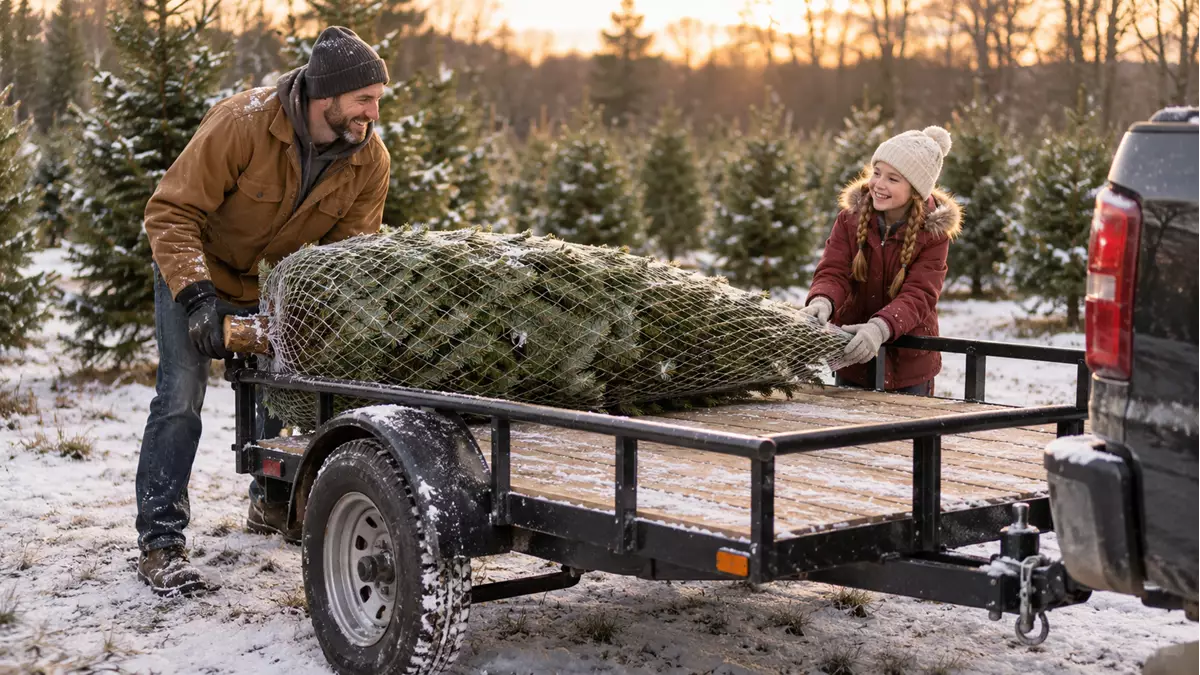
Start with a fresh cut. If the tree was cut more than a few hours ago, have the lot take an inch off the bottom of the trunk so it can drink once you get it in a stand. Then have them run it through the netting machine. Baling the tree in netting is the single best thing you can do for transport: it pulls the branches in tight, dramatically cuts needle loss, and makes the tree far easier to lift, position, and strap. If you are hauling on an open trailer, bring a tarp or an old moving blanket to lay the tree on and wrap over it, which keeps wind off the needles and sap off the deck.
Load the tree trunk-first, with the cut end toward the front of the trailer. Branches naturally fold back toward the top of the tree, so pointing the trunk into the wind lets the air flow over the branches instead of lifting them. Lay it flat and centered on the deck, not propped at an angle, so it has a stable base and a low profile.
Securing the Tree on the Trailer
A netted tree on a flat deck is easy to tie down, but Christmas trees have a trick to them: the trunk is heavy and the top is light and springy, so you have to anchor both ends differently. Run a strap over the trunk near the base and cinch it firmly to the trailer's anchor points, since that is where the weight is and where a loose tree will slide from. Then run a second, gentler strap over the middle-to-upper section just to keep the top from bouncing. Do not crank that upper strap down hard, or you will crush branches and leave a permanent flat spot.
Use soft straps or lay padding under the straps where they cross the trunk to avoid stripping bark, and keep the tie-downs snug but not savage. If any part of the tree hangs past the back of the trailer, tie a bright flag or cloth to the end so following drivers can see it. For a general refresher on keeping a load from shifting and chafing, our piece on edge protection for a trailer load covers the basics.
Driving Home Safely
Even a well-strapped tree wants you to take it easy. Drive a little slower than usual, especially on the highway, because wind load on a tree builds fast with speed and can work a strap loose over miles. If you have a long drive, pull over once after the first few miles and re-check your straps, since the netting and branches settle and a tie-down that was tight at the lot can go slack.
On an open trailer, expect some needle loss no matter what, and keep an eye on the tree in your mirrors. In wet or freezing weather, an enclosed trailer is worth the small premium: it keeps the tree out of road spray and salt, which both dry it out and leave a film on the needles. Either way, the tree will arrive looking the way it did at the lot instead of windburned and half-bare.
Hauling More Than One: Lots, Churches, and Community Trees
Christmas trees are not only a one-family errand. Tree lots restock through the season, churches and HOAs put up large trees and sell them to raise funds, and plenty of small businesses decorate with several at once. For any of that, a 6x12 utility, a flatbed, or an enclosed trailer turns a dozen trips into one. Netted trees stack and nest together well, so a single load can carry far more than you would guess, and side loading on a flatbed makes the heavy community tree manageable with a few hands.
Because owners on Neighbors Trailer set their own daily, weekly, and monthly rates, a lot that needs a trailer for a few weekends through December can often find a better deal than a flat commercial rental, and book only the days it actually needs. Renting from a nearby owner also means the trailer is local to where the trees are, not a yard across town. For a seller restocking a lot every few days, a weekly or monthly rate can be far cheaper than a string of single-day rentals, so it is worth pricing the whole season rather than each trip.
What to Do With the Tree After the Holidays
The trailer earns its keep a second time in January. A dried-out tree is brittle, messy, and often too long for a trash bin, and many curbside programs either skip trees or cap how many they take. Hauling it yourself to a drop-off is usually faster and cleaner than wrestling it to the curb and hoping it gets collected.
Most communities run free tree-recycling or chipping sites for a few weeks after the holidays, where trees are turned into mulch. A small open utility trailer handles a single tree easily, and if your neighborhood coordinates a pickup, one trailer load can clear several houses at once. Strip the lights, tinsel, and stand first, since those contaminate the mulch and jam the chipper. If you are already thinking about the yard, our rundown of trailer loads that save you a trip covers the other seasonal hauls a utility trailer makes easy.
Before You Book
A couple of quick checks make pickup day smooth. Match the trailer to the tallest tree you expect to haul, and give yourself a foot of margin so nothing overhangs. Check that your vehicle can tow the trailer and that your hitch ball size and light plug match the listing, which our guide to choosing a tow vehicle covers if you are not sure. And know the basics of booking on Neighbors Trailer: renters must be 21 or older and pass ID verification, you book and pay online around the clock, and a refundable security deposit is charged at booking.
When you are ready, browse utility trailer rentals for an open haul or enclosed trailer rentals to keep the weather off your tree.
Frequently Asked Questions
What size trailer do I need for a Christmas tree?
For a typical family tree up to about 9 feet, a 5x8 or 5x10 utility trailer is plenty once the tree is netted. For a tall 10 to 12 foot tree or several trees at once, step up to a 6x12. Choose an enclosed trailer if the weather is rough or the tree is flocked.
Which way should the tree face on the trailer?
Trunk-first, with the cut end toward the front. Branches fold back toward the top, so pointing the trunk into the wind lets air flow over the tree instead of lifting the branches. Lay it flat and centered, not angled.
How do I keep the tree from losing needles on the drive?
Have the lot net the tree, lay it on and wrap it in a tarp or moving blanket on an open trailer, drive a little slower than normal, and use an enclosed trailer in wet or freezing weather to keep road spray and salt off the needles.
Do I need to tie it down a special way?
Yes. Strap firmly over the heavy trunk near the base, where the weight is, and run a second gentle strap over the upper section just to stop it bouncing. Don't over-tighten the top strap or you'll crush branches. Pad the straps to protect the bark, and flag any overhang.