

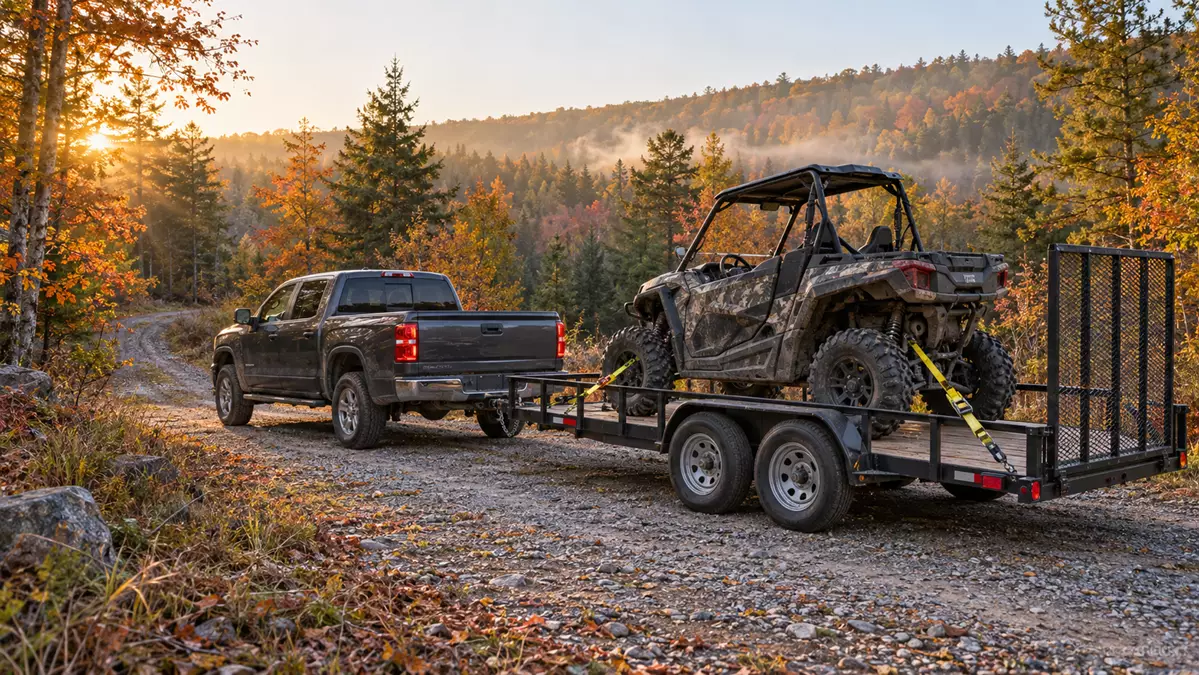
Renting a Trailer for Hunting Season: Hauling Your UTV, Gear, and Game to Camp and Back
 Neighbors Trailer
Oct 14, 2026 13 10 min read
Hunting season does not slow down because the weather turns cold. If anything, it is one of the busiest hauling stretches of the year. You have a side-by-side or four-wheeler to get to the property, a truck bed's worth of gear, stands, feeders, and feed, and, if the hunt goes the way you want it to, a few hundred pounds of game to bring back out. For a lot of hunters, the one thing standing between the driveway and the lease is a trailer big enough and tough enough to carry all of it.
Renting one for the season, or just for the trip, is often the smarter move than buying. You get the right trailer for the hunt in front of you without storing, insuring, and maintaining it the other eleven months of the year. This guide walks through what you are really hauling, which trailer fits which kind of hunt, and how to get your machine and your game to camp and back without a headache.
What You Are Really Hauling on a Hunt
The load is almost never just one thing. Plan the trailer around the full picture, not the single heaviest item, because the odds and ends are what fill the floor and push you into a bigger trailer than you expected.
A typical multi-day hunt means some combination of a UTV or ATV, a locked case of rifles or bows, climbing and ladder stands, ground blinds, a feeder and a few bags of feed, a generator, firewood, water, and two or three coolers. On the way home, add the part that catches people off guard: a field-dressed deer runs well over a hundred pounds, and an elk quartered into game bags can be several hundred. The trailer that carried everything out needs room and payload to carry a cooler full of meat back.
Before you book anything, add up the real weight of the machine plus gear plus the heaviest game you expect, and make sure both the trailer's rated capacity and your truck can handle it. If you are not certain your truck is up to it, our towing capacity calculator is a quick way to check before you load a thousand pounds behind it.
Which Trailer Fits Which Hunt
Three trailer types cover almost every hunting trip: an enclosed trailer, an open utility trailer, and a flatbed. The right one depends on how far you are going, how long you are staying, what the weather is doing, and whether you are hauling one machine or three. If you want the full breakdown of matching a trailer to an off-road vehicle, our guide on choosing the right trailer to haul your off-road vehicles goes deeper than we will here.
Here is the short version for a hunt, as a decision guide rather than a hard rule, since your machine's size and the property's access always have the final say:
| Trailer Type | Best Hunting Use | Keep in Mind |
|---|---|---|
| Enclosed | Multi-day trips, expensive gear, bad weather, and secured overnight storage at camp | Heavier and taller, so it tows a little harder; confirm your UTV clears the door opening |
| Open Utility | A single ATV or UTV plus gear on a short or one-day hunt; the easiest to load and the lightest on your truck | No weather or theft protection, so gear and game ride exposed |
| Flatbed | Two or more machines, oversized loads, or a group hunt sharing one trailer | Everything is exposed and tie-downs do all the work, so securing the load matters most |
Enclosed Trailer
An enclosed trailer is the choice for a serious multi-day hunt. It keeps rain, snow, and road grime off your gear, it locks, so you can leave it loaded at camp overnight without worrying, and it holds scent and weather off your equipment. The trade-off is that it is heavier and taller than an open trailer, which you feel in crosswinds and at the fuel pump. The one thing to confirm before you book is the door opening. A wide side-by-side can be too tall or too wide for some enclosed trailers, so check the machine against the door, not just the floor.
Open Utility Trailer
For a single ATV or a narrow UTV and a load of gear on a day hunt or an overnighter, an open utility trailer is hard to beat. It is the cheapest to rent, the lightest to tow, and the fastest to load and unload because you are not threading a machine through a door. You give up weather and theft protection, so it is best when you are not leaving the trailer loaded and unattended for long.
Flatbed
When the hunt is a group effort, a flatbed earns its keep. Two side-by-sides, or a UTV plus a loaded cargo rack, fit where they would not on a smaller trailer, and there are no walls or a roof to limit what you carry. The catch is that everything rides exposed and held down only by your straps and chains, so a flatbed rewards hunters who know how to secure a load properly.
Getting Your Machine Loaded and Secured
Loading a UTV or ATV onto a rental is the step where most of the risk lives, so it is worth slowing down for. Use ramps rated for your machine's weight, load on firm level ground, and have a spotter if the ramp angle is steep. Once the machine is on, secure it at four points with rated ratchet straps, set the parking brake, and leave it in gear. Then walk around and check every strap again before you pull out, and recheck them after the first few miles once everything has settled.
Fit matters as much as weight. A machine that is too wide for the trailer, or too tall for an enclosed door, turns into a problem in the driveway rather than at the property. If you are deciding between enclosed and open for a side-by-side, our comparison of enclosed, flatbed, and utility trailers for an ATV or UTV lays out the fit and loading differences in detail.
Hauling to a Remote Camp or Lease
Getting to the hunt is rarely a straight shot down pavement. Leases and camps sit at the end of gravel, two-track, and mud, and that changes what you want under you. Favor a trailer with decent ground clearance and tires in good shape, confirm there is a usable spare, and take the access road slower than you think you need to. A loaded trailer that bottoms out or slides in mud ends a trip fast.
When you reach camp, think about where the trailer sits for the next several days. Park it on firm ground where it will not sink if the weather turns, chock the wheels, and if you rented an enclosed trailer, use it as the lockable storage it is. Keeping your gear in the trailer rather than scattered around camp protects it from weather and from wandering off.
Bringing the Game Back Out
This is the part that gets planned last and matters most on the drive home. A successful hunt means you are now hauling game, and that comes with its own short list. Field-dressed and quartered game travels in coolers or game bags, and it needs to stay cool and clean on a long drive, so bring more cooler space and ice than you think you need and keep the meat off the trailer floor where road heat and grime collect.
An enclosed trailer shines here, because it keeps your coolers out of the sun and out of sight at fuel stops. On an open or flatbed trailer, secure and cover the coolers so nothing shifts or bakes. Distribute the weight too: a few loaded coolers all slid to the back of a trailer change how it tows, so keep the heavy ones centered over the axle. Either way, plan to clean the trailer out before you return it. Blood, mud, and feed left behind are not what the next renter wants to find, and a quick rinse and sweep keeps you in good standing with the owner and protects your deposit.
What Size to Rent and What It Costs
Size the trailer to the machine plus the heaviest version of your load, then add a margin for the game you hope to bring back. A 6-by-12 open utility trailer handles a single ATV and gear comfortably; a full-size UTV and a multi-day setup usually wants a 7-by-14 or larger, enclosed if the weather or the gear calls for it. If you are not sure what fits, our what trailer do I need tool matches your load to a size in a couple of minutes.
Renting keeps the cost tied to the trip. Instead of carrying a trailer you use a few weekends a year, you pay for the days you need it, which for most hunters is a weekend or a week around the season. That is also why the right size matters: you are not paying to store capacity you rarely use. If you want to ballpark the rental before you commit, our rental cost calculator gives you a quick estimate by trailer type and number of days.
Book Before the Season Peaks
Hunting demand is concentrated into a few short windows, and so is the demand for the trailers that serve it. When an opener lands on a weekend, a lot of hunters in the same region are all looking for the same utility and enclosed trailers at once, and the good ones in your area go first. The fix is simple: book early. As soon as you know your dates and your property, line up the trailer, rather than scrambling the week of the opener when the nearby inventory is already spoken for.
Booking ahead also gives you room to get the size right instead of taking whatever is left. If your first choice is reserved, you still have time to adjust, to pick up a slightly larger trailer, or to coordinate with your group so one trailer carries two machines. The hunters who plan the trailer with the same lead time they give the tags and the lease are the ones who are not improvising in the driveway on opening morning.
Your Pre-Hunt Trailer Checklist
Run through these five before you leave the driveway. Each one is a trip-saver on its own.
- Weigh the real load. Machine plus gear plus expected game, checked against both the trailer's capacity and your truck's towing limit.
- Confirm fit. Your UTV or ATV clears the door or deck width, not just the floor length.
- Check tires and the spare. Good tread and correct pressure on the trailer, plus a usable spare for the gravel miles.
- Pack straps and ramps rated for the weight. Four-point tie-down, parking brake set, machine in gear.
- Plan for the game. Cooler space, ice, and a way to keep meat clean and cool on the drive home.
Rent the Right Trailer for Your Season
The hunt is hard enough to plan without the trailer being a question mark. Matching the trailer to the machine, the property, and the weather, and thinking through the game on the way back as carefully as the gear on the way out, is what turns a long haul into a non-event. Neighbors Trailer connects you with trailers from owners near you, so you can rent the size you actually need for the days you actually need it, then hand it back when the season winds down. Find a trailer near your hunt and book it before the weekend rush.