

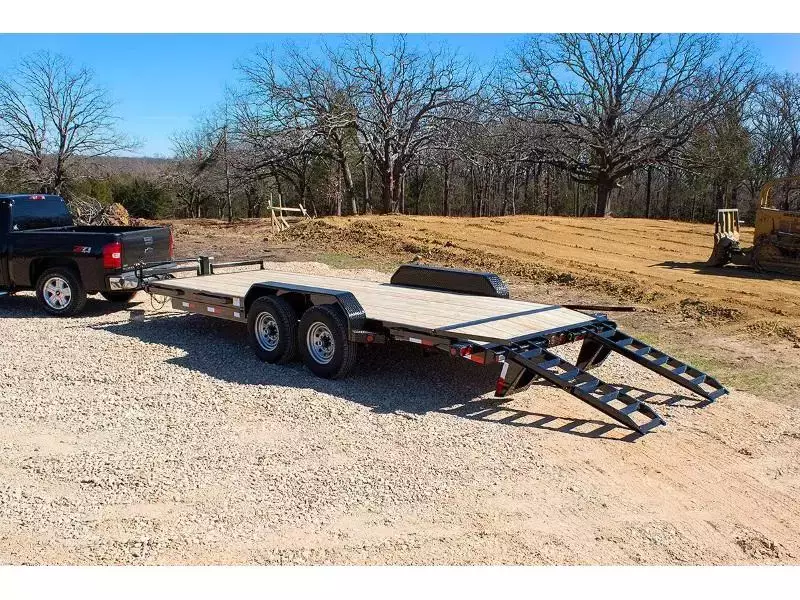
Learn How to Measure the Axles on Your Car Trailer
 Neighbors Trailer
Jun 23, 2023 1028 8 min read car trailer renta
Axle measurements on a car trailer determine whether the trailer can safely support the width, weight, and wheel spacing of the vehicle you're loading. Whether you're checking a potential rental listing, comparing single-axle versus tandem-axle options, or trying to understand why your car doesn't sit centered on the deck, knowing how to read axle specs puts you in control. This guide walks through exactly what to measure, what each number means, and how to use that information when renting a car trailer through Neighbors Trailer.
Why Axle Measurements Matter on a Car Trailer
When you load a car onto a flatbed-style car trailer, the vehicle's weight rests on the trailer deck - which is supported by the axles underneath. The axles determine:
- Load capacity: Each axle has a rated weight limit (GAWR - Gross Axle Weight Rating). Exceed it and you risk axle failure or tire blowout.
- Track width: How far apart the trailer's wheels are, which affects road stability and load distribution.
- Hub face width: The distance between the inside faces of the hubs, which determines how wide a vehicle can be before the wheels hang over the trailer edge.
- Axle placement: Where the axle sits along the trailer frame affects tongue weight and towing balance.
Key Axle Measurements to Know
1. Gross Axle Weight Rating (GAWR)
GAWR is stamped on a compliance label on the trailer tongue or frame and indicates the maximum weight each axle can support. A trailer with two 3,500-lb GAWR axles can handle a maximum of 7,000 lbs of combined axle load. Our axle capacity calculator adds up your axle ratings and tells you the safe combined load. This is the most important safety number to verify before loading.
2. Hub Face Width (Track Width)
Hub face width is the distance from the inside face of one hub to the inside face of the opposite hub. This measurement tells you the maximum usable deck width between the wheel wells. Any vehicle whose body or frame is wider than this measurement will hang over the trailer edge - which may be acceptable for wide trucks on wide flatbeds, but should be verified before loading.
3. Overall Axle Length (Spindle-to-Spindle)
This is the total length of the axle tube from one spindle tip to the other. It determines the overall track width of the trailer and helps identify compatible hubs, bearings, and brake assemblies if the owner needs to source replacement parts.
4. Axle-to-Axle Spacing (Tandem Trailers Only)
On tandem-axle car trailers, the distance between the two axle centerlines affects tongue weight distribution and ride smoothness. Standard tandem spacing is typically 4 feet (48 inches), though some heavy-duty trailers use wider spacing.
Trailer Axle Specifications by Common Car Trailer Type
| Trailer Type | Axle Config | Typical GAWR per Axle | Total Capacity | Typical Hub Face Width | Best Vehicle Fit |
| Open 16 ft car hauler | Single | 3,500 lbs | ~3,500 lbs payload | 72-76 inches | Compact cars, motorcycles |
| Open 18 ft car hauler | Tandem | 3,500 lbs each | ~7,000 lbs payload | 76-82 inches | Sedans, small SUVs |
| Open 20 ft car hauler | Tandem | 5,200 lbs each | ~10,000 lbs payload | 82-88 inches | Full-size trucks, large SUVs |
| Enclosed 20 ft car trailer | Tandem | 5,200 lbs each | ~8,000 lbs payload | 84-90 inches interior | Collector cars, sports cars |
| Gooseneck car hauler 24 ft | Tandem | 7,000 lbs each | ~14,000 lbs payload | 88-96 inches | Duallies, heavy trucks, two vehicles |
How to Physically Measure a Car Trailer's Axles
If you're measuring a trailer in person at pickup, here's how to get accurate readings:
- Hub Face Width: Use a tape measure from the inside face of the driver's side hub to the inside face of the passenger's side hub. This is the usable width between the wheel wells.
- Overall Axle Length: Measure from the very tip of one spindle to the tip of the opposite spindle. This gives the full axle tube length.
- Axle-to-Axle Spacing (tandem): Measure from the centerline of the front axle to the centerline of the rear axle.
- Deck Width at Axle Location: Measure the width of the trailer deck directly above the axle. For flatbed car haulers, this is typically 82-102 inches.
Single Axle vs. Tandem Axle: Which Should You Rent?
| Factor | Single Axle | Tandem Axle |
| Load capacity | Up to 3,500-5,200 lbs payload | Up to 7,000-14,000+ lbs payload |
| Towing stability | More sway at highway speed | More stable; less sway |
| Turning radius | Easier to maneuver | Slightly larger turning radius |
| Tire blowout safety | Single blowout = loss of trailer control | One blown tire; other axle maintains control |
| Best for | Light vehicles, motorcycles, one-car moves | Heavy or valuable vehicles, long distances |
| Rental cost | Lower daily rate | Higher daily rate but greater safety margin |
What to Check on the Axles at Trailer Pickup
Before accepting any car trailer rental, physically inspect the axles as part of your pre-rental inspection:
- Hub seals: Look for grease leaking around the hub area - this indicates a failed seal and potential bearing failure
- Lug nuts: All lug nuts should be present and tight. Missing or loose lug nuts are a safety hazard
- Tire condition: Check for sidewall cracking, uneven wear, and verify adequate tread depth (minimum 4/32")
- Brake drums: If the trailer has drum brakes, visually inspect for cracks, deep grooves, or missing brake shoes
- Axle straightness: Sight down the axle - a bent axle will be noticeably off-level and will cause tire cupping and uneven wear
- Certification label: Confirm the GAWR certification label is present on the trailer frame near the tongue
Protecting Your Rental with NT Protect
Car trailers are precision pieces of equipment - axle damage, bent frames, and tire failures during rentals do happen, and repairs aren't cheap. NT Protect covers damage to your Neighbors Trailer rental for just a few dollars per day with a $500 deductible. It's the easiest way to rent with confidence and protect yourself from unexpected costs.
Frequently Asked Questions
How do I know if a car trailer's axle rating is enough for my vehicle?
Find your vehicle's curb weight (check the door jamb sticker or manufacturer website). Add any additional cargo weight. Compare that total to the trailer's GVWR minus the trailer's empty weight (to get payload capacity). If your vehicle weight is under the payload capacity, the trailer can handle it. A 10-15% safety margin is recommended - don't load a 7,000-lb trailer to exactly 7,000 lbs. To learn more about payload capacity, it's explained in detail here: Towing Capacity Explained: GVWR, GCWR & Payload | Neighbors Trailer
What does GAWR mean on a trailer label?
GAWR stands for Gross Axle Weight Rating - the maximum weight each individual axle is designed to support when loaded. On a tandem-axle trailer, both axles have their own GAWR rating, and both must be checked separately. The overall trailer GVWR is based on the combination of both axle ratings plus a structural safety factor.
Can I tow a car trailer with wide tires on a standard single-axle hauler?
Wide body vehicles (like lifted trucks with fender flares or modified show cars) need a trailer with a hub face width at least as wide as the vehicle's widest measurement. Measure your vehicle's widest point (usually the outer edge of the tires when steered straight) and compare to the trailer's deck width and hub face width before booking.
Why does my car sit off-center on the car trailer?
Off-center placement usually means you need to re-load the vehicle, positioning the driver's side tires on the center of the driver's side wheel guide or track. Many car trailers have adjustable wheel guides or lanes to accommodate different track widths. If the trailer itself appears off-center due to worn or bent suspension components, that's a safety concern - flag it with the owner before accepting the rental.
Conclusion
Understanding axle measurements removes guesswork from car trailer rentals and helps you choose the right trailer for your specific vehicle and load. By verifying GAWR, hub face width, and axle configuration before you book or load, you protect both your vehicle and the trailer from preventable damage. Find the right car trailer for your next move at neighborstrailer.com, where local trailer owners list everything from basic open haulers to heavy-duty gooseneck car carriers.
Related Articles
- Rental Trailers: Comparing Single Axle vs. Dual Axle Trailers
- Trailer Inspections: What You Need to Know Before Every Rental
- How to Prepare Your Truck to Tow a Car Trailer Rental Safely
- Taking Good Care of Your Trailer: Essential Maintenance Tips
Content Update: This guide was substantially updated in March 2026 with expanded towing safety guidance, improved equipment recommendations, and additional resources to help trailer owners tow safely and confidently.