How To Choose The Right Trailer Rental Size
 Neighbors Trailer
May 16, 2024 856 9 min read Trailer Rental Siz
How to Choose the Right Trailer Rental Size for Your Project
Choosing the right trailer rental size is the single most important decision you'll make when planning a haul. Pick one that's too small and you're making multiple trips, overloading axles, and risking a citation for an unsafe load. Pick one that's too big and you're paying for capacity you don't use, wrestling a hard-to-maneuver trailer down narrow streets, and burning extra fuel. The good news: with a short list of questions and the numbers below, you can dial in the correct size on the first try.
This 2026 guide walks through how to think about cargo dimensions, weight, your tow vehicle's limits, and the practical trade-offs between open and enclosed trailers. It applies whether you're moving a household, hauling a riding mower, picking up reclaimed lumber, transporting a motorcycle, or running a small landscaping crew.
Start With What You're Hauling, Not the Trailer
The most common mistake renters make is picking a trailer first and trying to make the load fit. Reverse that. Write down three numbers before you look at a single listing:
- Cargo length and width. Measure the longest, widest item in inches. Add 6 to 12 inches of clearance on each side so you have room to strap and walk around it.
- Cargo height. If you need an enclosed trailer, interior height matters. A standard cargo trailer gives you 6 feet, 6 inches of interior height. A "tall" or "extra height" trailer gives you 7 feet or more.
- Total cargo weight, loaded. Use the manufacturer's spec sheet, a freight scale, or a careful estimate. Round up by 15 percent to cover packing materials, tie-downs, fuel in tanks, and anything you forgot.
Once you have those three numbers, every trailer in the listing pages either passes or fails. No guessing, no eyeballing.
Trailer Size Reference Chart
The table below shows the most common rental sizes on Neighbors Trailer and the kinds of jobs each one handles well. Use it as a starting point, then verify the actual GVWR and bed dimensions on the specific listing you're considering.
| Trailer Size | Typical Payload | Best For | Tow Vehicle |
| 4x6 utility | 1,500 to 2,000 lbs | Small ATV, mowers, yard debris, single appliance | Compact SUV or midsize sedan |
| 5x8 utility | 1,800 to 2,500 lbs | Studio move, dirt bike, hardware runs | Midsize SUV or small pickup |
| 6x10 open | 2,400 to 3,000 lbs | Landscaping, mulch, two motorcycles, lawn tractor | Half-ton pickup or full-size SUV |
| 6x12 enclosed | 2,800 to 4,000 lbs | 1-bedroom move, trade tools, weather-sensitive cargo | Half-ton pickup |
| 7x14 enclosed | 4,000 to 6,000 lbs | 2-bedroom move, vending setups, motorsports paddock | Half-ton pickup with tow package |
| 8.5x20 car hauler | 6,000 to 8,000 lbs | One full-size vehicle, two compact cars, classic restoration | Three-quarter ton pickup |
| 8.5x24 cargo | 8,000 to 10,000 lbs | Full household move, contractor work trucks, large equipment | Three-quarter or one-ton pickup |
Match the Trailer to Your Tow Vehicle, Not the Other Way Around
A common rookie mistake is to rent the biggest trailer that fits the cargo, then discover your truck can't safely tow it. Three numbers from your vehicle's manual decide what you can pull:
- GVWR (Gross Vehicle Weight Rating): maximum weight of your loaded tow vehicle by itself.
- Maximum Tow Capacity: maximum trailer weight when properly hitched.
- GCWR (Gross Combined Weight Rating): maximum weight of vehicle and loaded trailer combined.
You'll often hit GCWR before you hit max tow capacity, especially with passengers and gear. A pickup rated for 9,000 pounds of towing with a half-ton bed full of cargo and four passengers can effectively haul less. Add it up. For a deeper walk-through of these terms, see our companion guide on trailer towing capacity explained: GVWR, GCWR, and payload.
Payload Capacity at a Glance
The chart below shows the typical payload range you can expect from each common rental size. Listings vary by axle configuration and tire rating, so always confirm the specific number on the trailer you book.
NeighborsTrailer.com
Open vs Enclosed: It's About More Than Weather
People default to enclosed trailers when they want to "protect" the cargo, but the trade-offs go deeper than rain protection.
When to choose open
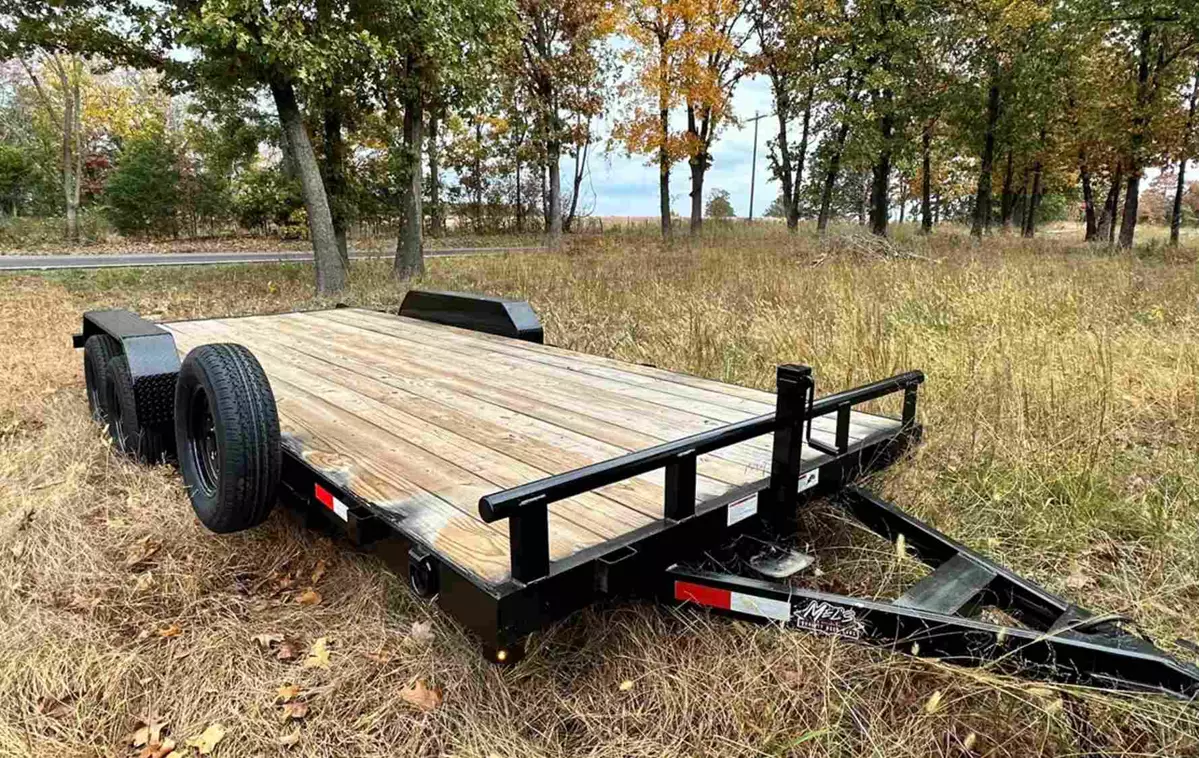
Open trailers (utility, flatbed, car hauler) are lighter, easier to load from any angle, and almost always cheaper to rent. If you're hauling lumber, dirt, mulch, oversized items, or anything you'll forklift or crane onto the deck, open is the right call. Loading ramps are simpler, and you can secure unusually shaped items without worrying about door height.
When to choose enclosed
Enclosed cargo trailers shine when weather, theft, or dust would damage the load. Household moves benefit because boxes stay dry overnight. Trade tools stay locked and out of sight at the job site. Motorsports paddocks use enclosed trailers because dust ruins fresh paint and tuning gear. The cost is real, though: an enclosed trailer of equivalent payload weighs 800 to 1,500 pounds more than its open counterpart, which eats into your tow vehicle's headroom.
The Three Sneaky Variables That Mess Up Size Estimates
Even careful renters underestimate three factors. Account for them up front and you'll avoid the "we need a bigger trailer" call at 7 a.m. on moving day.
- Wheel wells. The interior width of a 6-foot-wide trailer is often 70 inches between the fenders, not 72. Furniture that's exactly 6 feet wide will not slide flat through the door.
- Tongue weight. Roughly 10 to 15 percent of total trailer weight should rest on the hitch. A perfectly sized trailer that's loaded with everything in the rear half will sway dangerously at highway speed. Use a trailer weight capacity calculator if you're unsure.
- Ramp door slope. A 6,000-pound vehicle on a 6-foot ramp climbs at a steeper angle than the same vehicle on an 8-foot ramp. Low-slung cars need longer ramps. Verify ramp length on the listing.
Hitch Compatibility Often Decides It
Trailer sizes correlate with coupler sizes. A 4x6 utility trailer typically uses a 1-7/8 inch ball. Most 6x12 and 7x14 enclosed trailers use a 2 inch ball. Heavier car haulers and 8.5x24 cargo trailers usually require a 2-5/16 inch ball, and bumper-pull trailers above 10,000 pounds GVWR almost always need a weight-distribution hitch to be street-legal. If your truck only has a 2 inch ball mount, you may be limited to mid-size trailers even if your vehicle is rated for more. Check our hitch size compatibility chart before you book.
Sample Decision Walk-Throughs
These three scenarios show how the size question shakes out in real bookings.
Scenario A: Moving a one-bedroom apartment across town
Estimated cargo: 1,500 pounds of furniture, 600 pounds of boxes, 1 mattress. Total around 2,500 pounds with overage. Weather looks dry. A 6x10 open utility trailer behind a half-ton pickup is plenty. An enclosed 6x12 is overkill unless rain is in the forecast.
Scenario B: Hauling a 1968 Camaro project car
Vehicle weight: 3,400 pounds. You'll want a car hauler with a flat deck, not a tilt-bed (the suspension is soft). An 18-foot car hauler with a 7,000-pound GVWR handles the car plus a parts box. A three-quarter ton truck pulls it comfortably with weight distribution.
Scenario C: Landscaper picking up 2 cubic yards of mulch
Mulch weight: roughly 1,400 pounds for 2 yards. A 5x8 or 6x10 utility with high-side rails works. Closed cargo trailers are a poor fit because you'd have to shovel mulch through a side door. Open and walk-in is the way.
FAQs About Choosing the Right Trailer Size
What size trailer do I need for a full house move?
For a 2 to 3 bedroom home, plan on an enclosed 7x16 to 8.5x20 trailer with at least 7,000 pounds of payload capacity. A studio or one-bedroom can usually fit in a 6x12. Multi-bedroom homes with appliances may need two trips with a smaller trailer or a single trip with an 8.5x24.
Can I tow a 7x14 enclosed trailer with a half-ton truck?
Usually yes, but check your truck's tow rating and add your trailer's loaded weight (not its empty weight) to confirm. A loaded 7x14 enclosed often weighs 6,500 to 8,500 pounds. Most modern half-tons with the tow package handle that, but older half-tons may not.
How do I know if I'm overloading the trailer?
Compare your total cargo weight to the trailer's GVWR minus its empty weight (this is the actual payload). Both numbers are stamped on the VIN plate near the front of the trailer. If your cargo plus tongue gear exceeds payload, downsize the load or upsize the trailer.
Is renting an oversized trailer ever a good idea?
Yes, in two cases. First, if the cost difference is small and you'd rather have headroom for last-minute additions. Second, if the larger trailer happens to have better suspension, better tires, or a longer ramp that makes loading safer. Otherwise, smaller is usually cheaper, lighter, and easier to maneuver.
What if I can't find the exact size I need?
Always size up, not down. A slightly larger trailer costs a few dollars more per day but gives you a safety margin for tie-down room, balance, and last-minute additions. Tight, just-barely-fits trailers turn into stressful loading sessions.
The Bottom Line
The right trailer size starts with three numbers: your cargo's dimensions, its loaded weight, and your tow vehicle's combined rating. Get those right and the listing pages do the rest of the work. When you're between sizes, size up. When you're between open and enclosed, let weather and theft risk be the tiebreaker. And every time, double-check coupler size and ramp length before you drive away. The few minutes spent on a quick spec review save hours of stress on haul day.
Related Articles
- Trailer Towing Capacity Explained: GVWR, GCWR, and Payload
- Trailer Weight Capacity Calculator
- Hitch Size Compatibility Chart: Find the Right Hitch for Your Trailer
- Trailer Rental Guide: How to Choose the Right Flatbed Trailer Rental
Content updated May 2026