

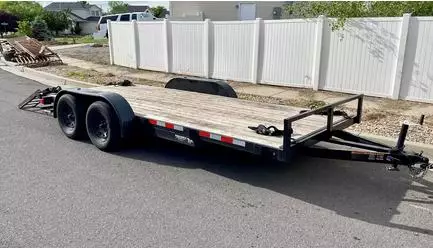
Choosing a Gooseneck vs. Bumper-Pull Flatbed Trailer Rental
 Neighbors Trailer
Aug 19, 2023 1208 5 min read flatbed trailer renta
Gooseneck vs Traditional Flatbed Trailer Rental: Which One Should You Book?
Picking between a gooseneck flatbed and a traditional bumper pull flatbed is the first real decision a renter makes when a job gets bigger than a pickup bed. Both styles haul the same kinds of loads, but the way they attach to the tow vehicle changes payload, stability, and what kind of truck you need. This guide walks through the working differences so you can book the right trailer the first time on Neighbors Trailer.
Hitch Basics
A traditional flatbed is a bumper pull trailer. It attaches to a 2 inch or 2-5/16 inch ball mounted on a receiver hitch behind the rear bumper. A gooseneck flatbed uses a ball or coupler mounted in the bed of the pickup, roughly above the rear axle. The weight of the trailer tongue is transferred over the axle rather than behind it, which changes handling fundamentally.
Payload and GVWR Comparison
Because the gooseneck hitch sits over the tow vehicle axle, the combined rig can safely carry much more weight without risk of fishtailing. The chart below compares typical rentable GVWR ratings between the two styles.
NeighborsTrailer.com
Side by Side: Gooseneck vs Bumper Pull Flatbed
| Feature | Gooseneck Flatbed | Traditional (Bumper Pull) Flatbed |
| Typical GVWR | 16,000 to 30,000 lbs | 7,000 to 14,000 lbs |
| Tow Vehicle Needed | 3/4 ton or 1 ton pickup with bed hitch | Half ton pickup and up |
| Turning Radius | Very tight (pivot is over the axle) | Wider swing arc |
| Stability at Highway Speed | Excellent, resists sway | Good for lighter loads, sway likely near max GVWR |
| Typical Daily Rate | $165 to $320 | $85 to $165 |
When a Gooseneck Makes Sense
Book a gooseneck flatbed when your load exceeds roughly 12,000 pounds, when you need a deck longer than 24 feet, or when you are hauling over a long distance where sway resistance matters. Commercial landscapers, equipment dealers, and anyone moving a tractor, skid steer, or small excavator usually gravitate to gooseneck rentals. For a deeper look at flatbed configurations, our six profitable flatbed uses post shows how owners actually deploy each style.
When a Traditional Flatbed Is Plenty
For weekend projects, home remodels, single vehicle hauls, and deliveries under 10,000 pounds, a traditional bumper pull flatbed is easier, cheaper, and tows behind almost any modern half ton pickup. It is also easier to maneuver in residential driveways and at job sites with tight staging areas.
What You Need on the Tow Vehicle
Gooseneck rentals require a hitch ball installed in the bed of the pickup. Most late model 3/4 and 1 ton trucks have factory gooseneck prep, but if you are using an older truck you may need to install an aftermarket bed hitch. Neighbors Trailer owners often list whether their rig requires a gooseneck ball or a 5th wheel king pin, and will happily help you verify compatibility before booking. For fundamentals on towing safely, the heavy hauling safety tips guide is a great pre booking read.
NT Protect on Every Rental
Whether you book a bumper pull or a gooseneck, every Neighbors Trailer reservation includes NT Protect coverage for a few dollars per day, charged automatically at checkout. It is not an add on and cannot be removed. NT Protect keeps renters covered for physical damage and liability, with a $500 deductible applied when a claim is filed.
Frequently Asked Questions
Is a gooseneck harder to drive than a bumper pull?
No, most drivers find goosenecks easier to back up because the pivot point is directly over the rear axle. Turns are tighter and smoother, especially in reverse.
Can I rent a gooseneck if I only have a half ton truck?
Generally no. Gooseneck trailer GVWR and tongue weight exceed what half ton pickups can safely handle. Stick with a bumper pull flatbed for half ton tow vehicles.
Does a gooseneck rental cost much more?
Daily rates are typically 60 to 90 percent higher than a comparable bumper pull flatbed. For jobs that require the added capacity, the upgrade pays for itself; for lighter jobs it is rarely worth it.
Do gooseneck flatbeds come with tie downs?
Most gooseneck decks include stake pockets and D rings every 12 to 24 inches. Listing owners often provide straps and chains; confirm in the booking message before pickup.
Conclusion
The right flatbed depends on what you are hauling and what you drive. Pick a traditional bumper pull for jobs under 10,000 pounds behind a half ton truck; step up to a gooseneck when the load, distance, or size demand it. Both options come with NT Protect included and both connect you with local owners who know their trailers inside out. Browse flatbed rentals on Neighbors Trailer to see which style is available near you.
Related Articles
- How to Choose the Right Flatbed Trailer Rental
- When a Deckover Flatbed Trailer Rental Is the Right Choice
- Trailer Safety 101: How to Safely Tow a Trailer
- How to Load a Vehicle on a Car Hauler for Safe Towing
Content updated April 2026