

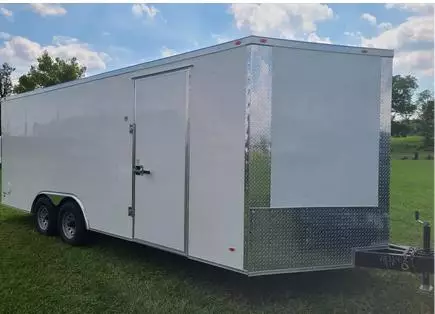
Enclosed Trailer Financing: Loans, Leasing & Renting (2026)
 Neighbors Trailer
Oct 17, 2023 536 8 min read buying an enclosed trail
An enclosed trailer is one of the most useful pieces of hauling equipment you can have access to, but it is also one of the most expensive. A new 7x14 enclosed model often runs between $7,500 and $14,000, and larger or upgraded units can climb past $25,000. For most weekend movers, contractors with seasonal work, motorcycle owners, and small-business operators, paying that price up front is not realistic. That is where financing, and increasingly, peer-to-peer rental, comes in.
This guide breaks down every practical way to pay for an enclosed trailer in 2026: traditional bank loans, dealer financing, RV-style installment plans, lease-to-own programs, and renting through a peer-to-peer marketplace like Neighbors Trailer. By the end, you will know which path matches your budget, how often you actually haul, and how long you plan to keep the trailer.
Why Enclosed Trailer Financing Looks Different in 2026
Enclosed trailers are categorized as recreational or commercial assets depending on how lenders score them. Most banks treat them like a small RV or boat: collateralized loan, 36 to 84 month terms, and rates tied to your credit profile. In 2026 the average APR for a personal trailer loan with a 700+ FICO score sits between 8.5% and 11.9%. Sub-prime borrowers can see rates of 14% to 22%, which is why understanding every financing option matters so much.
The other big shift is rental supply. Peer-to-peer trailer marketplaces have grown roughly 30% year over year, and that means most metro areas now have multiple enclosed trailers available within a 10 mile radius for $60 to $120 per day. For people who only need an enclosed trailer a handful of times each year, renting often beats financing by thousands of dollars.
The Five Most Common Ways to Pay for an Enclosed Trailer
1. Cash Purchase
The cleanest, simplest, and lowest-total-cost option, if you can afford it. No interest, no monthly payment, no lender restrictions on use. The downside is opportunity cost: tying up $10,000 or more in a depreciating asset that may sit unused 95% of the year.
2. Bank or Credit Union Loan
Traditional installment loans are typically the lowest-rate financing path for trailer buyers with strong credit. Local credit unions are especially worth checking, as they often beat dealer financing by 1 to 3 percentage points. Expect a down payment of 10% to 20%, plus title and registration fees on top.
3. Dealer Financing
Most enclosed trailer dealers partner with finance companies like Sheffield Financial, Roadrunner, or Synchrony to offer in-house loans. The convenience is real, you can drive home with the trailer the same day, but rates tend to run higher than a credit union and the term lengths can stretch to make the monthly payment look small while inflating total cost.
4. Lease-to-Own Programs
Lease-to-own (sometimes called rent-to-own) programs let you take possession of the trailer with no credit check and a low first payment, then make monthly installments until the trailer is yours. They are designed for buyers with bruised credit. The trade-off is total cost, which can run 1.5x to 2x the trailer's sticker price by the time you finish the contract.
5. Peer-to-Peer Rental
If you only haul a few times a year, renting from a local owner on a platform like Neighbors Trailer is almost always the lowest total cost. You skip the loan, the depreciation, the storage, the maintenance, and the registration fees. Daily rates for enclosed trailers usually fall between $60 and $120 depending on size, location, and demand.
Financing Options Compared Side by Side
| Financing Path | Typical APR | Down Payment | Best For | Watch Out For |
| Cash Purchase | 0% | 100% | Daily haulers, full-time contractors | Opportunity cost on capital |
| Bank or Credit Union Loan | 8.5% to 11.9% | 10% to 20% | Strong credit, 3+ year ownership plans | Title and registration fees on top |
| Dealer Financing | 10% to 14% | 0% to 15% | Same-day pickup, convenience buyers | Long terms inflate total cost |
| Lease-to-Own | Implied 18% to 30% | 1 month payment | Bruised credit, no other options | Total cost often 2x sticker price |
| Peer-to-Peer Rental | Not applicable | None | Occasional haulers, weekend projects | Availability during peak season |
How Monthly Costs Stack Up
To make the math concrete, here is what a typical 7x14 enclosed trailer costs per month under each financing path. The chart assumes an $11,500 sticker price, average APRs, and 60-month terms where applicable. The peer rental figure assumes one weekend rental every other month.
NeighborsTrailer.com
The visual gap between owning and renting is the headline of this post. If you genuinely use an enclosed trailer five or more days each month, ownership pays off. If you use it less, the rental path lets you keep the cash, the parking space, and the time you would otherwise spend on maintenance. If the need runs long rather than occasional, Trailer Bid lets you post the rental once and compare one complete total from each supplier near you.
Hidden Costs That Trip Up First-Time Buyers
The sticker price is rarely the whole story. Before you sign a financing agreement, budget for the following:
- Sales tax and registration: 5% to 9% of purchase price plus annual plate fees in most states.
- Insurance: Typical liability and physical damage coverage runs $20 to $45 per month for an enclosed trailer.
- Storage: Indoor storage averages $80 to $200 monthly. Outdoor lots run $30 to $80 if HOA rules even permit it.
- Maintenance: Bearings, brakes, tires, and seals add up. Plan on $250 to $500 a year for a well-used unit. See single vs dual axle differences if you are weighing capacity options that affect maintenance load.
- Depreciation: Enclosed trailers lose 8% to 12% of value in year one and 5% to 7% per year after that.
Add those up and the true monthly cost of ownership is usually $100 to $180 higher than the loan payment alone.
How to Decide Between Financing and Renting
The right choice almost always comes down to use frequency. Run this quick check before you commit:
- Count the number of haul days you actually expect over the next 12 months.
- Multiply that number by the average local enclosed rental rate (typically $80 to $100 per day).
- Compare that total against a 60-month financed payment plus storage, insurance, and maintenance.
If the rental total is lower, rent. If the financed total is lower, buy. The break-even for most buyers sits at about 45 haul days per year. A platform like Neighbors Trailer also lets you list your trailer to earn rental income on the days you are not using it, which can shift the math even further toward ownership.
Tips to Get Approved for Enclosed Trailer Financing
If you decide a loan is the right path, these steps consistently improve approval odds and lower your APR:
- Pull your credit report 30 to 60 days before applying so you can dispute errors.
- Get pre-qualified at two banks and one credit union before walking into a dealership.
- Make a 15% to 20% down payment so the loan-to-value ratio looks healthier to underwriters.
- Choose the shortest term you can comfortably afford; a 36-month loan saves thousands compared to a 72-month loan at the same rate.
- Bring proof of intended use (commercial license, contracting work) if applying for a higher loan amount.
Frequently Asked Questions
Can I finance a used enclosed trailer?
Yes. Banks and credit unions typically finance used trailers up to 10 years old, though APRs run roughly 1 to 2 percentage points higher than new. Dealer financing for used inventory is also widely available.
Is renting really cheaper than financing for occasional use?
For most casual users, yes. If you haul fewer than about 45 days per year, renting from a peer-to-peer marketplace usually saves $1,500 to $4,000 over five years compared to financing.
What credit score do I need for enclosed trailer financing?
Most prime lenders want 670 or higher. Scores in the 580 to 669 range usually qualify but at higher APRs. Below 580, lease-to-own becomes the most realistic path.
Do enclosed trailers depreciate quickly?
Less aggressively than RVs but more than utility trailers. Expect 8% to 12% depreciation in year one and roughly 5% to 7% annually after that, depending on use and condition.
Can I write off enclosed trailer payments on taxes?
If you use the trailer for business purposes, the interest portion of payments and the depreciation may be deductible. Talk to a tax professional about Section 179 and bonus depreciation rules in your state.
Final Thoughts on Enclosed Trailer Financing
Financing an enclosed trailer is not a one-size-fits-all decision. Cash buyers save the most. Buyers with strong credit get the best APRs from credit unions. Buyers with bruised credit can still own through lease-to-own, just at a real premium. And occasional users almost always come out ahead by renting from neighbors instead of taking on a five-year loan. Run the numbers on your actual usage, factor in the hidden ownership costs, and choose the path that fits your life, not the path the dealer pushes hardest.
If you want to test the rental option before committing to ownership, you can browse local enclosed trailers on Neighbors Trailer to see real pricing in your area. Many first-time hauliers discover that renting two or three times a year covers everything they need, with none of the financing headaches.
Related Articles
- How Much Does it Cost to Rent a Trailer: Trailer Rental Prices Explained
- Setting a Fair Price for an Enclosed Trailer Rental
- Single vs Dual Axle Enclosed Trailer Rental: Which to Choose
- Trailer Rental Guide: Beginners Guide to Choosing the Best Enclosed Trailer Rental
Content updated April 2026