

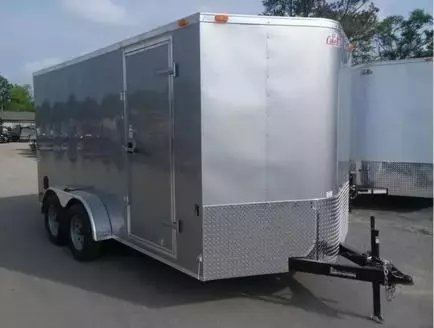
3 Best Trailer Jacks for Your Enclosed Trailer in 2023
 Neighbors Trailer
Nov 9, 2023 750 7 min read trailer jac
If you own or rent an enclosed trailer, the trailer jack is the unsung hero that makes hitching, leveling, and parking even possible. The wrong jack will fight you every time you try to hook up; the right one disappears into the background and saves your back. This guide walks through the three jack styles that actually belong on an enclosed trailer in 2026, what to expect to spend, and how to pick the one that fits the way you actually use your rig.
Whether you have a 5x8 cargo box for occasional hauling or a 7x16 enclosed for a side hustle, jack selection comes down to weight capacity, lift height, ease of use, and whether power is worth the extra money. The short version: if your trailer's tongue weight is over 600 pounds or you hitch up frequently, an electric jack pays for itself fast.
Why the Trailer Jack Choice Matters
The jack on the front of an enclosed trailer carries the loaded tongue weight when the trailer is uncoupled, levels the trailer for loading, and gets it back onto the hitch ball when you hook up. A jack rated below your tongue weight will fail or strain. A jack rated way above will work, but the extra cost may be wasted if you do not need the capacity.
Tongue weight on a typical loaded enclosed trailer runs 10 to 15 percent of the gross trailer weight. A 7,000-pound rig will sit somewhere between 700 and 1,050 pounds on the tongue. That number is what your jack needs to handle, and where most renters and first-time owners get tripped up.
The Three Jack Types You Will Actually See
1. Manual A-Frame Jack (Side-Wind or Top-Wind)
The classic. A manual A-frame jack mounts to the trailer's A-frame tongue and lifts via a hand crank. Side-wind jacks have the crank on the side of the housing; top-wind jacks have it on top, which is faster to operate when the jack is fully extended.
Manual jacks are inexpensive, reliable, and almost universally serviceable. Their downside is the cranking. On a heavy enclosed trailer, raising or lowering the tongue can take 60 to 90 turns and burn 1 to 2 minutes per cycle. If you hitch up multiple times a week, that adds up.
2. Electric Tongue Jack
Electric tongue jacks replace the manual crank with a 12-volt motor wired to the trailer's battery or to the tow vehicle's 7-pin connector. Press a button, the jack rises or lowers automatically. Most include an emergency manual override, a built-in light, and a digital level indicator.
For owners who hitch up frequently, electric jacks are a transformative upgrade. The time savings are real (10 seconds vs. 90 seconds), and the back savings are arguably more valuable. The tradeoff is cost (typically $200 to $400) and the small risk of motor failure over time.
3. Drop-Leg Manual Jack
Drop-leg jacks combine a long telescoping leg with a smaller cranking screw at the top. The bulk of the lift comes from manually pulling out the leg and pinning it at the right height; only the final inches of fine adjustment use the crank.
Drop-leg jacks are a great middle option: faster than a pure manual jack, much cheaper than an electric, and very reliable. They work especially well on heavier enclosed trailers where the cranking on a standard manual jack becomes punishing.
How to Choose the Right Capacity
Always size the jack above your loaded tongue weight. The table below maps common enclosed trailer sizes to recommended jack capacity ranges.
| Enclosed Trailer Size | Loaded Tongue Weight | Min. Jack Capacity | Recommended Style |
| 5x8 / 6x10 (light haul) | 200 to 400 lbs | 2,000 lbs | Manual or drop-leg |
| 6x12 / 7x14 (mid-duty) | 400 to 700 lbs | 3,500 lbs | Drop-leg or electric |
| 7x16 / 8.5x20 (heavy) | 700 to 1,200 lbs | 5,000 lbs | Electric strongly recommended |
| 8.5x24+ (commercial) | 1,200 to 2,000 lbs | 7,000 lbs | Electric with manual override |
What Owners Actually Buy in 2026
Sales data and rental fleet purchasing patterns show a clear shift toward electric tongue jacks across the mid and heavy enclosed trailer segments. The chart below illustrates the breakdown by jack type for trailers in the 6x12 to 8.5x24 range.
NeighborsTrailer.com
Installation Tips and Common Mistakes
Most jacks bolt to the A-frame using four to six grade-5 bolts. The mistake first-time installers make is using too short of bolts or skipping the lock washers, which lets the jack rock under load and eventually wallow out the holes.
If you are upgrading from manual to electric, double-check that your trailer battery (or tow vehicle 7-pin) can deliver enough current. Underpowered electrical setups will work briefly, then trip the breaker or burn the motor. Match your hitch and ball size to the trailer coupler before you ever load weight on the jack.
Maintenance: A Few Minutes Twice a Year
All three jack types last longer with basic care. Wipe the screw or telescoping shaft, apply a light coat of marine grease twice a year, and check the mounting bolts each season. Electric jacks add one more step: keep the battery connections clean and verify the manual override handle is still in the storage clip. Pair this with the rest of your trailer safety routine and you will rarely have an unexpected jack problem.
Frequently Asked Questions
Can I put any jack on any trailer?
You need to match the jack's mount type (A-frame, swivel, drop-leg) to your trailer's tongue. Most enclosed trailers use A-frame mounts, which fit the widest selection of jacks.
Are electric jacks worth the price?
For frequent hitchers and trailers over 5,000 pounds gross weight, almost always yes. The labor savings and reduced strain make the upfront cost reasonable within a season of regular use.
How high does my jack need to lift?
Most enclosed trailer jacks need 12 to 18 inches of lift to clear a standard tow ball plus level on uneven ground. Drop-leg jacks give you more clearance for low-to-the-ground hitches.
What if my electric jack motor fails?Quality electric jacks include a manual crank override on top so you can finish the job. Replacement motors are widely available and usually under $100.
Do I need a jack foot or pad?
Always. The pad spreads the load on dirt, gravel, or asphalt and prevents the jack from punching through soft ground. A wide round or square pad is cheap insurance.
Final Take
For most enclosed trailer owners in 2026, the right answer is a 5,000-pound electric tongue jack with a manual override. It costs more up front but transforms the hitching experience and adds resale value to the trailer. If budget is tight or the trailer is small, a drop-leg manual jack is the smart middle ground; pure crank A-frame jacks should be reserved for the lightest cargo trailers only.
Looking to rent an enclosed trailer that already has the right jack installed? Browse trusted listings on Neighbors Trailer to find a rig near you and book in minutes.
Related Articles
- The Vital Role of the Jockey Wheel on an Enclosed Trailer
- Beginners Guide to Choosing the Best Enclosed Trailer Rental
- Enclosed Trailer Rental Towing Facts
- Enclosed Trailer Rental Hitch Lock Guide
Content updated May 2026